
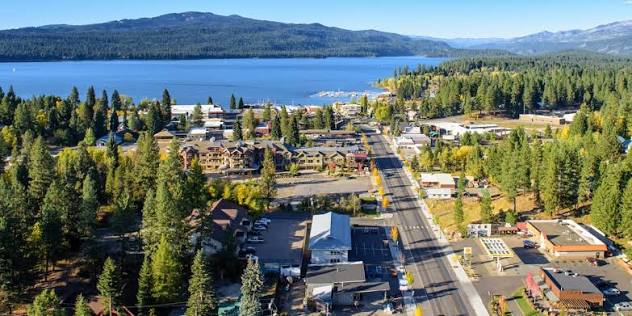
McCall Cabin Guide: Choosing a Wood Stove, Hot Tub, and Sauna for Payette Lake Winters
The Payette Lake Cabin Owner’s Guide—How to Size a Wood Stove for a Mountain Winter and Why Soapstone Earns Its Keep Here, What McCall’s Soft Lake Water and Deep Snow Mean for a Hot Tub, the Sauna That Belongs Next to It, Propane Instead of Natural Gas, Valley County’s Permit Quirk, and Why to Get It Delivered Before the Snow Flies
A McCall cabin in January is one of the best places in Idaho to be—snow piled past the windowsills, Payette Lake frozen white, Brundage a few minutes up the road—and it’s a place where the things that keep you warm aren’t amenities. They’re the point. A wood stove that heats the whole cabin through a three-day outage. A hot tub steaming on the deck under the pines. A sauna you step out of into knee-deep snow. Get them right and the cabin works all winter; get them wrong and you’re the owner fighting a frozen spa and a stove that won’t keep up.
This is the guide to getting them right in McCall specifically, because McCall is different from the rest of our territory in ways that matter: it gets well over a hundred inches of snow, it loses power in storms, it runs on propane rather than natural gas, and its water comes from the lake—soft, which flips the water-care advice we give everywhere else. We’ll start with the wood stove, since in a cabin it’s the heart of the house, then cover hot tubs for soft water and deep snow, the sauna that completes the setup, the propane fireplace as a companion, Valley County’s permit quirk, and how we deliver and service it all from Boise.
From Leisure Time Inc., a family business serving Idaho since 1974. Our Boise showroom has outfitted McCall, Donnelly, Lake Fork, Cascade, and New Meadows cabins for decades, and our technicians know Highway 55 in every season.
The Short Version
- Start with the wood stove. It’s the only heat that works with the power out, and in McCall the power goes out. Size it to the cabin, choose EPA-certified, and consider soapstone for heat that lasts through the night.
- McCall’s water is soft, not hard. Lake water often arrives below a salt-system spa’s calcium target—you may add hardness rather than remove it. Cabins on wells outside town vary; test either way.
- Plan the spa for snow. Keep it out of roof-shed zones, lock and brush the cover, and use a spa you can monitor from your phone with freeze protection and full-cavity insulation.
- It’s propane country. Gas fireplaces and inserts run on LP here, and the good ones—with battery backup or millivolt ignition—are the daily companion to the wood stove.
- A sauna completes the cabin. Wood-fired or electric, next to the spa, with the snow as the cold plunge.
- Deliver before the snow. A spa on a cart needs a clear path; September and October are the months to schedule McCall deliveries.
What Makes a McCall Cabin Different
- Snow. McCall sits at about 5,000 feet and routinely sees well over a hundred inches a winter. That’s a structural question for everything outdoors: covers, lifters, decks, and the roof above them.
- Outages. Mountain power fails in storms, and a cabin may sit empty for days before anyone notices. Every heat and water decision has to assume the grid will drop.
- Propane. McCall and Valley County are served by propane, not natural gas. Gas appliances are ordered and set up for LP, and your tank size matters.
- Soft water. The City of McCall draws from Payette Lake, and surface water from a granite watershed is soft—the opposite of the hard aquifer water in Idaho Falls or Twin Falls. Cabins on private wells around Lake Fork, Donnelly, and New Meadows vary and may carry iron.
- Access. Many cabins have long drives, steep lots, and gates that are easy in August and impassable in January. Delivery timing is part of the plan.
The Wood Stove: The Heart of a McCall Cabin
In town you might choose a wood stove for the look. In a McCall cabin you choose it because it’s the one heater that works no matter what: no grid, no propane delivery, just the woodpile. Three decisions matter.
1. Size It to the Cabin, Not the Room
Wood stoves are rated by the space they can heat, and a cabin’s open layout, ceiling height, insulation, and how often you’re there all move the answer. Oversize and you’ll roast with the doors open; undersize and you’ll feed it all day. A rough map for McCall’s climate:
| Cabin | Stove Size | Examples We Recommend |
|---|---|---|
| Small cabin or single great room (under ~1,200 sq ft, or a weekend place heated from cold) | Small to medium | HearthStone Green Mountain 20 or 40, Lincoln, or Craftsbury; Kuma’s compact models |
| Family cabin (~1,200–2,000 sq ft, open plan) | Medium to large | HearthStone Heritage, Castleton, Shelburne, or Green Mountain 60; Kuma’s mid-size stoves |
| Large lodge or full-time home (2,000+ sq ft, heated primarily with wood) | Large | HearthStone Mansfield, Manchester, or Green Mountain 80; Kuma’s largest models |
| Existing masonry fireplace | Insert | An EPA-certified wood insert sized to the opening |
2. Soapstone or Steel?
For a cabin you heat overnight or leave for hours, soapstone earns its keep. HearthStone’s stoves store the fire’s heat in 1¼-inch stone walls and keep radiating it for hours after the fire dies—HearthStone rates them by hours of usable heat from one load, up to 30 on the right stove, and says you can rekindle with kindling to the end of that window. Load it before bed and the cabin is warm at dawn with live coals waiting. The trade-off is a slower warm-up from cold, which matters if you arrive Friday night to a 40°F cabin and want heat fast. For that case, or for a smaller budget, Kuma’s Idaho-built steel stoves—made in Rathdrum—heat a room quickly and are hard-working, no-nonsense heaters that mountain owners swear by. Many McCall cabins pair the two logics: a soapstone stove for the main living space and overnight heat, a smaller steel stove or propane fireplace for quick warmth elsewhere. Our soapstone explainer covers the physics.
3. EPA 2020 Certified, Every Time
Idaho requires new wood appliances to be EPA-certified, and in a valley where winter air can settle, it’s the responsible choice regardless. Every HearthStone and Kuma stove we sell is EPA 2020 certified, burns a fraction of the wood an old stove did for the same heat, and keeps the chimney cleaner. A qualifying new stove may also be eligible for Idaho’s residential alternative energy tax deduction—confirm with a tax professional. Browse the full Fireplaces & Stoves collection, and read our HearthStone brand guide.
Dry wood is the difference between a stove that heats and one that smolders, and wood cut this summer isn’t dry by this winter. McCall owners who heat with wood keep two seasons’ supply under cover—this year’s burning, next year’s seasoning—so the stove always gets wood under 20% moisture. Stack it where you can reach it when the snow is four feet deep, which is not the far side of the yard.
The Hot Tub: Soft Water, Deep Snow, and a Spa You Can Watch From Boise
McCall’s Water Flips the Usual Advice
Everywhere else in our territory we tell buyers to soften their fill water. In McCall, the City draws from Payette Lake, and lake water from a granite watershed is naturally soft—often below the 25–75 ppm calcium range the FreshWater® Salt System wants (target 50). Hot Spring’s guidance is that very low hardness is fine for the initial fill, but water that’s too soft can be corrosive to equipment over time, so we often add a measured dose of calcium hardness increaser at start-up rather than removing it. The rest of the start-up is the same: pre-filter through a Clean Screen®, add FreshWater Spa Salt to target, balance, and establish chlorine.
| Your Fill Water | What to Do |
|---|---|
| McCall city water (Payette Lake)—soft, often under 25 ppm | Test; add calcium hardness increaser to reach the 25–75 ppm range; pre-filter |
| Private well, 75–150 ppm | Vanishing Act® calcium remover (in the FreshWater Salt start-up kit) |
| Private well, 150+ ppm | Vanishing Act® XL or an On The Go® softener on the hose |
| Any well with iron or manganese | Clean Screen® pre-filter and metal treatment before the salt system runs |
Bring a sample from your spigot to the Boise showroom or hand one to us at the site visit—the test is free, and in McCall it tells us which direction to go. Shop FreshWater products and read the FreshWater Method guide.
Snow: Placement First
A hundred-plus inches of snow is the single biggest threat to a cabin hot tub, and it’s solved with placement. Keep the spa out from under eaves, roof valleys, and any roof section that sheds—a slide of wet snow can crush a cover and snap a lifter. Give the cover lifter room to open against drifts, keep a shoveled path to the steps, and if the spa sits on a deck, confirm the deck is engineered for the spa’s filled weight plus McCall’s snow load. Every spa we sell comes with a custom-fit tapered cover; for McCall we add cover locks, a heavy-duty lifter, and a floating thermal blanket, and we ask whoever checks the cabin to brush the cover after storms. Our cover guide has more.
Outages and Absence: Buy a Spa That Takes Care of Itself
For a cabin you visit on weekends, the right spa does three things while you’re away. It holds heat and protects its plumbing in an outage—Hot Spring’s Highlife® spas with multi-density full foam and every FiberCor®-insulated Hot Spring and Caldera® are full-cavity insulated with freeze protection that activates when power returns. It keeps its own water clean—the FreshWater Salt System generates chlorine continuously and runs on low Output Levels in vacation mode, and FreshWater® IQ (included on Highlife and Utopia®) tests the water hourly and tells you what it needs. And it talks to you—the Connected Spa Kit puts the spa in the Hot Spring or Caldera app so you can check temperature from Boise, warm it up before you drive north, and see when the power dropped. For a cabin that may sit through a multi-day storm, add a standby generator sized to carry the spa’s circulation and heater. And don’t drain the spa for winter: a full, insulated spa in a short outage is far safer than an empty one with water in the lines. Our FreshWater IQ explainer and cold-climate guide go deeper.
The Spas We Recommend for a Cabin
- Hot Spring Envoy® — the après-Brundage spa: full-body lounge, captain’s chair, 55 jets, full foam, salt system included, IQ-ready.
- Hot Spring Grandee® — seven open seats for a cabin full of family; same footprint and equipment as the Envoy. See our comparison.
- Highlife Aria®, Vanguard®, and Jetsetter® LX — five with a lounge, six open, or three in a footprint that fits a small cabin deck. Browse the Highlife Collection.
- Caldera Geneva® and Cantabria® — Utopia Series with FreshWater IQ included and the UltraMassage® lounge; six seats in a compact square, or eight for the big lodge. Read the Cantabria review.
- Caldera Paradise Makena® and Salina® — FiberCor insulation and IQ-ready at a sweet-spot price. Every model is in our hot tub collection.
A hot tub is delivered on its side on a cart and needs a clear, firm path from the truck to the pad—which many McCall driveways and side yards offer in September and not in December. Schedule cabin deliveries for late summer or early fall, pour the pad and run the electrical before the ground freezes, and you’ll be soaking by the first snow instead of waiting for the thaw. If you’re reading this in winter, we can often still deliver to plowed, accessible lots; call and we’ll assess.
What It Costs to Run
McCall is served by Idaho Power on seasonal, tiered rates of roughly 10 to 15 cents per kWh. A well-insulated Highlife or Utopia costs about $1.15 to $1.65 a day in winter when you’re using it, and noticeably less in vacation mode with the temperature lowered and the salt system’s Output Level turned down between visits. Our cost-to-run guide has the math.
The Sauna: Finish the Cabin
If a cabin has a wood stove and a hot tub, a sauna is the piece that turns them into a ritual: heat in dry air at 170–190°F, step out into the snow, soak in the spa, repeat. McCall is built for it—the snow is the cold plunge, and Payette Lake in summer is the other one. Two things make a sauna especially right for a cabin:
- It needs nothing while you’re gone. No water care, no fill water, no cover to shovel. It sits ready for months and heats up in an hour when you arrive.
- It can run on wood. A wood-fired sauna heater keeps the cabin’s off-grid logic—no electricity required—and a lot of McCall owners love the ritual of lighting it. Electric heaters are simpler and faster; both are available.
Outdoor barrel and cabin saunas pair naturally with a spa pad and the pines; site them off the roof-shed line like the spa, with a short path from the sauna door to the hot tub. Indoor units fit a mudroom or lower level. Electric heaters run on a dedicated circuit (often 240V) that we coordinate with the spa circuit on one electrician visit. Browse our sauna collection, and see our wellness guides on the blog page.
The Companion: A Propane Fireplace That Works in an Outage
McCall doesn’t have natural gas, so a gas fireplace here is a propane fireplace—ordered and set up for LP from the start, with your tank sized to carry it along with the furnace and range. For a cabin, the gas unit is the daily fire in a bedroom, lower level, or the great room when you don’t want to build a wood fire, and it should keep working when the power quits. Heat & Glo’s direct-vent fireplaces with IntelliFire® Touch include battery backup so the fire lights and burns in an outage; Kozy Heat’s millivolt Chaska 335S insert and Valor’s fireplaces run with no electrical connection at all. At McCall’s 5,000 feet, every gas unit also needs high-altitude setup—our installers handle it. Browse the Heat & Glo line, and read our IntelliFire explainer and mountain-home fireplace guide. A pellet stove is a fine primary heater, but in a cabin that loses power it needs a battery backup or generator—see our pellet guide.
Permits in McCall and Valley County
Valley County has a quirk worth knowing. Inside McCall city limits, the City of McCall Building Department permits and inspects stoves, fireplaces, and the spa’s electrical. Outside city limits, Valley County handles some permits itself but, for certain appliance types, defers to the Idaho Division of Building Safety—our mountain-home guide notes that the county permits inserts while the state handles freestanding stoves and gas units. The practical result: the same stove may be permitted by a different office depending on which side of the city line your cabin is on. We’ve done this enough to know who to call, and we pull or coordinate the permits as part of installation.
- Wood stoves and inserts: a mechanical permit; appliance must be EPA-certified; chimney and clearances inspected.
- Propane fireplaces and inserts: a gas or mechanical permit and a licensed gas professional; venting and altitude setup inspected.
- Hot tubs: an electrical permit for the dedicated 230V/50A circuit, with inspection before the spa is energized; a locking ASTM safety cover—standard on every spa we sell—exempts it from the pool-fence requirement.
- Saunas: an electrical permit for an electric heater; a wood-fired heater needs a mechanical permit and chimney inspection.
- Decks and setbacks: a spa on a deck needs the deck engineered for filled weight plus snow load; lakefront and view lots often have setback and design-review rules.
Our Idaho fireplace permit guide, hot tub permit guide, and electrical guide cover the code.
How We Serve McCall From Boise
Our Boise showroom is about two hours down Highway 55, and it’s worth the trip to see soapstone stoves burning and wet-test a spa—many McCall owners stop in on the way up or back. For the cabin itself, the service model is built for owners who aren’t there:
- Site visit at the cabin to plan roof-shed zones, delivery path, deck load, stove placement, chimney route, and propane connection.
- Delivery timed to the season—spa to the pad, positioned and leveled; stove and fireplace installed to code and set up for altitude.
- Electrician and propane-contractor coordination, including generator sizing for the spa.
- Start-up and connectivity—salt system running, spa on your Wi-Fi and in your app before we leave.
- Caretaker handoff: a one-page sheet for whoever checks the cabin—cover care, what the IQ dashboard means, how to light the stove, who to call.
- Service plans and annual stove and fireplace service with technicians who make regular McCall runs. See our Service Department.
- Autoship to the cabin for cartridges, filters, and balancers, and financing if you want it.
Anyone who’s driven out to Burgdorf Hot Springs in winter knows the sequence: the long road, the hot pool, the snow all around, the cold walk back. A cabin with a wood stove, a sauna, and a spa under the pines is that afternoon on demand—heat, snow, hot water, and a warm room waiting—without the drive. If Burgdorf is what convinced you soaking belongs in a McCall winter, this is the version you get to do every weekend.
Frequently Asked Questions
What size wood stove do I need for a McCall cabin?
Size it to the cabin’s square footage, layout, and insulation, not to one room. Roughly: a small stove (HearthStone Green Mountain 20 or 40, Lincoln, Craftsbury, or a compact Kuma) for a small cabin or weekend place under about 1,200 square feet; a medium stove (Heritage, Castleton, Shelburne, Green Mountain 60) for a 1,200–2,000-square-foot family cabin; a large stove (Mansfield, Manchester, Green Mountain 80) for a lodge or full-time home heated primarily with wood. We’ll confirm the size at the site visit.
Is a soapstone stove worth it for a cabin?
For a cabin you heat overnight or leave for hours, yes. Soapstone stores the fire’s heat and radiates it for hours after the fire dies—HearthStone rates its stoves by hours of usable heat from one load, up to 30 on the right model—so a stove loaded at bedtime means a warm cabin at dawn with coals to rekindle. The trade-off is a slower warm-up from cold; if you often arrive to a cold cabin and want fast heat, a steel Kuma or a propane fireplace alongside the soapstone stove covers both.
Is McCall water hard or soft for a hot tub?
Soft. McCall’s city water comes from Payette Lake, and lake water from a granite watershed is often below the 25–75 ppm calcium range a FreshWater Salt System spa wants—so instead of softening, we typically add a measured dose of calcium hardness at start-up. Cabins on private wells around Lake Fork, Donnelly, and New Meadows vary and may carry iron that must be treated first. We test fill water free either way.
Will my hot tub survive a McCall winter when I’m not there?
With the right spa and placement, yes. Full-cavity insulation (full foam or FiberCor) holds heat for many hours in an outage and protects the plumbing; freeze protection activates when power returns; the Connected Spa Kit lets you watch temperature from Boise; and a standby generator covers a multi-day storm. Keep the spa out of roof-shed zones, lock and brush the cover, run vacation mode between visits, and don’t drain it for winter.
Does McCall have natural gas for a fireplace?
No—McCall and Valley County are propane territory. Gas fireplaces and inserts are ordered and set up for LP, your tank is sized to carry them, and at 5,000 feet they also need high-altitude setup. For a cabin that loses power, choose a unit that keeps working without electricity: Heat & Glo with IntelliFire Touch battery backup, or millivolt and valve-based units like Kozy Heat’s Chaska 335S and Valor fireplaces.
Do you deliver and service in McCall?
Yes. Our Boise showroom delivers, installs, and services wood stoves, hot tubs, saunas, and fireplaces throughout McCall, Donnelly, Lake Fork, Cascade, and New Meadows, with site visits at the cabin, permits coordinated with the City of McCall, Valley County, or the state as required, caretaker handoffs, service plans, and Autoship to the property. Call (208) 376-0180—and if you’re buying for this winter, call soon so we deliver before the snow.
A McCall cabin in winter is a place you go toward the cold, and the things that make that work are the things in this guide: a wood stove sized to the cabin and built to hold its heat through the night, a hot tub set out of the snow’s way and able to look after itself while you’re in the valley, a sauna that turns the snowbank into part of the routine, a propane fire for the nights you don’t want to split kindling, and a dealer whose truck has made the Highway 55 run in every month of the year. Get them right once, before the snow, and the cabin takes care of you for decades.
A stove that heats through the outage, a spa that minds itself, a sauna by the snow, and a dealer who knows the road—that’s a McCall cabin done right.
Shop Fireplaces & Stoves: leisuretimeinc.com/collections/fireplaces-stoves
A Dealer’s Guide to HearthStone: leisuretimeinc.com/blogs/fireplaces-stoves/a-dealers-guide-to-hearthstone-fireplaces
Tech Explained: HearthStone Soapstone: leisuretimeinc.com/blogs/fireplaces-stoves/tech-explained-hearthstone-soapstone
Shop Hot Tubs: leisuretimeinc.com/collections/hot-tubs
Hot Spring Envoy: leisuretimeinc.com/products/envoy-5-person-hot-tub
Hot Spring Grandee: leisuretimeinc.com/products/grandee-7-person-hot-tub
Caldera Cantabria: leisuretimeinc.com/products/cantabria-8-person-hot-tub
Shop Saunas: leisuretimeinc.com/collections/saunas
FreshWater Products & Method Guide: leisuretimeinc.com/collections/freshwater | freshwater-method
FreshWater Salt System (Hot Spring): hotspring.com/shop/water-care/freshwater-salt-system
Choosing the Right Fireplace for a Mountain Home: leisuretimeinc.com/blogs/fireplaces-stoves/choosing-the-right-fireplace-for-a-mountain-home
Preparedness Without the Panic: leisuretimeinc.com/blogs/fireplaces-stoves/preparedness-without-the-panic-heat-food-water-comfort-when-the-power-goes-out
Idaho Fireplace Permit & Code Guide: leisuretimeinc.com/blogs/fireplaces-stoves/idaho-fireplace-permit-code-guide
Sun Valley & Ketchum Vacation Home Guide: leisuretimeinc.com/blogs/spas-pools/sun-valley-ketchum-vacation-home-guide-hot-tubs-saunas-fireplaces-5800-feet
Service Department: leisuretimeinc.com/pages/service-department
Financing: leisuretimeinc.com/pages/financing
Store Locations: leisuretimeinc.com/pages/store-locations
Boise: (208) 376-0180 • Idaho Falls: (208) 523-4633 • Twin Falls: (208) 933-4295