
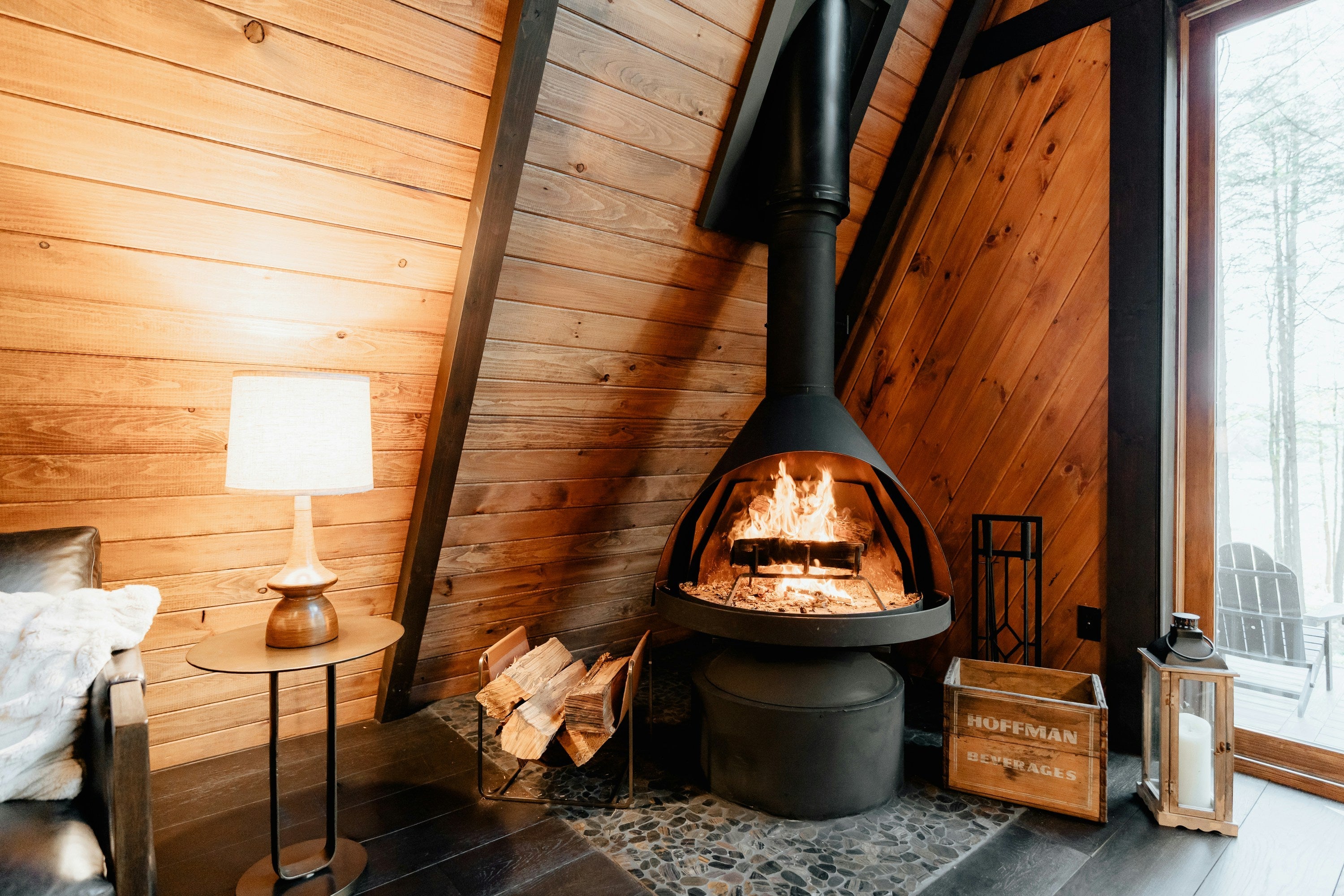
Choosing the Right Fireplace for a Mountain Home
How to Match Fireplace Type, Heat Output, and Design to the Realities of Mountain Living—From High-Altitude Gas Rules to Power-Outage Planning and Great-Room Scale
A fireplace in a mountain home isn’t just a feature—it’s the heart of the place. It’s where everyone gathers after a day on the slopes or the trail, the visual centerpiece of the great room, and often a serious source of heat when the weather turns. But mountain homes come with realities that lowland homes don’t: brutal cold, power outages, remote locations, high altitude, and big open spaces with soaring ceilings. The right fireplace has to account for all of it.
This guide walks through how to choose: comparing wood, gas, pellet, and electric for mountain living; the high-altitude factor that affects gas appliances; how to plan for outages and remoteness; sizing for a big great room; and designing a fireplace that fits the scale and style of a mountain home. The goal is a fireplace that’s as practical as it is beautiful.
From Leisure Time Inc., with showrooms in Boise, Idaho Falls, and Twin Falls. We’ve helped homeowners across Idaho’s valleys and mountain towns—from the Treasure Valley to McCall, Sun Valley, and Teton Valley—choose the right hearth for their home.
What Makes a Mountain Home Different
Before you pick a type or a style, it helps to name the conditions a mountain fireplace has to handle. These are the factors that should drive your decision:
- Severe, sustained cold: Mountain winters are longer and harsher, so heat output and efficiency matter more than in a milder climate.
- Power outages: Storms knock out power in the mountains—sometimes for days—so reliable heat that doesn’t depend on the grid is a real consideration.
- High altitude: Thinner air changes how gas appliances burn, which affects ratings and installation (more on this below).
- Remoteness and fuel access: Natural gas lines don’t reach every mountain property, so propane, wood, or pellets are often the practical fuels.
- Big, open volumes: Great rooms with tall ceilings and open floor plans need more heat—and good circulation—to feel warm.
- The fireplace as centerpiece: In a mountain home, the hearth is usually the architectural focal point, so scale and design carry extra weight.
- Wildfire awareness: In forested areas, clearances, venting, and defensible space deserve attention.
Your Fireplace Options: Wood, Gas, Pellet, and Electric
Each fuel type brings different strengths to mountain living. Here’s how they compare on the things that matter most up high:
| Type | Heat Output | Needs Power | Works in an Outage | Best Mountain Use |
|---|---|---|---|---|
| Wood | Strong, radiant | No | Yes | Remote, off-grid, outage resilience, ambiance |
| Gas (direct-vent) | Strong, instant | Little | Often, with battery backup | Convenient primary or zone heat (check altitude) |
| Pellet | Strong, even | Yes | No (without backup) | Efficient zone heat where power is reliable |
| Electric | Supplemental | Yes | No | Ambiance and mild supplemental heat |
In broad strokes: wood is the most resilient and self-sufficient choice; gas is the most convenient (with altitude planning); pellet gives efficient, thermostatic heat where power is dependable; and electric is best as ambiance or supplemental warmth, not a primary heat source for a hard mountain winter.
The High-Altitude Factor (Don’t Skip This)
This is the part many mountain homeowners—and even some installers—overlook. At elevation, the air is thinner and holds less oxygen, which changes how gas burns. Gas fireplaces are typically tested and certified for installation up to about 4,500 feet using their standard burner orifices. Above that, the appliance’s rated output is reduced—roughly 4% for every additional 1,000 feet—and a high-altitude conversion (different orifices and adjustments) is usually required for safe, proper combustion.
That matters a lot in Idaho, where many mountain communities sit well above the 4,500-foot line—McCall, Ketchum and Sun Valley, Driggs and the rest of Teton Valley, and Stanley among them. If your home is up high, a gas fireplace needs to be set up for your elevation, not for sea level.
An improperly set-up gas appliance at altitude can over-fire, short-cycle, and burn inefficiently—and incomplete combustion is a safety concern. Always use a qualified installer who knows high-altitude work; they’ll handle the orifice conversion, derate the input correctly, and verify combustion. This is also why direct-vent gas (sealed combustion, vented outside) is generally the right call in the mountains, while vent-free units carry altitude and oxygen concerns and are restricted or prohibited in some areas—confirm local code.
Wood and pellet stoves aren’t affected by the gas-orifice issue, which is one more reason they remain popular at higher elevations. And whether you burn natural gas or propane, the altitude rules apply—so the conversation with your installer is the same.
Heating a Big Mountain Great Room
Mountain homes love a dramatic great room—and tall ceilings and open volume are exactly what make heating one tricky. Warm air rises into all that space above your head, so a fireplace sized for the square footage alone can leave the room feeling cool at seating level.
A few things help: sizing up the heat output for the volume (not just the floor area), choosing a unit with a good blower or fan to push warm air out into the room, and—in very open plans—thinking about ceiling fans to move heat back down. Radiant heat from a wood or gas fire also warms people and surfaces directly, which feels good even in a big space.
Tall ceilings add volume that generic sizing charts ignore, and at altitude a gas appliance’s output is derated—so a unit that looks big enough on paper can come up short in a mountain great room. The reliable approach is a sizing assessment with a hearth specialist who factors in your ceiling height, layout, insulation, and elevation. Bring those details and we’ll point you to a unit that actually keeps the room warm.
Planning for Power Outages and Remote Living
When a winter storm takes out power in the mountains, your fireplace can be the difference between comfortable and cold. So ask early: will it work without electricity?
- Wood is the most self-sufficient: A wood stove or fireplace needs no power at all—it just works, which is why it’s a favorite for remote and outage-prone homes.
- Many gas units can run without power: Direct-vent gas fireplaces with a standing pilot, or electronic-ignition models with battery backup, will keep the fire (and radiant heat) going in an outage—though the blower won’t run without power.
- Pellet stoves need electricity: Their auger, igniter, and blowers all require power, so plan a battery backup (UPS) or generator if you choose pellet for a remote home.
- Electric fireplaces won’t help in an outage: They go dark with the grid, so don’t rely on one as emergency heat.
For a truly remote property where outages are common, many owners lean toward wood—or a gas unit that operates without electricity—as their primary heat, precisely because it doesn’t depend on the grid.
Designing the Centerpiece: Aesthetics and Scale
In a mountain home, the fireplace is usually the room’s focal point, so design and proportion matter as much as performance. A few principles:
- Scale to the wall: A tall great-room wall can swallow a modestly sized fireplace. Floor-to-ceiling stone surrounds, a substantial mantel, or a larger firebox keep the hearth in proportion to the space.
- Choose a style that fits the home: Classic mountain and cabin looks lean on natural stone, brick, and timber; modern-mountain interiors often pair a clean linear gas fireplace with stone or steel for a sleeker statement.
- Pick the firebox shape for the effect: Traditional fireboxes deliver that familiar dancing-flame look; long linear units read contemporary and suit wide walls and open plans.
- Make it a gathering spot: A raised hearth, built-in seating, or a generous surround turns the fireplace into the natural place everyone collects—exactly what a mountain home is for.
The best part: you don’t have to trade looks for function. With the right unit and surround, the fireplace that heats your great room is also the one that defines it.
Safety, Venting, and Clearances
Mountain installations deserve extra care on the safety side—both for combustion and for the surrounding environment:
- Professional installation and a permit: Have any fireplace installed to code by a qualified pro, typically with a local permit and inspection. This protects your home, warranty, and insurance.
- Proper venting: Wood units need a correctly sized, code-compliant chimney; direct-vent gas vents through a sealed system. Get the venting right for your specific appliance and roofline.
- Carbon monoxide detectors: Essential with any fuel-burning appliance—install and maintain CO detectors, and have gas units serviced annually.
- Wildfire and defensible space: In forested areas, mind clearances, use a spark arrestor on wood-burning chimneys, and follow local rules—including any seasonal burn restrictions.
How to Choose: A Quick Framework
Pulling it together, here’s a simple order of operations for landing on the right mountain fireplace:
- Define the job: Primary heat, zone heat, or mostly ambiance? That sets your output needs.
- Weigh power reliability: If outages are common, favor wood or a gas unit that runs without electricity—or plan a backup for pellet.
- Check fuel and altitude: Confirm what fuel reaches your property, and flag your elevation for any gas appliance.
- Size for volume: Account for ceiling height and great-room volume, not just floor area—ideally with a specialist.
- Match the design: Choose a style and scale that fits the home and the wall the fireplace will anchor.
- Plan venting and clearances: Confirm the venting path, clearances, and any wildfire considerations with your installer.
Qualifying EPA-certified wood and pellet units—and certain gas and propane heating units—may also be eligible for Idaho’s residential alternative energy tax deduction, so it’s worth asking about as you choose. (Confirm current eligibility with a tax professional.)
Frequently Asked Questions
What’s the best type of fireplace for a mountain home?
It depends on your priorities. Wood is the most self-sufficient and resilient—ideal for remote, outage-prone homes—and delivers great ambiance. Gas (direct-vent) is the most convenient and can run without power using a standing pilot or battery backup, but needs altitude-correct setup. Pellet offers efficient, even heat where power is reliable. Electric is best as supplemental warmth or ambiance. For many mountain homes, wood or direct-vent gas is the practical primary choice.
Does high altitude affect a gas fireplace?
Yes. Gas fireplaces are generally certified for installation up to about 4,500 feet with standard orifices. Above that, the rated output is reduced—roughly 4% per 1,000 feet—and a high-altitude conversion is usually required for safe, efficient combustion. Since many Idaho mountain towns sit above 4,500 feet, always have a qualified installer set up a gas appliance for your specific elevation.
Will my fireplace work during a power outage?
It depends on the type. A wood fireplace or stove works with no electricity at all. Many direct-vent gas units run during an outage via a standing pilot or battery backup—though the blower won’t operate without power. Pellet stoves need electricity for their auger and blowers, so they won’t run in an outage unless you have a battery backup or generator. Electric fireplaces won’t work without power.
How big should a fireplace be for a great room with high ceilings?
Bigger than the floor area alone suggests. Tall ceilings add volume that warm air rises into, so you size for the space’s volume and want a unit with a good blower to push heat out at seating level—plus, at altitude, gas output is derated. The reliable way to get it right is a sizing assessment with a hearth specialist who factors in ceiling height, layout, insulation, and elevation.
Can I use a ventless (vent-free) gas fireplace in the mountains?
It’s usually not the best choice up high. Vent-free units draw combustion air from—and exhaust into—the room, which raises oxygen and moisture concerns that are amplified at altitude, and they’re restricted or prohibited in some jurisdictions. For mountain homes, a direct-vent gas fireplace (sealed combustion, vented outside) is generally the safer, more reliable option. Always confirm what’s allowed under your local code.
Are wood-burning fireplaces allowed in mountain and forest areas?
Generally yes, but with conditions. Many areas require EPA-certified appliances, proper clearances, and a spark arrestor on the chimney, and forested properties should maintain defensible space. Some areas also have seasonal burn restrictions during high fire danger or air-quality alerts. Check your local rules, and have the unit professionally installed to code.
At Leisure Time Inc., we know Idaho’s mountains—and what it takes to heat a home in them. Our hearth specialists will help you weigh wood, gas, pellet, and electric for your situation, size the unit for your great room and elevation, and design a fireplace that becomes the centerpiece of the house. Visit a showroom to see working displays, ask about high-altitude setup, and walk through your options with people who’ve done it for decades.
The right fireplace makes a mountain home—let’s find yours.
Browse Fireplaces & Stoves: leisuretimeinc.com/collections/fireplaces-stoves
Pellet Stove Buyer’s Guide: leisuretimeinc.com/blogs/fireplaces-stoves/pellet-stove-buyers-guide-idaho-homes
Hearth Buyer’s Guide: leisuretimeinc.com/pages/hearth-buyers-guide
Financing Options: leisuretimeinc.com/pages/financing
Locations: leisuretimeinc.com/pages/locations
Boise: (208) 376-0180 • Idaho Falls: (208) 523-4633 • Twin Falls: (208) 933-4295