
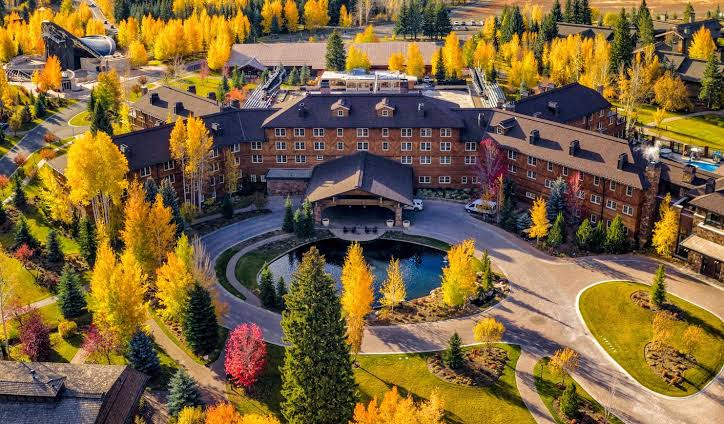
Sun Valley & Ketchum Vacation Home Guide: Hot Tubs, Saunas, and Fireplaces at 5,800 Feet
The Wood River Valley Second-Home Guide—Hot Tubs You Can Run From Your Phone, Snow-Load and Freeze Planning for a Spa Nobody’s Watching, Saunas Built for Après-Ski, Gas Fireplaces Set Up Right for Altitude, Wood Stoves That Work When the Power Doesn’t, and How We Deliver and Service It All From Twin Falls
A hot tub steaming under the stars after a day on Baldy. A soapstone stove radiating heat into a timber great room. A sauna at the edge of the snow, with the cold air waiting as the second half of the ritual. These are the reasons people buy in Sun Valley and Ketchum, and they’re the reasons the backyard and the hearth matter more here than almost anywhere we deliver. But a second home at 5,800 feet asks questions a primary residence never does: Who’s watching the spa when you’re in Boise or the Bay Area for three weeks? What does two feet of snow do to a cover? Will the gas fireplace light in an outage—and was it even set up for this elevation?
This is the guide for the Wood River Valley second-home owner. It covers what changes about hot tubs, saunas, and fireplaces at altitude and in absence: the remote-monitoring and vacation-mode features that let you run a spa from your phone, the snow-load and freeze planning that keeps it safe unattended, the sauna as the natural partner to a spa in a ski town, the high-altitude setup gas fireplaces need above 4,500 feet, the wood stoves that heat through a mountain outage, the local rules to know, and how we deliver and service all of it from our Twin Falls store.
From Leisure Time Inc., a family business serving Idaho since 1974. We’ve delivered to Ketchum, Sun Valley, Hailey, and Bellevue for decades, and we work with the property managers and builders who keep these homes running when the owners are away.
The Short Version
- Buy a spa you can monitor remotely. Hot Spring® and Caldera® spas with the Connected Spa Kit let you check and adjust temperature from your phone; FreshWater® IQ tests the water hourly and tells you—or your property manager—what it needs.
- Use vacation mode. The FreshWater Salt System’s low Output Levels and a lower set temperature cut costs while you’re gone, and Boost brings the spa back for your arrival.
- Plan for snow and freeze. Full-cavity insulation and freeze protection carry a spa through outages; placement away from roof-shed zones and a cover-care plan handle the snow.
- Gas fireplaces need altitude setup. Above 4,500 feet, gas appliances are derated and adjusted for thin air; at 5,800 feet, this isn’t optional. Choose models with battery backup for outages.
- A wood stove is outage insurance. EPA-certified soapstone or Idaho-built steel stoves heat with no electricity—and a soapstone stove radiates for hours after the fire dies.
- A sauna completes the après-ski. Heat, snow, soak, repeat.
- We serve the Wood River Valley from Twin Falls—site visits, delivery, installation, start-up, service plans, and coordination with your property manager.
Owning at 5,800 Feet: What Changes
Ketchum sits at about 5,850 feet, Sun Valley just under 6,000, Hailey around 5,300. Five things follow from that and from the fact that you’re often not there:
- Cold and snow. Winter lows well below zero, snow that stays from November to April, and roof loads that shed in avalanches onto whatever’s below.
- Thin air for gas appliances. Less oxygen means a gas fireplace certified at sea level burns differently; manufacturers derate and adjust above 4,500 feet. (Hot tub heaters and sauna heaters are electric and unaffected.)
- Outages. Mountain power goes down in storms, and nobody may be home to notice for days.
- Absence. A spa that sits unused for weeks still needs balanced, sanitized water and a working cover.
- Rules. Blaine County and the valley’s cities have thoughtful building codes, architectural review in many neighborhoods, dark-sky lighting ordinances, and short-term-rental rules that touch spas and fireplaces.
Hot Tubs for a Second Home
Run It From Your Phone
The most important feature for a vacation-home spa isn’t a jet—it’s connectivity. Hot Spring and Caldera spas accept the Connected Spa Kit, which puts the spa on your Wi-Fi and in the Hot Spring or Caldera app, so you can check the water temperature from Boise, turn the heat up the night before you drive in, and get alerts if something’s wrong. Pair it with FreshWater® IQ—included on Hot Spring Highlife® and Caldera Utopia® spas—and the spa tests its own chlorine, pH, and salt every hour and tells you exactly what it needs, which is the difference between a property manager who can keep the water right and one who’s guessing with test strips.
| Second-Home Feature | What It Does | Where You Get It |
|---|---|---|
| Connected Spa Kit + app | Monitor and set temperature, jets, and lights remotely; receive alerts | Optional on Hot Spring and Caldera spas |
| FreshWater® IQ Smart Monitoring | Tests chlorine, pH, and salt hourly; plain-language instructions on the control panel | Included on Highlife® and Utopia®; optional on Limelight® and Paradise® |
| FreshWater® Salt System | Generates chlorine automatically; water stays clean up to a year between drains—ideal for a spa that sits | Included on Highlife and Utopia; optional on the rest |
| Vacation Output Levels | Salt System Output Levels 1–2 run the cartridge an hour or two a day while you’re gone; Boost catches up before arrival | Every FreshWater Salt spa |
| Freeze protection | Circulates water or runs the heater automatically when temperatures drop | Every Hot Spring and Caldera |
| Full-cavity insulation | Holds heat for many hours in an outage; protects plumbing from freezing | Multi-density full foam on Highlife; FiberCor® on Limelight, Hot Spot®, and all Caldera |
Before you leave: test and balance the water, run a Boost, set the Salt System Output Level to 1 or 2, drop the set temperature ten degrees or so, lock the cover, and make sure the Connected Spa Kit is online. While you’re gone: glance at the app occasionally; have your property manager clear snow from the cover after big storms and check that the 10-day water-care reminder gets answered. The day before you arrive: raise the temperature and Output Level from the app and run a Boost. You’ll walk into a hot, balanced spa. Our Tech Explained guides on the Salt System and FreshWater IQ cover every setting.
Snow Load, Placement, and the Cover
Two feet of wet snow on a hot tub cover is hundreds of pounds, and a roof that sheds onto a spa can crush a cover or crack a lifter. In the Wood River Valley, placement comes first: keep the spa out from under eaves and roof valleys, or under a roof section with snow guards; give the cover lifter room to open against drifts; and keep a shoveled path to the steps. On the cover itself, a custom-fit, tapered cover is standard on every spa we sell; for a second home we recommend cover locks, a heavy-duty cover lifter, and a floating thermal blanket underneath. Have whoever checks the house brush the cover after storms—a cover that’s allowed to sag under snow wears out fast. Our cover guide covers the rest.
Outages When Nobody’s Home
This is where buying the right spa pays off. A full-foam or FiberCor spa with its cover locked is a well-insulated tank that holds heat for many hours, and the plumbing—which freezes first—is buried in insulation. Freeze protection kicks in as soon as power returns. For a home that sits empty through storm season, we also recommend a standby generator sized to carry the spa’s circulation pump and heater (we’ll give your electrician the draw), and the app so you know when power dropped. What you shouldn’t do is drain the spa for the winter: a full spa in a short outage is far safer than a drained one with water trapped in the lines. Our insulation explainer and cold-climate guide go deeper.
The Spas We Recommend
- Hot Spring Envoy® — the après-ski spa: a full-body lounge, a captain’s chair, 55 jets, two Moto-Massage® DX, full foam, salt system and IQ-ready. For legs that skied Baldy top to bottom.
- Hot Spring Grandee® — seven open seats in the same footprint; the spa for a house full of guests. See our Grandee vs. Envoy comparison.
- Caldera Cantabria® and Geneva® — Utopia Series with FreshWater IQ included and the UltraMassage® lounge; eight seats for the big lodge, six in a compact square for a tighter deck. Read the Cantabria review.
- Highlife Vanguard®, Aria®, and Jetsetter® LX — six seats open, five with a lounge, or three in a footprint that fits a Warm Springs or Elkhorn condo deck. Browse the Highlife Collection.
- Caldera Paradise Makena® and Salina® — FiberCor insulation and IQ-ready at a sweet-spot price. Every model is in our hot tub collection.
If the Home Is a Rental
Variable bather load is the water-care challenge of a short-term rental, and the FreshWater Salt System with IQ is built for it: the system generates chlorine continuously, IQ shows the turnover crew exactly what to add, and Boost resets the water between guests. Put cartridges and balancers on Autoship to the property, and ask us about a scheduled service plan so a technician—not a cleaner—is checking the spa. Blaine County and the cities regulate short-term rentals; confirm your permit covers a spa and any posted safety requirements.
Water and Power in the Wood River Valley
The Water
Ketchum, Sun Valley, and Hailey draw municipal water from wells in the Big Wood River aquifer, and it’s moderately hard—above the FreshWater Salt System’s 50 ppm calcium target, though generally not as extreme as the Magic Valley. Treat it at fill with a Vanishing Act® calcium remover (or an On The Go® softener on harder supplies) and pre-filter through a Clean Screen®. Homes on private wells in the foothills and up the side canyons may carry iron and manganese, which must be treated before a salt system runs. We test fill water free; bring a sample to Twin Falls or hand one to us at the site visit. Shop FreshWater products and read the FreshWater Method guide.
The Power
The valley is served by Idaho Power on seasonal, tiered rates of roughly 10 to 15 cents per kWh. A well-insulated Highlife or Utopia costs about $1.15 to $1.65 a day to run in winter when it’s in use—and noticeably less in vacation mode with the temperature lowered and the Output Level turned down. For a spa that spends most of the winter waiting for you, that’s a modest line item. Our cost-to-run guide has the full math.
Fireplaces at Altitude
A mountain house wants a fire, and at 5,800 feet there are two things to get right that a valley home can ignore.
Gas Fireplaces Need High-Altitude Setup
Gas appliances are certified with standard orifices for elevations up to about 4,500 feet. Above that, thinner air changes combustion, and manufacturers require the unit to be derated—roughly 4% of input per 1,000 feet—with orifices, pressure, or conversion kits adjusted for the elevation. At 5,800 feet, that’s not a footnote; a fireplace installed with sea-level settings will burn poorly, soot the glass, and shorten its own life. Our installers set up every gas unit for the home’s actual elevation and confirm it with the local inspector. If you already own a gas fireplace in the valley that sooted or struggled, altitude setup is the first thing to check. Our mountain-home fireplace guide explains it in depth.
Choose for Outages
Because mountain power fails in storms, pick a fireplace that keeps working without it. Heat & Glo’s direct-vent fireplaces with IntelliFire® Touch include battery backup, so the fire lights and burns when the grid is down—the Mezzo linear is the modern-mountain favorite, and our IntelliFire explainer shows how the backup works (and the one vent configuration that disables it). Kozy Heat’s millivolt Chaska 335S insert and Valor’s fireplaces run with no electrical connection at all.
The Wood Stove Is the Insurance Policy
For a house that may sit through a multi-day outage, nothing beats a wood stove. HearthStone’s soapstone stoves store the fire’s heat in 1¼-inch stone and keep radiating for hours after it dies—HearthStone rates them by hours of usable heat from one load, up to 30 on the right stove—and Idaho-built Kuma stoves are hard-working, no-nonsense heaters. Both are EPA 2020 certified, which Blaine County requires of new wood appliances and which keeps the valley’s winter air clear. A soapstone stove loaded before bed is a warm house at dawn, power or not. Read our soapstone explainer and browse the Fireplaces & Stoves collection and the Heat & Glo line.
The homes that handle Wood River Valley winters best have both: a modern gas fireplace with battery backup for the great room, and an EPA-certified wood stove—often in a lower level or family room—as the no-electricity heat source. The gas unit is the daily fire; the stove is what your caretaker lights when the power’s been out for a day and the forecast says three more. Ask us to spec the pair; the second appliance is often smaller than people expect.
Saunas: The Other Half of Après-Ski
Sun Valley invented American ski culture, and the sauna belongs in it. Heat the body in dry air at 170–190°F after a day on Baldy or Dollar, step out into the snow, soak in the spa, repeat—it’s the contrast ritual the Nordic world built around exactly this climate, and it’s why so many of our Ketchum customers own both a spa and a sauna. For a second home, a sauna has a second virtue: no water care, no fill water, no cover to shovel. It sits ready for months and heats up in an hour when you arrive.
- Outdoor barrel and cabin saunas pair naturally with a spa pad and look right in a mountain setting; site them out of the wind and off the roof-shed line, like the spa.
- Indoor saunas fit a mudroom, basement, or primary bath, and a glass-front unit off the great room is a design piece as much as a wellness one.
- Electrical: traditional heaters run on a dedicated circuit (often 240V); we size the heater to the room and coordinate it with the spa circuit on one electrician visit.
Browse our sauna collection, and see our wellness guides on the blog page.
Local Rules to Know
- Permits. Hot tubs need an electrical permit for the dedicated 230V/50A circuit through the City of Ketchum, Sun Valley, Hailey, or Bellevue, or Blaine County outside city limits, with inspection before the spa is energized. Gas fireplaces need a gas or mechanical permit and a licensed gas professional; wood stoves need a mechanical permit and must be EPA-certified. Saunas need an electrical permit for the heater.
- Barrier exemption. A hot tub with a locking ASTM safety cover—standard on every spa we sell—is exempt from the pool-fence requirement under the residential code Idaho uses.
- Architectural review. Many valley neighborhoods (Elkhorn, Warm Springs, and newer subdivisions) require design-review approval for a spa, pad, sauna, or screening. Submit before you pour; we provide spec sheets and a site sketch.
- Dark-sky lighting. Ketchum and Blaine County enforce dark-sky ordinances. Spa and sauna lighting that’s shielded and downward-facing keeps you compliant and keeps the stars where they belong; the LED systems on Hot Spring and Caldera spas are low-output and dimmable.
- Short-term rentals. If the home is rented, confirm your STR permit covers a spa and any posted-rule or safety requirements.
Our Idaho hot tub permit guide, electrical guide, and Idaho fireplace permit guide cover the code.
How We Serve the Wood River Valley From Twin Falls
Our nearest showroom is in Twin Falls, about an hour and a half down Highway 75, and it’s worth a stop on the drive in or out to wet-test a spa and see the stoves burning. For a second home, though, the service model is what matters, and ours is built for owners who aren’t there:
- Site visit at the property to plan snow-shed zones, wind, delivery path, venting, and clearances—scheduled around your visit or with your property manager.
- Delivery to the pad, positioned and leveled, or professional fireplace and stove installation set up for altitude.
- Electrician and gas-contractor coordination, including generator sizing for the spa.
- Start-up and connectivity setup—we put the spa on your Wi-Fi and in your app before we leave.
- Property-manager handoff. A one-page care sheet and a walkthrough for whoever checks the house: cover care, the 10-day reminder, what the IQ dashboard means, who to call.
- Scheduled service plans for spas and annual fireplace service, with factory-trained technicians who make regular Wood River Valley runs. See our Service Department.
- Autoship to the property for cartridges, filters, and balancers, and financing if you want it.
Much of the valley’s inventory is new construction or a remodel, and the cheapest moment to run the 230V spa circuit, pour the pad, set the sauna circuit, and rough in the fireplace venting is while the walls and yard are open. We send your builder a one-page spec for each appliance and coordinate with the design-review submission. Mention it at your electrical walkthrough and the whole house gets built around it.
Frequently Asked Questions
Can I control my hot tub remotely at my Sun Valley home?
Yes. Hot Spring and Caldera spas accept the Connected Spa Kit, which connects the spa to your Wi-Fi and the Hot Spring or Caldera app so you can check and set temperature, jets, and lights from anywhere and receive alerts. Add FreshWater IQ—included on Highlife and Utopia spas—and the spa tests its own chlorine, pH, and salt hourly and shows exactly what it needs, so you or your property manager can keep the water right between visits.
Will my hot tub freeze if the power goes out while I’m away?
Not quickly. A full-foam or FiberCor spa with a locked cover holds heat for many hours, its plumbing is buried in insulation, and freeze protection activates as soon as power returns. For a home that sits through storm season, we recommend a standby generator sized to carry the spa’s circulation and heater, and the app so you know when power dropped. Don’t drain the spa for winter—a full spa in a short outage is safer than a drained one with water in the lines.
Does a gas fireplace need special setup at 5,800 feet?
Yes. Gas appliances are certified with standard settings up to about 4,500 feet; above that, thinner air requires derating—roughly 4% of input per 1,000 feet—and adjustment of orifices, pressure, or a conversion kit for the elevation. A fireplace installed with sea-level settings in Ketchum will burn poorly and soot the glass. Our installers set up every gas unit for the home’s actual elevation and confirm it with the inspector.
Which fireplace works in a mountain power outage?
Any wood stove heats with no electricity, and a HearthStone soapstone stove keeps radiating for hours after the fire dies. Among gas fireplaces, Heat & Glo units with IntelliFire Touch battery backup light and burn without power (fans and lights don’t), as do millivolt or valve-based units like Kozy Heat’s Chaska 335S and Valor fireplaces. Many Wood River Valley homes pair a gas fireplace for daily use with a wood stove as outage insurance.
How should I prepare the spa when I leave for a few weeks?
Balance the water and run a Boost, set the Salt System Output Level to 1 or 2, lower the set temperature about ten degrees, lock the cover, and confirm the Connected Spa Kit is online. Have your property manager brush snow off the cover after storms and answer the 10-day water-care reminder. The day before you return, raise the temperature and Output Level from the app and run a Boost. You’ll arrive to a hot, balanced spa.
Do you deliver and service in Ketchum and Sun Valley?
Yes. Our Twin Falls store delivers, installs, and services hot tubs, saunas, and fireplaces throughout the Wood River Valley—Ketchum, Sun Valley, Hailey, Bellevue, and the side canyons—with site visits at the property, coordination with your builder or property manager, scheduled service plans, and Autoship to the home. Call (208) 933-4295 to schedule.
A second home in the Wood River Valley is built for the hours after the lifts close: the soak under the stars, the stove ticking in the great room, the sauna at the edge of the snow. The difference between a backyard that delivers those hours and one that becomes a worry from two hundred miles away is a handful of decisions made up front—a spa you can watch from your phone, a cover and a placement that respect the snow, a gas fireplace set up for the altitude, a wood stove for the night the power quits, and a dealer whose technicians already know the road up Highway 75. We’ve been making that drive for decades.
A spa that runs from your phone, a fire that works without the grid, and a dealer who knows the valley—that’s a Sun Valley second home done right.
Shop Hot Tubs: leisuretimeinc.com/collections/hot-tubs
Hot Spring Envoy: leisuretimeinc.com/products/envoy-5-person-hot-tub
Hot Spring Grandee: leisuretimeinc.com/products/grandee-7-person-hot-tub
Caldera Cantabria: leisuretimeinc.com/products/cantabria-8-person-hot-tub
Highlife Collection: leisuretimeinc.com/collections/hot-spring-highlife-series
Shop Saunas: leisuretimeinc.com/collections/saunas
Shop Fireplaces & Stoves: leisuretimeinc.com/collections/fireplaces-stoves
FreshWater Products & Method Guide: leisuretimeinc.com/collections/freshwater | freshwater-method
FreshWater Salt System (Hot Spring): hotspring.com/shop/water-care/freshwater-salt-system
Tech Explained: FreshWater IQ: leisuretimeinc.com/blogs/spas-pools/tech-explained-freshwater-iq-automated-water-monitoring
Choosing the Right Fireplace for a Mountain Home: leisuretimeinc.com/blogs/fireplaces-stoves/choosing-the-right-fireplace-for-a-mountain-home
Best Hot Tubs for Idaho Winters: leisuretimeinc.com/blogs/spas-pools/best-hot-tubs-for-idaho-winters-cold-climate-buyers-guide
Twin Falls Hot Tub Buyer’s Guide: leisuretimeinc.com/blogs/spas-pools/twin-falls-hot-tub-buyers-guide-wind-water-magic-valley
Service Department: leisuretimeinc.com/pages/service-department
Financing: leisuretimeinc.com/pages/financing
Store Locations: leisuretimeinc.com/pages/store-locations
Twin Falls: (208) 933-4295 • Boise: (208) 376-0180 • Idaho Falls: (208) 523-4633