
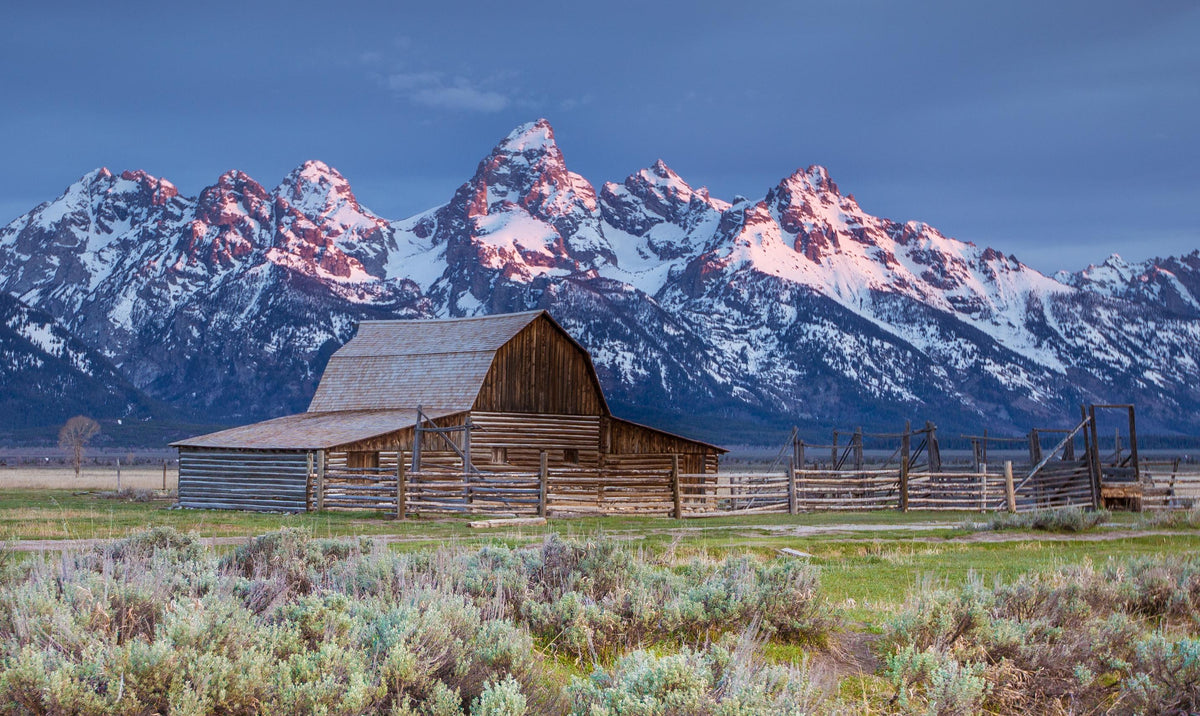
Teton Valley & Driggs Hot Tub Guide: Spas That Survive Grand Teton Winters
The Guide for the Coldest Place We Deliver—What Thirty-Below Nights Actually Do to a Hot Tub, the Insulation and Covers That Beat It, Freeze and Outage Planning for Driggs, Victor, and Tetonia, Hard Well Water and Cooperative Power, the Hot Spring and Caldera Spas Built for It, and How to Get One Over Pine Creek Pass Before the Snow
Teton Valley is the coldest place we deliver a hot tub, and we deliver a lot of them there. Driggs sits at about 6,100 feet on a valley floor that pools cold air, winter nights drop to twenty and thirty below with some regularity, the snow is deep and the wind off the Tetons finds every gap in a cover. It’s also one of the best places on earth to own a spa: a 104-degree soak with the Grand looming over the valley after a day at Targhee is the kind of thing people move here for.
The catch is that not every hot tub can do it. A spa that’s fine in Boise can struggle in Driggs, and the difference isn’t luck—it’s physics, insulation, and setup. This guide is built around that: what extreme cold actually does to a hot tub, the insulation and cover choices that beat it, freeze and outage planning for a valley where the power goes down in storms, the hard well water and cooperative power that shape the rest of the decision, the Hot Spring® and Caldera® spas we trust at 30 below, the second-home features most Teton Valley buyers need, local permits, and how we deliver and service over Pine Creek Pass from Idaho Falls.
From Leisure Time Inc., a family business serving Idaho since 1974. Our Idaho Falls store has delivered to Driggs, Victor, and Tetonia for decades—and our technicians know what the valley does to a spa in February.
The Short Version
- Cold is the whole decision. At 30 below, a spa fights twice the temperature difference it faces in Boise. Insulation, cover, and placement aren’t features here; they’re the purchase.
- Buy full-cavity insulation—Hot Spring Highlife’s multi-density full foam first, FiberCor® on the rest of Hot Spring and every Caldera—and never a partially insulated spa.
- The cover is the second heater. A custom-fit tapered cover, locks for the wind, a floating thermal blanket, and a brush-off after every storm.
- Plan for outages. Freeze protection and insulation carry a spa for many hours; a generator sized to the spa carries it for days. Never drain it in a panic.
- The water is hard and often from a well. Treat hardness and metals at fill. We test for free.
- Deliver before the snow—ideally September or October—and if it’s a second home, buy a spa you can watch from your phone.
What Thirty Below Actually Does to a Hot Tub
A hot tub loses heat in proportion to the difference between the water and the air around it. In Boise on a cold January night—say 25°F—a 104°F spa is fighting a 79-degree gap. In Driggs at 30 below, it’s fighting a 134-degree gap: the spa is losing heat to the air at nearly twice the rate for the same insulation. Every weakness in the design shows up as a running heater and a bill, and in a bad enough case as water that can’t hold temperature at all.
Heat escapes four ways, and in Teton Valley each one gets worse:
- The water surface and cover—the biggest path, made worse by wind pulling warmth off a cover’s seams and edges.
- The shell and cabinet walls—where the cabinet insulation does its work.
- The plumbing—dozens of feet of pipe that radiate heat if they sit in open air and, critically, freeze first in an outage.
- The base—conducting heat into a pad that’s been frozen since November.
A spa that survives a Teton winter is simply one that closes all four paths well. Here’s how.
Insulation: The One Thing You Can’t Fix Later
Covers can be upgraded, placement can be changed, a blanket can be added. Insulation is built into the spa the day it leaves the factory. In Teton Valley we only recommend spas that fill the entire cabinet cavity so the plumbing is buried in insulation, not hanging in open air—and we rank them by how much insulation they pack in:
| Insulation System | Found In | Why It Matters at 30 Below |
|---|---|---|
| Multi-density full foam | Hot Spring Highlife® (Grandee, Envoy, Vanguard, Aria, Sovereign, Jetsetter) | Six foam densities layered through shell, cabinet, and base—the most intensive system we carry and our first recommendation for the valley floor |
| FiberCor® | Hot Spring Limelight® and Hot Spot®; every Caldera series | Full-cavity wool-like fiber at four times the density of standard foam, same insulating value, serviceable and mold-proof; Caldera Utopia® adds a thermal isolated base pan that cuts heat loss to a frozen pad |
| Partial or perimeter insulation | Many competitors | Plumbing sits in open air inside the cabinet—the first thing to freeze and the biggest heat leak. Not for Teton Valley |
Every Hot Spring and Caldera we sell is certified to California Energy Commission standards, the strictest efficiency test in the industry. Our insulation explainer walks through the engineering.
The Cover: Your Second Heater
In a 134-degree gap, the cover matters as much as the cabinet. What we set up on every Teton Valley spa:
- A custom-fit, tapered cover—standard on every spa we sell. Hot Spring’s WeatherPro™ cover and Caldera’s equivalent are built to seal tight at the shell.
- Cover locks on every strap, plus wind straps on exposed sites. The valley wind will lift an unsecured cover.
- A floating thermal blanket on the water under the cover. It cuts evaporation and surface heat loss dramatically and is the best few hundred dollars a Driggs owner can spend.
- A brush-off after every storm. A cover left under two feet of snow absorbs water, sags, and lets heat and wind under the edges. Keep a brush by the steps.
- A replacement before it’s heavy. When a cover gets waterlogged, its insulation is gone. Our cover guide explains what to look for.
Site the spa where the house, garage, or a solid fence breaks the prevailing wind, keep it out from under eaves and roof valleys that shed snow, and mount the cover lifter so the house sits between the open cover and the gusts. A sheltered spa in Driggs runs noticeably cheaper and safer than the same spa in the middle of an open yard. We plan this at the site visit—it’s the first thing we look at.
Freeze Protection and Outages
Teton Valley power goes down in storms, and a spa may sit for hours—or, at a second home, days—before anyone notices. What keeps it safe:
- Built-in freeze protection. Every Hot Spring and Caldera circulates water or runs the heater automatically when temperatures drop, as soon as power is available.
- Full-cavity insulation and a locked cover. With the power off, a full-foam or FiberCor spa is a well-insulated tank of warm water that holds heat for many hours—and its plumbing, buried in insulation, is protected far longer than exposed pipe.
- A standby generator sized to the spa. For a valley-floor home, and especially a second home, we recommend a generator that carries the spa’s circulation pump and heater through a multi-day outage. We’ll give your electrician the spa’s draw.
- Remote monitoring. The Connected Spa Kit puts the spa in the Hot Spring or Caldera app, so you know the moment the power drops and can confirm the temperature when it’s back.
- Don’t drain it. A full, insulated spa in a short outage is far safer than a drained one with water trapped in the lines. Draining is a last resort for a weeks-long outage, done properly—call us first.
The Water: Hard, and Often From a Well
Driggs, Victor, and Tetonia draw municipal water from wells in the Teton Valley aquifer, and much of the valley outside town is on private wells. Both tend to run hard—well above the 50 ppm calcium target (25–75 acceptable) of the FreshWater® Salt System on Hot Spring and Caldera spas—and wells can carry iron and manganese that must be treated before a salt system or any oxidizer runs. Treat the water on the way in, every fill:
| Your Fill Water | What to Use |
|---|---|
| 75–150 ppm calcium hardness | FreshWater® Vanishing Act® calcium remover (included in the FreshWater Salt start-up kit) |
| 150–300 ppm | Vanishing Act® XL |
| 300+ ppm | On The Go® portable water softener on the fill hose, reusable for the life of the spa |
| Any well water | Clean Screen® pre-filter on the hose, and metal treatment at fill if iron or manganese is present—before the salt system runs |
Bring a sample from the spigot you’ll fill from to our Idaho Falls store, or hand one to us at the site visit—the test is free and it decides your start-up. Once the fill is right, the FreshWater Salt System generates its own chlorine and keeps water clean up to a year between drains, which in Teton Valley means fewer mid-winter refills from a frozen hose bib. Shop FreshWater products, read the FreshWater Method guide, and put cartridges and balancers on Autoship.
The Power: Cooperative Rates in the Valley
Most of Teton Valley is served by Fall River Electric, a member-owned cooperative whose residential rates run below the national average. That’s good news for a spa that works harder here than anywhere else: a well-insulated Hot Spring or Caldera in Driggs costs more to run in January than the same spa in Boise—the physics above sees to that—but with cooperative rates, full-cavity insulation, a good cover, and a blanket, it stays a modest line item rather than a surprise. Bring us your rate and we’ll estimate your winter cost; our cost-to-run guide explains the math.
The Spas We Trust at Thirty Below
We carry the full Hot Spring and Caldera lines. For the valley floor, these are our first recommendations:
Hot Spring Highlife® — the Valley-Floor Standard
Multi-density full foam, a titanium No-Fault® 4,000-watt heater, the SilentFlo 5000® circulation pump moving water around the clock, the FreshWater Salt System included, and FreshWater IQ ready. The Grandee® (seven open seats) and Envoy® (five seats with a full-body lounge) share the same footprint and equipment—our comparison helps you choose. The Vanguard® and Aria® bring the same insulation to a compact 7½-foot square, and the Jetsetter® LX fits a small deck. Browse the Highlife Collection.
Caldera Utopia® — FiberCor Plus the Base Pan
Utopia spas add a thermal isolated base pan that minimizes contact with a frozen pad—a real advantage in Driggs—on top of FiberCor insulation, the EnergyPro® circulation pump that returns its energy to the water as heat, and FreshWater IQ included, which tests the water hourly. The eight-seat Cantabria® is the lodge spa; the six-seat Geneva® puts the UltraMassage® lounge in a compact square. Read the Cantabria review.
Paradise, Limelight, and the Value Lines
Caldera’s Paradise Series (Makena®, Salina®, Reunion®) and Hot Spring’s Limelight Collection are FiberCor-insulated, salt-ready, and CEC-certified—solid Teton Valley spas at a lower price, best set in a sheltered spot with a thermal blanket. Every model is in our hot tub collection, and our cold-climate guide goes deeper on all of them.
Most Teton Valley spas earn their keep between 4 and 6 p.m. in winter: legs that skied Grand Targhee from first chair, a dark valley at 10 below, and a lounge seat with the Moto-Massage® DX sweeping your back. If recovery is why you’re buying, sit in the Envoy’s lounge and the Cantabria’s UltraMassage seat before you decide—both are at our Idaho Falls showroom to wet-test.
If It’s a Second Home
A large share of Teton Valley spas go into homes that sit empty for weeks at a time, and the right spa takes care of itself while you’re gone. The Connected Spa Kit puts a Hot Spring or Caldera in your phone—check temperature from anywhere, warm it up the night before you drive in, get alerts. FreshWater IQ (included on Highlife and Utopia) tests the water hourly and tells you or your caretaker exactly what it needs. Before you leave: balance the water, run a Boost, set the Salt System’s Output Level to 1 or 2, lower the temperature ten degrees, lock the cover. While you’re gone: glance at the app and have someone brush the cover after storms. The day before you return: raise the temperature and Output Level from the app and run a Boost. Our FreshWater IQ explainer covers every setting, and we hand your caretaker a one-page care sheet at start-up.
Permits in Driggs, Victor, Tetonia, and Teton County
- Electrical permit. Every full-size Hot Spring and Caldera runs on a dedicated 230-volt, 50-amp circuit with a GFCI-protected disconnect, installed by a licensed electrician who pulls the permit through the City of Driggs, Victor, or Tetonia, or Teton County outside city limits. The spa can’t be energized until it passes inspection.
- Barrier exemption. Under the residential code Idaho uses, a hot tub with an ASTM-rated locking safety cover—standard on every spa we sell—is exempt from the pool-fence requirement. Keep it locked; it’s a code item and a wind item.
- Setbacks and design review. Setbacks vary by jurisdiction, and many valley subdivisions have design-review requirements for a spa, pad, or screening. We confirm them at the site visit and provide spec sheets for your submission.
- The pad. A filled Grandee weighs over 5,800 pounds with people in it. A reinforced concrete pad or a deck engineered for the spa’s weight plus Teton Valley snow load is required.
Our Idaho hot tub permit guide and electrical guide cover the details.
Delivery Over the Pass, and Service After
Our Idaho Falls showroom is about an hour and a half from Driggs by way of Pine Creek Pass or Swan Valley, and the drive is worth it to wet-test a spa and bring a water sample. For the home itself, here’s what a Teton Valley purchase includes:
- A site visit at the property to plan wind shelter, snow-shed zones, delivery path, pad or deck load, and setbacks.
- Delivery timed to the season—to the pad, positioned and leveled.
- Electrician coordination on the 230V circuit, permit, inspection, and generator sizing.
- Free fill-water testing and a start-up kit sized to valley well water.
- Start-up, connectivity, and a walkthrough—salt system running, spa in your app, cover locked, winter care explained; a care sheet for a caretaker if it’s a second home.
- In-house service from factory-trained technicians who make regular Teton Valley runs, plus full Hot Spring and Caldera warranty support. See our Service Department.
- Supplies shipped from Idaho Falls, trade-ins, and financing.
A spa comes over the pass on a truck and goes to the pad on a cart, and both need clear, firm ground. In Teton Valley that means scheduling delivery for September or October, pouring the pad and running the electrical before the ground freezes, and soaking by the first big storm instead of waiting for spring. We can often still deliver to plowed, accessible lots in winter—but earlier is easier, and the valley’s good installation weather is short.
Frequently Asked Questions
Can a hot tub really handle 30-below winters in Driggs?
Yes—the right one can, and hundreds do every winter in Teton Valley. The keys are full-cavity insulation (Hot Spring Highlife’s multi-density full foam, or FiberCor on the rest of Hot Spring and every Caldera), a custom-fit cover with locks and a floating thermal blanket, wind-sheltered placement, and built-in freeze protection. A partially insulated spa with exposed plumbing is the kind that fails here; a full-cavity spa with a good cover holds 104°F all winter.
What happens to my hot tub in a Teton Valley power outage?
A full-foam or FiberCor spa with its cover locked holds heat for many hours, and its plumbing—buried in insulation—is protected long after exposed pipe would freeze. Freeze protection activates as soon as power returns. For a valley-floor home or a second home, add a standby generator sized to the spa’s circulation pump and heater, and the Connected Spa Kit so you know when the power drops. Don’t drain the spa in a short outage; call us before draining for anything longer.
Which hot tub is best for Teton Valley?
For the valley floor, Hot Spring’s Highlife Collection—the Grandee or Envoy for families, the Vanguard or Aria for a compact pad—because multi-density full foam is the most intensive insulation we carry. Caldera’s Utopia Series (Cantabria, Geneva) is the other top pick, adding a thermal isolated base pan to FiberCor insulation. Paradise and Limelight spas work well in sheltered spots with a thermal blanket.
Is Teton Valley well water a problem for a spa?
It’s hard and can carry iron and manganese, which are easily handled if you treat at fill: a Vanishing Act calcium remover or On The Go softener for hardness, a Clean Screen pre-filter, and metal treatment before the salt system runs. Untreated, hard water scales the heater and salt cartridge and metals stain the shell. We test fill water free at the Idaho Falls store or at your site visit.
Can I manage a Driggs spa from Jackson or out of state?
Yes. The Connected Spa Kit puts a Hot Spring or Caldera in your phone for temperature, jets, lights, and alerts from anywhere, and FreshWater IQ—included on Highlife and Utopia—tests the water hourly and shows exactly what to add, so a caretaker can keep it right. Set vacation mode before you leave, have someone brush the cover after storms, and warm it up from the app the night before you arrive.
Do you deliver and service in Driggs, Victor, and Tetonia?
Yes. Our Idaho Falls store delivers, installs, and services hot tubs throughout Teton Valley—Driggs, Victor, Tetonia, and the surrounding county—with site visits at the property, caretaker handoffs, scheduled service, and supplies shipped or on Autoship. Call (208) 523-4633, and if you want to soak this winter, call soon so we deliver before the snow.
Teton Valley is hard on hot tubs and perfect for soaking, and the gap between the two is a handful of decisions: a spa that fills its cabinet with insulation, a cover treated like the heater it is, a sheltered spot out of the wind and the roof’s snow, a plan for the outage that’s coming, water treated on the way in, and a delivery scheduled before the pass turns white. Get those right and the Grand is the last thing you see before the steam closes in every night from now until April.
Built for the cold, set for the wind, watched from your phone, and delivered by people who know the pass—that’s a hot tub that survives a Teton winter.
Shop Hot Tubs: leisuretimeinc.com/collections/hot-tubs
Highlife Collection: leisuretimeinc.com/collections/hot-spring-highlife-series
Hot Spring Grandee: leisuretimeinc.com/products/grandee-7-person-hot-tub
Hot Spring Envoy: leisuretimeinc.com/products/envoy-5-person-hot-tub
Caldera Cantabria: leisuretimeinc.com/products/cantabria-8-person-hot-tub
Shop Caldera Spas: leisuretimeinc.com/collections/caldera-hot-tubs
Tech Explained: Hot Tub Insulation: leisuretimeinc.com/blogs/spas-pools/tech-explained-full-foam-vs-fibercor-vs-sunstrong-insulation
Best Hot Tubs for Idaho Winters: leisuretimeinc.com/blogs/spas-pools/best-hot-tubs-for-idaho-winters-cold-climate-buyers-guide
How to Choose a Hot Tub Cover: leisuretimeinc.com/blogs/spas-pools/how-to-choose-a-hot-tub-cover
FreshWater Products & Method Guide: leisuretimeinc.com/collections/freshwater | freshwater-method
FreshWater Salt System (Hot Spring): hotspring.com/shop/water-care/freshwater-salt-system
Tech Explained: FreshWater IQ: leisuretimeinc.com/blogs/spas-pools/tech-explained-freshwater-iq-automated-water-monitoring
What It Really Costs to Run a Hot Tub in Idaho: leisuretimeinc.com/blogs/spas-pools/how-much-does-it-really-cost-to-run-a-hot-tub-in-idaho-real-numbers
Idaho Hot Tub Permit & Code Guide: leisuretimeinc.com/blogs/spas-pools/idaho-hot-tub-permit-code-guide
Hot Tubs in Idaho Falls: leisuretimeinc.com/blogs/spas-pools/hot-tubs-in-idaho-falls-snake-river-water-winter-idaho-falls-power
Service Department: leisuretimeinc.com/pages/service-department
Financing: leisuretimeinc.com/pages/financing
Store Locations: leisuretimeinc.com/pages/store-locations
Idaho Falls: (208) 523-4633 • Boise: (208) 376-0180 • Twin Falls: (208) 933-4295