
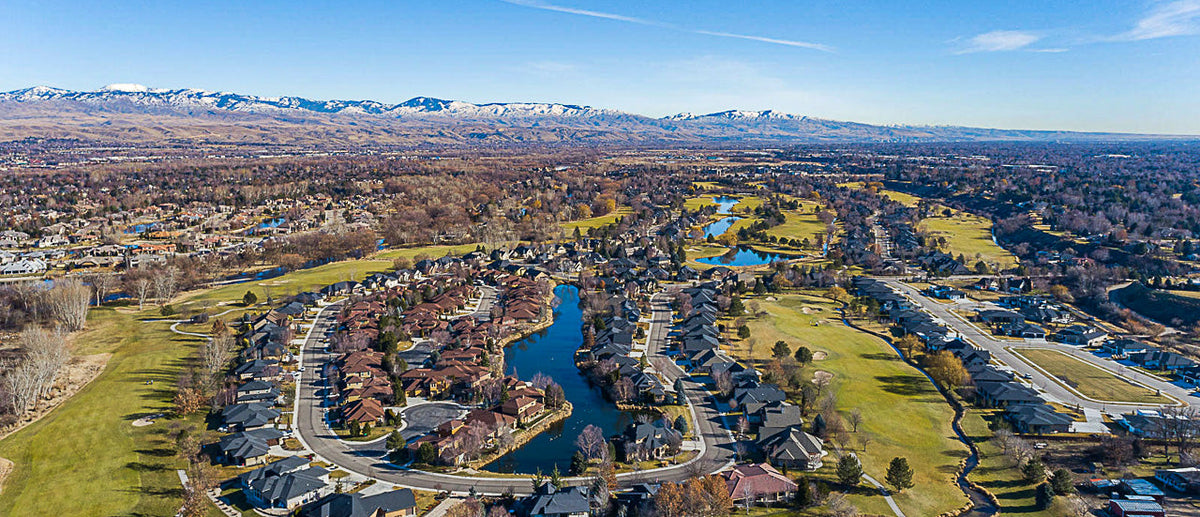
Hot Tubs in Meridian, Eagle, and Star: Subdivision Setbacks, HOA Rules, and New-Construction Pads
The West Treasure Valley Buyer’s Guide—How to Get Your HOA’s Approval Without a Fight, What Meridian, Eagle, and Star Require for Setbacks and Permits, Why the Cheapest Time to Prep for a Spa Is Before the Sod Goes Down, Pad Specs That Pass Inspection, and the Hot Spring and Caldera Spas That Fit a Subdivision Yard
Meridian, Eagle, and Star are growing faster than almost anywhere in Idaho, and a lot of that growth looks the same: a new home in a planned subdivision, an HOA with a thick set of CC&Rs, a backyard that’s still dirt and a pile of sod, and a family that wants a hot tub in it. That’s a great situation to be in—you can do everything right from the start—but it comes with three questions nobody answers until it’s too late: What will the HOA approve? How close to the fence can it go? And what has to happen before the landscapers show up?
This is the guide for exactly that buyer. We’ll walk through HOA architectural approval the way it actually works in West Ada subdivisions, the setback and permit basics for each of the three cities, how to coordinate a spa with a new build (and why doing it early saves real money), the pad specs that pass inspection, and the Hot Spring® and Caldera® spas we recommend for subdivision-sized yards. Then we’ll cover the Treasure Valley water and Idaho Power math briefly, since they matter here too.
From Leisure Time Inc., a family business serving Idaho since 1974, with a Boise showroom and service team that delivers to Meridian, Eagle, and Star every week. When you buy a spa from us, the people who help with your HOA packet, set the spa on the pad, and service it later are the same people.
The Short Version
- Get HOA approval before you pour anything. Most West Ada HOAs require Architectural Committee sign-off for a hot tub, pad, screening, and sometimes the cover color. Submit a simple site plan and allow two to four weeks.
- Setbacks are measured to the spa, not the pad. Each city has its own rules for accessory structures; most subdivision yards accommodate a spa a few feet off the rear and side lines, but you confirm with the city and the CC&Rs—and we help.
- On a new build, prep before the sod. Run the 230V circuit and pour the pad while the backyard is still open and the electrician is already on site. It’s the cheapest it will ever be.
- The pad is 4 inches of reinforced concrete, level, sized to the spa—or an engineered deck. A filled Grandee® weighs over 5,800 pounds with people in it.
- Pick a spa for the yard you have. Compact Highlife® and Utopia® models fit a 10-by-10 corner; the Grandee and Cantabria® need a bigger footprint and a wider delivery path.
- Treasure Valley water is moderately hard and Idaho Power is tiered—both manageable, and both reasons to buy an efficient, salt-system spa and test your fill water free.
HOA Rules: Getting Approval Without a Fight
Nearly every subdivision in Meridian, Eagle, and Star is governed by CC&Rs, and nearly all of them treat a hot tub as an improvement that needs Architectural Review Committee (ARC) approval before installation—the same process as a fence, a shed, or a patio cover. The rules vary by community, but after years of helping customers through them, the pattern is consistent. HOAs typically care about:
- Placement: usually rear yard only, not visible from the street, and sometimes a minimum distance from the neighbor’s fence that’s stricter than the city’s.
- The pad and any structure: a concrete pad is almost always fine; pergolas, gazebos, and privacy screens often need their own approval and height limits.
- Screening: some communities ask that equipment panels or the spa itself be screened from adjacent lots with landscaping or fencing.
- Appearance: cabinet and cover colors that blend with the home are an easy yes; a few HOAs specify neutral tones.
- Drainage: where drain water goes—never onto a neighbor’s lot or into a storm drain.
- Noise: rarely an issue with modern spas, but some CC&Rs mention quiet hours; a quality spa’s circulation pump is nearly silent.
What to Submit
A good ARC packet is simple and complete, and it gets approved faster. Include a plat or site sketch showing the spa’s location with distances to property lines and the house; the spa’s dimensions and a photo or spec sheet; the pad size and material; the electrical disconnect location; the cover and cabinet colors; and any screening or landscaping you plan. We provide the spec sheets, dimensions, and color swatches for any Hot Spring or Caldera, and we’ll sketch the site plan with you after the site visit.
The most expensive mistake we see in West Ada subdivisions is a pad poured in the wrong spot. An HOA that would have approved the spa four feet to the left can require the pad to be removed and repoured, and some can fine the homeowner in the meantime. Submit first, pour second. Most ARCs respond in two to four weeks, and many approve a well-documented hot tub request on the first pass. Build that time into your plan and you’ll never have a problem.
Setbacks and Permits in Meridian, Eagle, and Star
Beyond the HOA, each city regulates where a hot tub can sit and requires an electrical permit to power it. The specifics differ by city and by zoning district, so treat this as the map, not the ruling—and let us confirm the numbers for your lot.
| City | Who Permits It | What to Expect |
|---|---|---|
| Meridian | City of Meridian Building Division (electrical permit); Planning for setback questions | Hot tubs are treated as accessory improvements with side and rear setbacks that vary by zone; most subdivision lots accommodate a spa a few feet off the lines. The largest city in the group, with the most standardized process. |
| Eagle | City of Eagle Building Department | Similar accessory-structure setbacks; foothill and larger-lot subdivisions often have slope and easement considerations. Many Eagle neighborhoods also have the most detailed CC&Rs in the valley. |
| Star | City of Star Building Department | A smaller city with a growing building department; newer subdivisions, frequent new-construction coordination, and some lots still on private wells. |
| Unincorporated Ada County | Ada County Development Services | Applies to homes outside city limits between the three cities; different setbacks and a county electrical permit. |
The Rules That Are the Same Everywhere
- Electrical permit. Every full-size Hot Spring and Caldera runs on a dedicated 230-volt, 50-amp circuit with a GFCI-protected disconnect at least five feet from the spa and within sight of it, installed by a licensed electrician who pulls the permit. The spa can’t be energized until it passes inspection.
- Barrier exemption. Under the residential code Idaho uses, a hot tub with an ASTM-rated locking safety cover is exempt from the pool-fence requirement—and every spa we sell comes with one. (Your subdivision fence covers the rest.)
- Measure to the spa. Setbacks are measured to the edge of the spa, so a spa set on a larger pad still has to clear the line. Plan for cover-lifter clearance (about 18–24 inches behind the spa) and equipment access on one side.
- Easements. Utility and drainage easements along rear lot lines are common in new subdivisions and can’t hold a permanent pad. Your plat shows them; we check.
Our Idaho hot tub permit guide and electrical guide cover the code in depth.
New Construction: Prep Before the Sod Goes Down
If your home is still being built or your backyard is still dirt, you’re in the best possible position—and the window is short. Once the fences are up, the sod is laid, and the electrician has left, every one of these items costs more. Coordinate with your builder on:
- The 230V circuit. Have the electrician run the dedicated 50-amp circuit and set the GFCI disconnect while the house is being wired. Trenching conduit across open dirt costs a fraction of cutting through finished landscaping, and you avoid a second permit trip. We supply the spa’s exact electrical specs to your builder’s electrician.
- The pad, with the patio. If the builder is pouring a patio, have them extend or add the spa pad in the same pour—same crew, same truck, same inspection. Give them the spa footprint and the specs below.
- Grading and drainage. The pad must be level, and the yard must drain away from it. Settle this with the builder’s grading plan before sod; a pad that holds water or sits in a low spot is a problem forever.
- Delivery access. A spa is delivered on its side on a cart and needs a clear path: a gate or fence opening at least 36 inches wide (wider is better), no tight turns, and no steps. On a new build, the easiest answer is to deliver before the fence goes up. If the fence is first, plan a double gate.
- Sprinklers and landscaping. Keep sprinkler heads from spraying the spa cabinet and cover, leave the equipment-panel side clear of plantings, and run the irrigation plan around the pad, not under it.
- HOA timing. Submit the ARC packet while the house is under construction so approval lands before the backyard is finished.
Builders in Meridian, Eagle, and Star coordinate hot tubs all the time; they just need to know early. Once you’ve chosen a spa, we send a one-page spec sheet with the footprint, pad size, electrical requirements, and disconnect location that your builder’s electrician and concrete crew can work from. Mention the spa at your pre-construction or electrical walkthrough, and the whole backyard gets built around it instead of retrofitted later.
Pad Specs That Pass Inspection
A hot tub full of water and people is one of the heaviest things on your property, and it has to sit dead level for the shell, plumbing, and cover to work as designed. Here’s what Hot Spring and Caldera require and what inspectors look for:
| Element | Specification |
|---|---|
| Material | Reinforced concrete (rebar or wire mesh), or an engineered deck designed for the spa’s filled weight; compacted pavers over a proper base are acceptable on some sites—ask us |
| Thickness | 4 inches minimum |
| Size | The spa’s footprint plus a margin: at least the full base of the spa, ideally 6–12 inches larger on each side, with extra depth behind for the cover lifter and a step |
| Level | Flat and level in both directions; no slope for drainage under the spa (the yard drains around it) |
| Load to plan for | Grandee®: about 5,810 lbs filled with seven adults; Envoy®: about 5,455 lbs; a Cantabria® is heavier. Standard decks are not designed for this |
| Clearances | Equipment-panel side accessible; 18–24 inches behind for a cover lifter; disconnect 5+ feet away and in sight |
Spas That Fit a Subdivision Yard
West Ada lots range from compact patio homes to half-acre Eagle foothill parcels, and the right spa depends on the space. We carry the full Hot Spring and Caldera lines at our Boise showroom; here’s how we match them to yards:
Compact Corners (a 10-by-10-foot pad or less)
Hot Spring’s Jetsetter® and Jetsetter® LX seat three in a footprint that fits a patio-home corner, with full Highlife insulation and the FreshWater® Salt System; the rectangular Sovereign® seats five with a lounge in a long, narrow shape that hugs a fence line. Caldera’s new three-seat Ravello® brings Utopia-level features to a small pad, and the two-person Vacanza® Aventine® is the smallest spa we sell. Browse the Highlife Collection and the Caldera line for exact dimensions.
Standard Yards (a 9-by-9 to 10-by-10-foot pad)
The sweet spot for most Meridian and Star subdivisions. The five-seat Highlife Aria® (with a lounge) and six-seat Vanguard® (open seating) both sit on a roughly 7½-foot-square base; Caldera’s six-seat Geneva® puts the UltraMassage® lounge in a 7’5” square, and the Paradise Makena® and Salina® offer FiberCor® insulation and four to six Circuit Therapy stations at a sweet-spot price.
Big Yards and Big Families
The seven-seat Hot Spring Grandee and five-seat Envoy share an 8’4” by 7’7” footprint, and the eight-seat Caldera Cantabria is a full 9 feet long—all three need a larger pad and, importantly, a wider delivery path. Our Grandee vs. Envoy comparison and Cantabria review cover them in depth, and every model is in our hot tub collection.
Two Treasure Valley Basics: Water and Power
The Water
Meridian, Eagle, and Star draw municipal water from deep Treasure Valley wells, and it’s moderately hard—well above the 50 ppm calcium target of the FreshWater Salt System on Hot Spring and Caldera spas, though not as extreme as the Magic Valley. Treat it at fill with a Vanishing Act® calcium remover (or an On The Go® softener on harder supplies), pre-filter through a Clean Screen®, and it’s a non-issue. Homes on private wells in rural Star and the Eagle foothills may also carry iron and manganese, which must be treated before a salt system runs. We test fill water free at the Boise showroom; shop FreshWater products and read the FreshWater Method guide.
The Power
The whole West Treasure Valley is served by Idaho Power on seasonal, tiered rates of roughly 10 to 15 cents per kWh—below the national average, but tiered, which means insulation and cover quality show up directly on the bill. A well-insulated Highlife or Utopia costs about $1.15 to $1.65 a day to run in winter here and far less in summer. Our cost-to-run guide has the full math; our cold-climate guide covers the insulation.
What Buying From Our Boise Showroom Actually Includes
- Wet-test before you buy. Spas are filled and running on the floor. Bring a swimsuit.
- HOA packet support. Spec sheets, dimensions, color swatches, and a site sketch for your ARC submission.
- Builder coordination. A one-page spec for your builder’s electrician and concrete crew on new construction.
- Site visit to confirm placement, setbacks, easements, and delivery path, then delivery to the pad, positioned and leveled.
- Electrician coordination on the 230V circuit, permit, and inspection.
- Free fill-water testing and a matched start-up kit.
- In-house service from Boise—factory-trained technicians covering Meridian, Eagle, Star, Kuna, Nampa, and Caldwell, plus full Hot Spring and Caldera warranty support. See our Service Department.
- Trade-ins and financing. Ask about trade-in credit on an old spa; our financing options fit a new-home budget.
From Idea to Soaking: A Subdivision Timeline
Because HOA approval adds a step, plan on about six weeks—less if your ARC is quick, and much less if the pad and electrical are going in with the house.
- Week 1 — Visit, wet-test, and choose. Narrow it to one or two spas at the Boise showroom. Bring your plat and photos of the yard.
- Week 1 — Pull your CC&Rs and ARC form. Most HOAs post them online or through the management company. Note placement, screening, and color rules.
- Week 2 — Site visit and ARC submission. We confirm setbacks, easements, and delivery path, sketch the site plan, and you submit the packet.
- Weeks 2–5 — Approval and prep. While the ARC reviews, bring us a water sample, line up the electrician, and—on a new build—get the circuit and pad into the builder’s schedule.
- Week 5 — Pad and electrical. With approval in hand, pour the pad and run the circuit; the electrician pulls the city permit.
- Week 6 — Delivery, fill, and start-up. We deliver and level, you fill through the pre-filter while the electrical passes inspection, and we start up the salt system and walk you through the controls. Then you soak.
Frequently Asked Questions
Do I need HOA approval for a hot tub in Meridian, Eagle, or Star?
Almost always. Most West Ada subdivisions require Architectural Review Committee approval for a hot tub, its pad, and any screening or structure, just as they do for fences and sheds. Submit a simple packet—site sketch with setbacks, spa dimensions and spec sheet, pad details, disconnect location, and colors—before you pour anything, and allow two to four weeks. We provide the spec sheets and help with the sketch.
How close to the fence can a hot tub be?
It depends on your city’s accessory-structure setbacks for your zoning district and on your HOA, which can be stricter. Most subdivision lots in Meridian, Eagle, and Star accommodate a spa a few feet off the side and rear lines, but setbacks are measured to the spa itself, and rear-lot utility easements can’t hold a pad. Bring us your plat and we’ll confirm the numbers with the city for your lot.
What kind of pad does a hot tub need?
Four inches of reinforced concrete, flat and level, sized to the spa’s full base plus a margin for the cover lifter and a step—or a deck engineered for the spa’s filled weight, which is over 5,800 pounds for a Grandee with people in it. Standard decks aren’t designed for that load. On a new build, have the builder pour the spa pad with the patio.
Should I have my builder run the hot tub electrical?
Yes, if you can. Running the dedicated 230V/50A circuit and setting the GFCI disconnect while the house is being wired and the yard is open costs a fraction of trenching through finished landscaping later, and it folds into the builder’s inspections. We send your builder’s electrician a one-page spec with the spa’s exact requirements and disconnect placement.
Which hot tub fits a small subdivision yard?
For a compact corner, Hot Spring’s three-seat Jetsetter or Jetsetter LX, the rectangular five-seat Sovereign, Caldera’s three-seat Ravello, or the two-person Aventine. For a standard 9-to-10-foot pad, the Highlife Aria or Vanguard or Caldera’s Geneva, Makena, or Salina. The Grandee, Envoy, and Cantabria need a larger pad and a wider gate for delivery. We’ll measure your yard and gate at the site visit.
Do you deliver to Meridian, Eagle, and Star?
Yes—our Boise showroom delivers and services throughout the Treasure Valley, including Meridian, Eagle, Star, Kuna, Nampa, and Caldwell, with factory-trained technicians based in Boise. Call (208) 376-0180 to schedule a site visit, and let us know if your home is under construction so we can coordinate with your builder.
A hot tub in a Meridian, Eagle, or Star subdivision is one of the easiest backyard projects there is—if you do the paperwork first and the prep early. Get the HOA’s yes before the concrete, confirm the setbacks before the pad, run the power before the sod, and choose a spa sized for the yard you actually have. Do that, and the hard part is over before the spa arrives. We’ve helped hundreds of West Ada families through exactly this, and we’re a short drive away when it’s time for service.
HOA approved, setbacks confirmed, pad poured, and a dealer who handled all three with you—that’s owning a hot tub in Meridian, Eagle, and Star.
Shop Hot Tubs: leisuretimeinc.com/collections/hot-tubs
Highlife Collection: leisuretimeinc.com/collections/hot-spring-highlife-series
Shop Caldera Spas: leisuretimeinc.com/collections/caldera-hot-tubs
Hot Spring Grandee: leisuretimeinc.com/products/grandee-7-person-hot-tub
Hot Spring Envoy: leisuretimeinc.com/products/envoy-5-person-hot-tub
Caldera Cantabria: leisuretimeinc.com/products/cantabria-8-person-hot-tub
Idaho Hot Tub Permit & Code Guide: leisuretimeinc.com/blogs/spas-pools/idaho-hot-tub-permit-code-guide
Hot Tub Electrical Guide: leisuretimeinc.com/blogs/spas-pools/hot-tub-electrical-guide-220v-vs-110v-gfci-idaho-code
What It Really Costs to Run a Hot Tub in Idaho: leisuretimeinc.com/blogs/spas-pools/how-much-does-it-really-cost-to-run-a-hot-tub-in-idaho-real-numbers
FreshWater Products & Method Guide: leisuretimeinc.com/collections/freshwater | freshwater-method
FreshWater Salt System (Hot Spring): hotspring.com/shop/water-care/freshwater-salt-system
Hot Tubs in Idaho Falls: leisuretimeinc.com/blogs/spas-pools/hot-tubs-in-idaho-falls-snake-river-water-winter-idaho-falls-power
Twin Falls Hot Tub Buyer’s Guide: leisuretimeinc.com/blogs/spas-pools/twin-falls-hot-tub-buyers-guide-wind-water-magic-valley
Service Department: leisuretimeinc.com/pages/service-department
Financing: leisuretimeinc.com/pages/financing
Store Locations: leisuretimeinc.com/pages/store-locations
Boise: (208) 376-0180 • Idaho Falls: (208) 523-4633 • Twin Falls: (208) 933-4295