
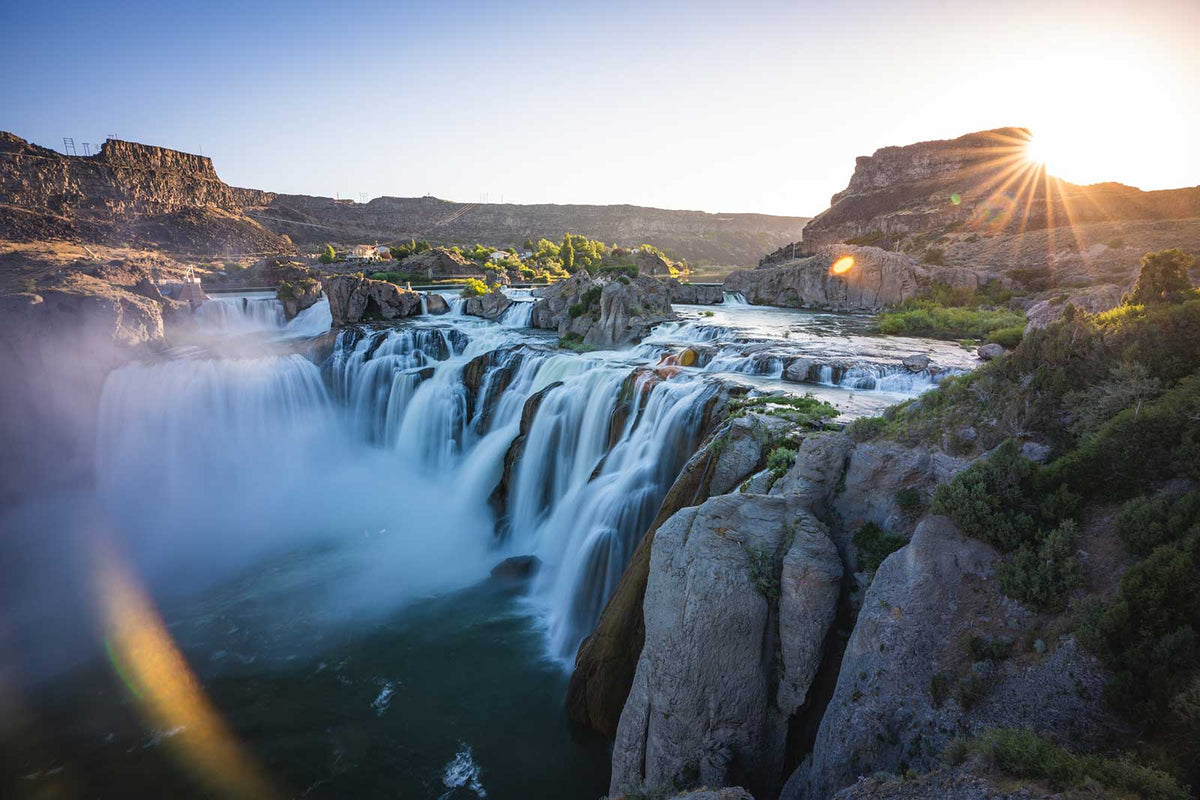
The Twin Falls Hot Tub Buyer's Guide: Wind, Water, and the Magic Valley
The Local Buyer’s Guide—How the Magic Valley’s Wind Changes Where You Put a Spa and How You Cover It, What Some of Idaho’s Hardest Water Means for Your Start-Up, What Idaho Power’s Tiered Rates Really Cost, Which Hot Spring and Caldera Models We Recommend for the Canyon, and How to Buy, Permit, and Own One Here
Twin Falls is a hot tub town with its own rules. Winters here are a little gentler than up the valley in Idaho Falls, but the wind off the Snake River Plain makes up the difference—it will test your cover, your placement, and your patience if you don’t plan for it. The water that comes out of the canyon springs and the aquifer is among the hardest in Idaho. And unlike Idaho Falls’ flat municipal rate, most of the Magic Valley is on Idaho Power’s tiered pricing, which rewards an efficient spa and punishes a leaky one.
This is the guide we wish every Twin Falls, Jerome, and Kimberly buyer read before walking into a showroom. It covers the three local factors that change the decision—the wind, the water, and the power—then gets practical: which Hot Spring® and Caldera® spas we recommend for Magic Valley homes, what the city and county require for permits and electrical, and how to go from ‘thinking about it’ to soaking in about a month. Everything here comes from the water we test, the spas we deliver, and the wind we’ve watched flip more than one unsecured cover.
From Leisure Time Inc., a family business serving Idaho since 1974, with a showroom and service team right here in Twin Falls. When you buy a spa from us, the people who deliver, fill, and service it are your neighbors.
The Short Version
- Plan for wind first. Place the spa in the lee of the house or a fence, use cover locks and a sturdy lifter, and add a floating thermal blanket—the wind is the Magic Valley’s defining variable.
- Our water is very hard—Twin Falls tests around 18 grains per gallon, roughly 300 ppm of hardness, against a salt-system target of 50. Every fill needs a softener or calcium remover; rural wells add metals.
- Idaho Power is tiered. Rates run roughly 10–15¢ per kWh depending on season and usage, so insulation and a good cover directly lower your bill. A well-insulated spa still costs only about $1.15–$1.65 a day here in winter.
- Choose a spa built for it: Hot Spring’s full-foam Highlife® spas and Caldera’s FiberCor®-insulated Utopia® and Paradise® models hold heat against wind and cold.
- Permits are simple but required: an electrical permit from the City of Twin Falls (or Twin Falls or Jerome County outside city limits) and a locking cover.
- Buy local and the hard parts disappear: free water testing, delivery to the pad, electrician coordination, and in-house service from our Twin Falls store.
The Wind: The Magic Valley’s Defining Variable
Anyone who has lived through a Twin Falls spring knows the wind isn’t a footnote. The Snake River Plain gives it a long runway, the canyon funnels it, and gusts strong enough to lift an unsecured cover arrive several times a season. A hot tub cover is a big, light sail; wind is also the enemy of heat retention, stripping warmth off the water surface and pulling it through every gap. Here’s how we set up spas to beat it:
- Site it in the lee. The single best move: put the spa where the house, garage, or a solid fence breaks the prevailing wind. A spa in the open center of a yard works everywhere; in Twin Falls, it works harder than it needs to.
- Lock the cover. Every Hot Spring and Caldera cover comes with locking straps—use all of them, every time. For exposed sites we add wind straps or cover clips.
- Choose a sturdy lifter and face it right. A good cover lifter holds the open cover upright; mount it on the side that puts the house between the open cover and the wind.
- Add a floating thermal blanket. A foam blanket on the water under the cover cuts evaporation and heat loss dramatically, which matters most when wind is pulling heat off the surface. On Idaho Power’s tiered rates, it pays for itself.
- Keep the cover healthy. A waterlogged cover sags and lets wind under the edges. When it gets heavy, replace it; our cover guide explains what to look for.
- Summer dust. The wind carries farm dust in summer; a tight cover keeps it out of the water, and an extra filter rinse during windy stretches keeps the water clear. Stock up on filters.
Every Twin Falls delivery starts with a site visit, and wind is the first thing we look at. We’ll walk your yard, note where the gusts come from, and recommend a placement and lifter orientation that keeps the cover on and the heat in. It’s a ten-minute conversation that saves years of fighting your own backyard.
The Water: Some of the Hardest in Idaho
Twin Falls’ water is drawn from aquifer-fed springs and wells in and around the Snake River Canyon, and it carries the minerals the Eastern Snake River Plain Aquifer picks up moving through lava rock and limestone. The result is water that tests around 18 grains per gallon—roughly 300 ppm of calcium hardness—which puts Twin Falls in the ‘very hard’ category and among the hardest municipal water in the state. Hot Spring’s FreshWater® Salt System targets just 50 ppm (25–75 acceptable).
Fill a spa straight from a Twin Falls hose and you’ll get white scale at the waterline within weeks, scale on the heater and plumbing, and—on a salt-system spa—scale on the titanium electrodes that generate your chlorine, shortening cartridge life. The fix is simple: treat the water on the way in, every fill.
| Your Fill Water’s Calcium Hardness | What to Use |
|---|---|
| 75–150 ppm | FreshWater® Vanishing Act® calcium remover (included in the FreshWater Salt start-up kit) |
| 150–300 ppm | Vanishing Act® XL |
| 300+ ppm (typical Twin Falls city water and most Magic Valley wells) | On The Go® portable water softener on the fill hose, reusable for the life of the spa—often paired with a Vanishing Act |
| Any fill water | Clean Screen® pre-filter on the hose to catch metals and sediment |
On a Well in Jerome, Buhl, Filer, Kimberly, or Hansen?
Much of the Magic Valley outside city limits is on private wells, and the valley’s volcanic geology adds iron and manganese to the hardness. Metals must be treated before a salt system or any oxidizer runs, or they oxidize and turn the water brown or green and stain the shell. The thresholds that matter: iron and manganese below 0.5 ppm, copper below 0.2 ppm. A Clean Screen pre-filter and a metal-control treatment at fill are standard practice on well water—and bringing us a sample first is free.
We test fill water for free—hardness, metals, phosphates, and pH. With water this hard, the test isn’t optional; it’s how we size your softener and build a start-up kit that gets your spa right on day one instead of a scale problem in month three. Fill a clean bottle from the outdoor spigot you’ll use to fill the spa, and bring it by.
Once the fill water is handled, Twin Falls is an easy place to own a spa. The FreshWater Salt System on Hot Spring and Caldera spas generates its own chlorine, keeps the water soft and odor-free, and can stretch drain-and-refills to as long as a year with proper care—which means fewer fills from that mineral-heavy tap. Shop FreshWater products, read our FreshWater Method guide, and put cartridges and balancers on Autoship. If scale has already shown up, our white scale problem-solver collection has the fix.
The Power: Idaho Power’s Tiered Rates and What a Spa Really Costs
Twin Falls and most of the Magic Valley are served by Idaho Power, which prices residential electricity on a seasonal, tiered schedule—roughly 10 to 15 cents per kilowatt-hour depending on the time of year and how much you use. That’s still comfortably below the national average of about 14¢, but it isn’t Idaho Falls’ flat 7.6¢, and the tiers mean efficiency has a direct, visible payoff on your bill.
| Utility | Residential Rate (2026) | What It Means for a Spa |
|---|---|---|
| Idaho Power (Twin Falls, Jerome, most of the Magic Valley) | About 9.9–14.6¢/kWh, seasonal and tiered | A well-insulated spa runs about $1.15–$1.65 a day in winter; insulation and a good cover lower it |
| U.S. average | About 14¢/kWh | The same spa costs more almost anywhere else |
Practically, that means two things for a Twin Falls buyer. First, a hot tub here is still inexpensive to run—around a dollar and a half a day through the coldest months for a Highlife or Utopia, and far less in summer. Second, the spa’s insulation, its cover, and your wind placement aren’t just comfort decisions; they’re the difference between the low end of that range and the high end. Our cost-to-run guide walks through the numbers for Idaho Power customers in detail.
In Twin Falls, every kilowatt-hour a leaky spa wastes is billed at Idaho Power’s upper tiers in winter. That’s why we steer Magic Valley buyers toward full-cavity-insulated spas and a quality cover, and why a floating thermal blanket is one of the best accessories you can buy here. A few hundred dollars of insulation and cover quality saves that much and more over a couple of winters.
The Winter: Milder Than Up the Valley, Windier Than Anywhere
At about 3,700 feet, Twin Falls winters are a notch milder than Idaho Falls’—January lows typically in the teens and low twenties, with the occasional cold snap below zero—but the wind chill and the wind’s effect on a spa’s heat loss make the practical difference small. What matters is the same as anywhere in Idaho:
- Full-cavity insulation. Hot Spring and Caldera fill the entire cabinet so the plumbing is insulated, not just the walls. Hot Spring’s Highlife Collection uses multi-density full foam; Limelight®, Hot Spot®, and every Caldera use FiberCor®, a dense wool-like fiber with the same insulating value that can’t mold. All are certified to California Energy Commission standards.
- Freeze protection. Both brands include freeze-protection logic that circulates water or runs the heater when temperatures drop. In a power outage, a full-foam or FiberCor spa with its cover on holds heat for many hours—don’t drain it in a panic.
- The cover and the blanket, as above—doubly important here because of the wind.
Our cold-climate buyer’s guide goes deeper on all of it. One more Magic Valley note: if your home is up the Wood River Valley in Hailey or Ketchum, you’re at 5,000 to 6,000 feet with much harsher winters—our Twin Falls store serves that area too, and we lean even harder on Highlife and Utopia insulation there.
The Spas We Recommend for Magic Valley Homes
We carry the full Hot Spring and Caldera lines at our Twin Falls showroom. These are the ones we point local buyers to first, and why:
Hot Spring Envoy® — the Therapy Spa for Hard-Working Bodies
Five seats built around a full-body lounge and a captain’s chair with wrist jets, two Moto-Massage® DX jets, 55 jets in all, multi-density full foam, and the FreshWater Salt System included. In a valley full of people who farm, build, and ride for a living, the Envoy is the spa we recommend most for sore backs and legs. Hot Spring’s spec sheet has the numbers.
Hot Spring Grandee® — the Big-Family Spa
Seven open seats in the same footprint and with the same equipment as the Envoy. If your evenings look like a full tub of family and neighbors, the Grandee is the one; our Grandee vs. Envoy comparison walks through the choice.
Caldera Cantabria® and Geneva® — the Utopia Lounge Spas
Caldera’s Utopia Series includes FreshWater IQ, which tests the water hourly and tells you what it needs—a real advantage with water this hard. The eight-seat Cantabria is the flagship for entertainers; the six-seat Geneva puts the same UltraMassage® lounge in a compact square footprint that fits a tighter, wind-sheltered corner. Read the Cantabria review for the full picture.
The Highlife, Paradise, and Value Lines
Smaller household or tighter spot? The Highlife Aria®, Vanguard®, and Sovereign® bring the same full-foam efficiency and salt system in five- and six-seat footprints—browse the Highlife Collection. Caldera’s Paradise Series (the Makena®, Salina®, and Reunion®) brings FiberCor and four to six Circuit Therapy stations at a sweet-spot price. And if budget leads, Hot Spring’s Limelight and Hot Spot collections and Caldera’s Vacanza® Series are all FiberCor-insulated and salt-ready—see every model in our hot tub collection, or start with our Hot Tub Buyer’s Guide. Call ahead and we’ll tell you which models are filled and on the floor in Twin Falls.
Permits and Electrical in Twin Falls
- Electrical permit. Every full-size Hot Spring and Caldera runs on a dedicated 230-volt, 50-amp circuit with a GFCI-protected disconnect, installed by a licensed electrician who pulls a permit—through the City of Twin Falls inside city limits, or Twin Falls County or Jerome County outside them. The spa can’t be energized until it passes inspection.
- Barrier rules. Under the residential code Idaho uses, a hot tub with an ASTM-rated locking safety cover is exempt from the pool-fence requirement—and every spa we sell comes with one. Keep it locked; it’s a code item and a wind item.
- Setbacks. Property-line setbacks vary by zone and jurisdiction. We confirm them during the site visit.
- The pad. A filled Envoy weighs about 5,450 pounds with people in it; a Cantabria is heavier. A reinforced concrete pad or an engineered deck is required.
Our Idaho hot tub permit guide and electrical guide cover the details, and we coordinate with your electrician as part of every purchase.
What Buying From Our Twin Falls Showroom Actually Includes
- Wet-test before you buy. Spas are filled and running on the floor. Bring a swimsuit.
- Free fill-water testing and a start-up kit sized to the Magic Valley’s hardness and your well’s metals.
- Site evaluation with a wind plan—placement, lifter orientation, and cover locks—then delivery to the pad, positioned and leveled.
- Electrician coordination on the 230V circuit, permit, and inspection.
- Start-up and an owner walkthrough on the salt system, the controls, and winter care.
- In-house service from the Twin Falls store—factory-trained technicians nearby, plus full Hot Spring and Caldera warranty support. See our Service Department.
- Trade-ins and financing. Replacing an old spa? Ask about trade-in credit; our financing options make a Highlife or Utopia fit a monthly budget.
- Supplies, local. Filters, FreshWater cartridges, softeners, balancers, and covers in stock or on Autoship.
From Idea to Soaking: A 30-Day Twin Falls Plan
- Week 1 — Visit and wet-test. Come to the Twin Falls showroom, sit in an Envoy and a Caldera, and narrow it to one or two. Bring photos of your yard and note which direction your wind comes from.
- Week 1 — Bring a water sample. From the spigot you’ll fill from. We’ll test it free and size your softener and start-up kit.
- Week 2 — Site visit and pad. We confirm placement in the lee of the wind, delivery path, and setbacks. Your contractor pours the pad or we confirm the deck is engineered for the load.
- Week 2–3 — Electrical. Your electrician pulls the city or county permit and runs the 230V/50A circuit; we supply the spa’s specs.
- Week 3–4 — Delivery and fill. We deliver, level, set up, and orient the lifter; you fill through the softener and Clean Screen pre-filter while the electrical passes inspection.
- Week 4 — Start-up. Salt in, water balanced, chlorine established, salt system running, cover locked. We walk you through the controls and winter care. Then you soak.
Frequently Asked Questions
How much does it cost to run a hot tub in Twin Falls?
On Idaho Power’s seasonal, tiered rates—roughly 10 to 15 cents per kWh—a well-insulated Hot Spring or Caldera costs about $1.15 to $1.65 a day through the coldest months and considerably less the rest of the year, still below what the same spa costs at the national average. Because the rates are tiered, insulation, a good cover, and a wind-sheltered placement directly lower the bill. Our cost-to-run guide has the full math.
Is Twin Falls water too hard for a hot tub?
It’s very hard—around 18 grains per gallon, roughly 300 ppm, against a salt-system target of 50 ppm—but it’s easily handled. Fill through an On The Go softener and a Clean Screen pre-filter, use a Vanishing Act calcium remover at start-up, and the water is right from day one. Untreated, it scales the heater, shell, and salt cartridge. Well water outside the city also needs metal treatment first. We test fill water free at the Twin Falls store.
How do I keep my hot tub cover from blowing off in Twin Falls?
Site the spa in the lee of the house or a fence, use every locking strap on the cover (and add wind straps on exposed sites), mount the cover lifter on the side that puts the house between the open cover and the wind, and replace the cover when it gets waterlogged and sags. A floating thermal blanket under the cover also cuts the heat the wind strips off the water surface. We plan all of this at the site visit.
Do I need a permit for a hot tub in Twin Falls?
You need an electrical permit for the dedicated 230V/50A circuit, pulled by a licensed electrician through the City of Twin Falls (or Twin Falls or Jerome County outside city limits), with inspection before the spa is energized. A hot tub with a locking ASTM safety cover—standard on every spa we sell—is exempt from the pool-fence requirement. Setbacks vary by jurisdiction; we confirm them at the site visit.
Which hot tub is best for a Twin Falls family?
For hydrotherapy-first buyers, the Hot Spring Envoy’s lounge and captain’s chair; for big families, the seven-seat Grandee in the same footprint. For a compact, wind-sheltered corner with a lounge, the Caldera Geneva; for eight seats and FreshWater IQ’s hourly water testing, the Cantabria. All are full-cavity insulated for Magic Valley winters. Call the Twin Falls showroom to confirm which are on the floor to wet-test.
Do you deliver and service outside Twin Falls?
Yes. Our Twin Falls store delivers and services throughout the Magic Valley and beyond—Jerome, Kimberly, Hansen, Filer, Buhl, Gooding, Burley, Rupert, and up the Wood River Valley to Hailey and Ketchum—with factory-trained technicians based here. Call the Twin Falls showroom to confirm your area and schedule a site visit.
The Magic Valley asks a little more of a hot tub than most places—harder water, harder wind, and a utility that rewards efficiency—and it gives back a lot: long clear nights over the canyon, winters mild enough to soak through, and a dealer a few minutes away who has already solved every one of those problems for your neighbors. Pick a spa built for the cold, set it in the lee of the wind, treat the water on the way in, and let the people who deliver and service it be the ones down the road.
Wind you can plan for, water you can treat, and a dealer who knows the valley—that’s owning a hot tub in Twin Falls.
Shop Hot Tubs: leisuretimeinc.com/collections/hot-tubs
Hot Spring Envoy: leisuretimeinc.com/products/envoy-5-person-hot-tub
Hot Spring Grandee: leisuretimeinc.com/products/grandee-7-person-hot-tub
Caldera Cantabria: leisuretimeinc.com/products/cantabria-8-person-hot-tub
Highlife Collection: leisuretimeinc.com/collections/hot-spring-highlife-series
FreshWater Products & Method Guide: leisuretimeinc.com/collections/freshwater | freshwater-method
FreshWater Salt System (Hot Spring): hotspring.com/shop/water-care/freshwater-salt-system
How to Choose a Hot Tub Cover: leisuretimeinc.com/blogs/spas-pools/how-to-choose-a-hot-tub-cover
What It Really Costs to Run a Hot Tub in Idaho: leisuretimeinc.com/blogs/spas-pools/how-much-does-it-really-cost-to-run-a-hot-tub-in-idaho-real-numbers
Best Hot Tubs for Idaho Winters: leisuretimeinc.com/blogs/spas-pools/best-hot-tubs-for-idaho-winters-cold-climate-buyers-guide
Idaho Hot Tub Permit & Code Guide: leisuretimeinc.com/blogs/spas-pools/idaho-hot-tub-permit-code-guide
Hot Tubs in Idaho Falls: leisuretimeinc.com/blogs/spas-pools/hot-tubs-in-idaho-falls-snake-river-water-winter-idaho-falls-power
Service Department: leisuretimeinc.com/pages/service-department
Financing: leisuretimeinc.com/pages/financing
Store Locations: leisuretimeinc.com/pages/store-locations
Twin Falls: (208) 933-4295 • Boise: (208) 376-0180 • Idaho Falls: (208) 523-4633