


4300 Step Top Wood Stove
Overview
The 4300 Step Top wood stove is the epitome of the Quadra-Fire tradition of excellence. Automatic Combustion Control (ACC) burn technology works in unison with the Four-Point Burn System to achieve consistent, efficient and clean burns; season after season, year after year. These easy start-up wood stoves provide a reliable heating solution beyond any other stove or fireplace.
Quick Specs
- BTUs: Up to 63,700 Output
- Heating Capacity: Up to 3,000 sq ft
- Material: Steel
| BTU | Up to 61,700 Output |
|---|---|
| Width | 26 in. |
| Height | 34-1/4 in. |
| Depth | 28-5/8 in. |
| Weight | 315 lbs. |
| Material | Steel |
| Heating Capacity | 1,100 - 3,000 sq ft. |
| Burn Time | 12 hrs. |
| Firebox Capacity | 2.3 cu ft. |
| Recommended Log Length | 18 in. |
| Viewing Area | 165 sq in. |
| Glass Type | Ceramic |
| Efficiency | LHV 80%, HHV 74% |
| Emissions | 1.6 g/hr. |
| EPA Certified | Yes |
Hearth Blog Posts

Can You Put a TV Above a Fireplace? Clearances, Mantels & Heat Management
A Dealer's Guide to HearthStone Fireplaces
Ask anyone who's lived with a soapstone stove and they'll tell you the heat is different — steady, gentle, and still coming hours after the fire burns down. Here's a dealer's guide to HearthStone, the Vermont brand behind it: its story since 1978, soapstone and TruHybrid explained, the full lineup, and which model fits your home.
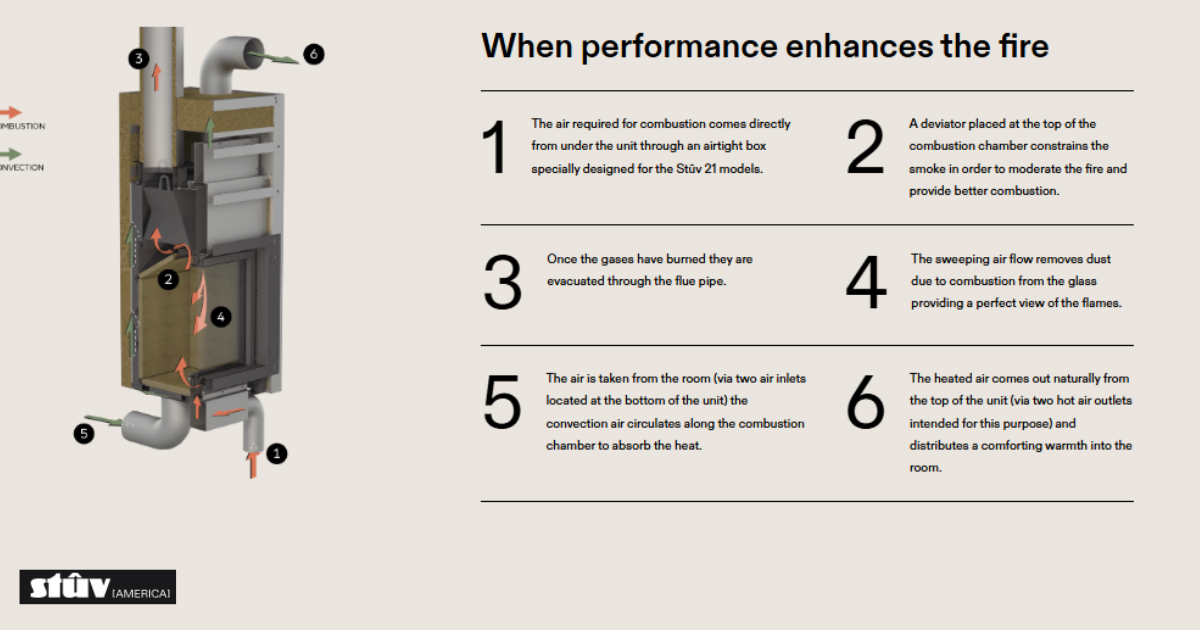
A Dealer's Guide to Stûv Fireplaces
Most wood stoves look like wood stoves. Stûv doesn't — a cylinder that rotates toward the couch, a wall of fire you can open like a window. Here's a dealer's guide to the Belgian-designed, Québec-built brand: its story, what sets it apart, the full lineup, and which model fits your home.