
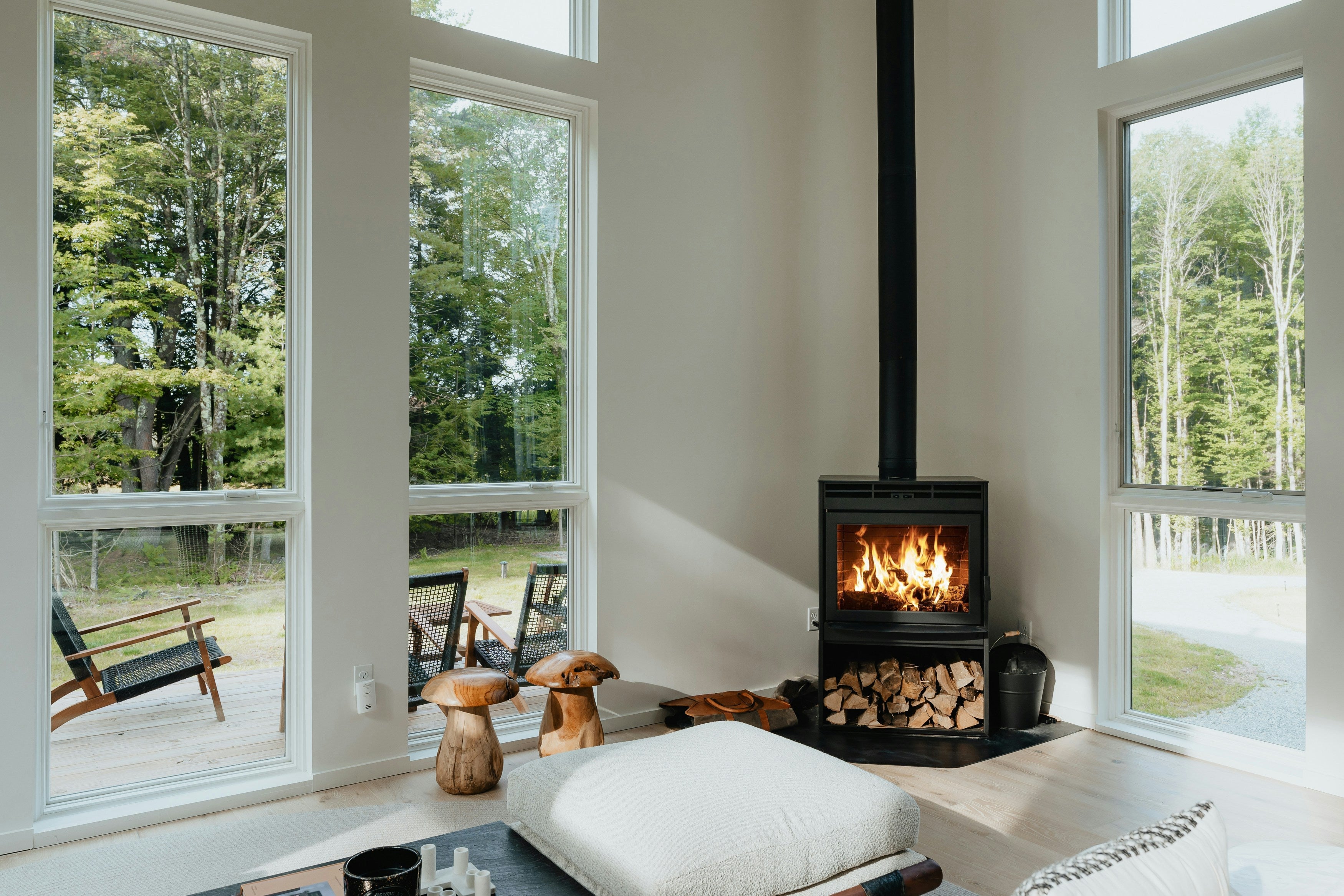
Wood-Burning vs. Gas Fireplace: Total Cost of Ownership in Idaho
A Real-World 10-Year Cost Comparison of Wood-Burning vs. Gas Fireplaces in Idaho—Upfront, Fuel, Maintenance, and the Intangibles That Tip the Decision
When people compare wood-burning and gas fireplaces, they usually look at the sticker price and stop there. But the purchase price is only part of the story. The real question is total cost of ownership: what you’ll spend over the years to buy, fuel, and maintain the fireplace—plus the value of the things that don’t show up on a receipt, like convenience, ambiance, and heat during a power outage.
This guide breaks down the true 10-year cost of owning a wood-burning versus a gas fireplace in Idaho, using real local numbers. Idaho is a uniquely good place to run either one: we have some of the cheapest natural gas in the country and ready access to affordable firewood. By the end, you’ll know which one fits your budget, your lifestyle, and your home.
From Leisure Time Inc., with showrooms in Boise, Idaho Falls, and Twin Falls. We sell and install both wood and gas fireplaces, inserts, and stoves—Kozy Heat, Heatilator, Heat & Glo, Valor, and Stûv—so this is an honest comparison, not a pitch for one side.
The Three Cost Buckets
Total cost of ownership comes down to three things:
- Upfront cost: The unit plus installation—venting, gas line or chimney, framing, and finish work.
- Fuel cost: What you pay to actually run it each year—cordwood for wood, natural gas or propane for gas.
- Maintenance cost: Keeping it safe and efficient—chimney sweeping for wood, annual service for gas.
Let’s look at each, with Idaho numbers, then put them together into a 10-year picture.
1. Upfront Cost
Wood-Burning Fireplace
A new high-efficiency, EPA-certified wood-burning fireplace or insert with a proper chimney/flue system typically runs $5,000–$12,000+ installed, depending on whether you’re inserting into existing masonry or building new. Wood inserts with a stainless liner commonly land in the $8,000–$12,000 range. The venting and chimney work is the biggest variable.
Gas Fireplace
A new direct-vent gas fireplace or insert typically runs $4,000–$10,000+ installed, including the unit, gas line connection, venting, framing, and finish. Gas units often cost a bit less to install than wood because direct-vent piping is simpler than a full chimney system—though running a new gas line can add cost.
Upfront verdict: Roughly comparable, with gas often slightly less to install. Both span a wide range based on your specific situation and finish choices.
2. Fuel Cost (Idaho)
Wood
Idaho has some of the most affordable firewood in the country—seasoned cords can often be found around $200, versus a national average near $300 and premium states like Vermont at $470+. A typical household burning a fireplace through the heating season uses roughly 2–4 cords per year. That puts annual wood fuel cost in the range of about $400–$800 if you buy it—less if you cut and split your own, which many Idahoans do, bringing the cash cost down dramatically (in exchange for the labor).
Gas
Idaho has the cheapest residential natural gas in the United States—roughly 52% below the national average, at around $0.50/therm through Intermountain Gas. A gas fireplace used regularly through the season as zone heat typically adds somewhere in the range of $150–$400 per year to your gas bill, depending on use and BTU output. If you’re on propane (common in rural Idaho) rather than natural gas, costs run higher—propane was around $2.37/gallon in early 2026—so propane fireplaces cost meaningfully more to run than natural gas.
Fuel verdict: Natural gas is the cheapest, most predictable fuel to run in Idaho. Wood you buy is comparable-to-somewhat-higher per year; wood you cut yourself is the cheapest of all in cash terms but costs significant labor. Propane is the most expensive fuel option.
Whichever fuel you choose, the real savings come from zone heating—warming the room you actually live in while turning your central furnace thermostat down. A fireplace used this way can cut furnace run time 20–40%, offsetting much of its fuel cost by reducing what you spend heating the rest of the house. In Idaho’s long heating season, this effect is substantial and applies to both wood and gas.
3. Maintenance Cost
Wood
Wood fireplaces require an annual chimney inspection and sweeping to remove creosote (a flammable byproduct of wood combustion) and prevent chimney fires. A professional sweep/inspection typically runs $150–$400 per year. You’ll also handle ash removal and the ongoing work of hauling, stacking, and storing wood—real labor that doesn’t cost cash but costs time.
Gas
Gas fireplaces need far less maintenance—an annual service inspection (checking the burner, venting, ignition, and connections) typically runs $100–$200 per year. There’s no creosote, no ash, no wood to handle. It’s the lower-maintenance option by a wide margin.
Maintenance verdict: Gas is clearly cheaper and easier to maintain—less money, far less labor. Wood’s maintenance is both a higher cash cost and a meaningful time commitment.
Putting It Together: 10-Year Total Cost of Ownership
Here’s a realistic mid-range estimate for each, assuming regular seasonal use as zone heat in an Idaho home. Your actual numbers will vary with usage, finish choices, and whether you cut your own wood.
| Cost Component | Wood (bought) | Wood (DIY cut) | Gas (nat.) |
|---|---|---|---|
| Upfront (installed) | $9,000 | $9,000 | $7,000 |
| Fuel (10 yrs) | ~$6,000 | ~$1,000 | ~$2,750 |
| Maintenance (10 yrs) | ~$2,750 | ~$2,750 | ~$1,500 |
| 10-Year Total | ~$17,750 | ~$12,750 | ~$11,250 |
Figures are mid-range Idaho estimates for illustration. Wood fuel assumes ~3 cords/yr at ~$200 bought vs. minimal cash cost if self-cut. Gas fuel assumes ~$275/yr natural gas. Maintenance assumes annual sweep (wood ~$275/yr) vs. annual service (gas ~$150/yr).
The bottom line on cost: Gas has the lowest total cost of ownership in Idaho for most households—lower fuel, lower maintenance, and slightly lower install. Wood you cut yourself can rival gas on cash cost, but only if you value your firewood labor at zero. Wood you buy is the most expensive to own over ten years. But—and this matters—cost isn’t the only factor.
The Intangibles: Where Wood Wins
If this were purely about money, gas would win most of the time in Idaho. But fireplaces aren’t purely about money. Here’s where wood earns its premium for many owners:
- Ambiance: Nothing replicates the crackle, smell, and radiant warmth of a real wood fire. For many people, this is the entire point—and it’s worth every extra dollar.
- Off-grid heat: A wood fireplace needs no gas line and no electricity. In a prolonged Idaho winter outage, it keeps producing heat when everything else is down. (Note: certain gas units like Valor also run without electricity—worth asking about.)
- Fuel independence: If you have access to wood—your own land, a permit, or a reliable supplier—you’re not tied to utility rates at all.
- The ritual: Splitting, stacking, and building a fire is deeply satisfying for those who enjoy it. It’s part of the lifestyle, not just a heat source.
Where Gas Wins
- Convenience: Instant heat at the flip of a switch or tap of a thermostat—no hauling wood, building fires, or cleaning ash.
- Consistent, controllable heat: Set it and forget it. Thermostat and remote control deliver steady warmth without tending.
- Cleanliness: No wood mess, no ash, no creosote, no bugs from firewood. Clean operation indoors.
- Lower ongoing cost and effort: Cheaper to run and maintain in Idaho, with none of the labor.
- Lower emissions: Cleaner-burning than wood, with no particulate smoke—better for air quality, especially during winter inversions common in some Idaho valleys.
Which Should You Choose?
Choose Wood if you:
- Want authentic fire ambiance above all—the look, sound, and smell
- Value off-grid heat independence in a long Idaho winter
- Have access to affordable or self-cut firewood
- Enjoy the ritual and don’t mind the labor and maintenance
- Aren’t bothered by higher ongoing cost and effort
Choose Gas if you:
- Want the lowest total cost of ownership in Idaho
- Prioritize convenience—instant, thermostat-controlled heat
- Prefer clean operation with minimal maintenance
- Have (or can add) a natural gas line—cheapest fuel here
- Want consistent zone heating without tending a fire
Still weighing fuel types more broadly (including pellet)? See our companion guide on how to buy a fireplace in Idaho: gas vs. wood vs. pellet. Deciding between upgrading an existing fireplace or installing new? See our fireplace insert vs. new fireplace guide.
Frequently Asked Questions
Is a wood or gas fireplace cheaper to own in Idaho?
For most households, gas has the lower total cost of ownership in Idaho—thanks to the cheapest natural gas in the country, lower maintenance, and slightly lower install cost. Wood you cut yourself can match gas on cash cost but adds significant labor. Wood you buy is generally the most expensive to own over a 10-year horizon. That said, the intangibles—ambiance, off-grid heat—lead many Idahoans to happily choose wood anyway.
How much does it cost to run a gas fireplace in Idaho?
Because Idaho has the lowest residential natural gas rates in the U.S. (around $0.50/therm via Intermountain Gas, ~52% below the national average), a gas fireplace used regularly as zone heat typically adds roughly $150–$400 per year to your gas bill. Propane (common in rural areas) costs more—around $2.37/gallon in early 2026—so propane units run meaningfully higher than natural gas.
How much firewood will I burn in a season?
A typical household using a wood fireplace through Idaho’s heating season burns about 2–4 cords per year. At roughly $200 per seasoned cord here (among the cheapest in the nation), that’s about $400–$800 annually if you buy it—substantially less if you cut and split your own, in exchange for the labor.
Does a wood fireplace really need annual chimney cleaning?
Yes. Wood combustion produces creosote, a flammable residue that builds up in the chimney and is a leading cause of chimney fires. An annual professional inspection and sweep (typically $150–$400) is essential for safety and efficiency. This is a real recurring cost and a key reason wood’s maintenance is higher than gas, which has no creosote.
Will a gas fireplace work during a power outage?
Many will—if you choose the right one. Standard gas fireplaces with electronic ignition may not light without power, but units with battery-backup ignition or millivolt/standing-pilot systems (like many Valor models) operate without electricity. If winter outage resilience matters to you, ask us specifically about no-electricity gas options. Wood fireplaces, of course, never need power.
Which is better for the environment?
Gas burns cleaner than wood, producing fewer particulates and less smoke—which matters for air quality, especially during winter temperature inversions that trap smoke in some Idaho valleys. Modern EPA-certified wood units burn far cleaner than old open fireplaces, but gas remains the lower-emission choice. If local air quality or burn bans are a concern in your area, gas has an advantage.
Can I get the wood look with a gas fireplace?
Yes. Modern gas fireplaces feature remarkably realistic log sets and flames, and many people are surprised how convincing they look. You won’t get the crackle and smell of real wood, but you get the visual warmth with none of the labor. Visit our showrooms to see gas units running—the realism of today’s models often changes minds.
At Leisure Time Inc., we sell and install both wood and gas fireplaces, so we’ll give you a straight answer about which makes sense for your home, your budget, and how you want to live with it. We carry Kozy Heat, Heatilator, Heat & Glo, Valor, and Stûv, and we’ll walk you through the full cost picture—upfront, fuel, and maintenance—plus the intangibles that matter to you. Come see them running in our showrooms.
Wood or gas—let’s find the right fireplace for your Idaho home.
How to Buy a Fireplace in Idaho (Gas vs. Wood vs. Pellet): leisuretimeinc.com/blogs/fireplaces-stoves/how-to-buy-a-fireplace-in-idaho-gas-vs-wood-vs-pellet
Fireplace Insert vs. New Fireplace: leisuretimeinc.com/blogs/fireplaces-stoves/fireplace-insert-vs-new-fireplace
Can a Fireplace Heat My Home?: leisuretimeinc.com/blogs/fireplaces-stoves/can-a-fireplace-actually-heat-my-home
Fireplace Safety Guide: leisuretimeinc.com/blogs/fireplaces-stoves/is-my-fireplace-safe-to-use
Browse Fireplaces & Inserts: leisuretimeinc.com/collections/built-in-fireplaces
Shop Accessories: leisuretimeinc.com
Locations: leisuretimeinc.com/pages/locations
Boise: (208) 376-0180 • Idaho Falls: (208) 523-4633 • Twin Falls: (208) 933-4295