
Hot Tub Size Guide: How Many Seats Do You Really Need?
How to Translate Advertised Capacity Into Comfortable Seating, the Right Footprint, and a Better Everyday Soak
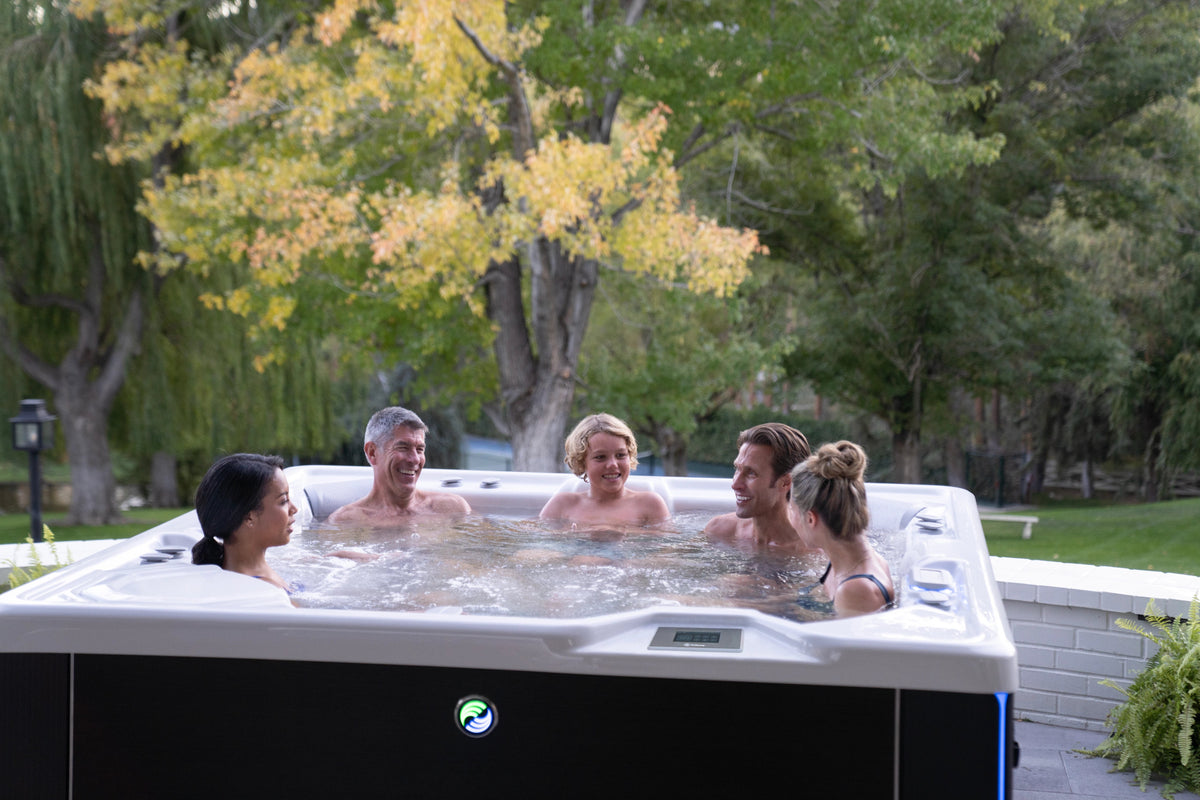
A six-person hot tub does not automatically mean six adults will be equally comfortable in it. Advertised capacity counts designated seats; it does not account for body size, legroom, seat depth, shoulder space, a lounger, or how often you actually entertain.
The best hot tub size is the smallest model that comfortably handles your normal household and the guests you truly expect—without making the daily experience feel cramped. Here is how to choose it.
Seat Count Is a Starting Point, Not the Answer
| Advertised Size | Often Fits Best | Watch For |
|---|---|---|
| 2–3 person | One or two regular users, small patios, quiet soaking | Limited guest flexibility; compact models can still be deep or difficult to deliver |
| 4–5 person | Couples wanting extra room, small families, occasional guests | A lounger may consume a large share of the footwell |
| 6–7 person | Families, frequent guests, varied seating preferences | Larger footprint, water volume, cover, delivery route, and electrical planning |
| 8 person | Large households or regular group soaking | Verify real shoulder and foot space with the intended group |
Leisure Time Inc.’s current hot-tub selection spans compact two-person layouts through large eight-person designs. Capacity alone cannot tell you which one fits because two seven-seat spas may use completely different seat depths, footwells, and jet arrangements.
Count Regular Users First, Guests Second
- Write down the normal group: Who will use the spa on an ordinary week?
- Add realistic guest space: Plan for the friends or family who visit regularly, not an imagined once-a-year maximum.
- Consider height and mobility: Tall users, shorter users, children, and anyone with limited mobility need different seat depths and entry points.
- Decide whether people share foot space comfortably: A crowded footwell often limits real capacity before the seats do.
A dry showroom sit is useful, but buoyancy changes how your body fits a seat. If possible, wet-test your leading models. Check whether you float out of the lounger, can keep your shoulders under water, and can move between seats without stepping on other users.
Open Seating vs. a Lounger
Open-Seated Hot Tubs
Bench and bucket-seat layouts tend to make better use of the perimeter, allow easier conversation, and provide more flexible group seating. They are often the strongest fit for families and entertaining.
Hot Tubs With a Lounger
A full-body lounge can provide excellent leg, calf, and foot hydrotherapy. It also takes up substantial interior space and may reduce flexibility for guests. Fit matters: a user who is too short or too buoyant may struggle to stay positioned against the jets.
If one person loves a lounger and others want open seats, look for a balanced layout with varied depths and a generous footwell rather than choosing by seat count alone.
Measure the Complete Installation, Not Just the Spa
- Foundation: It must support the exact filled weight and remain level.
- Delivery route: Measure gates, house corners, eaves, slopes, steps, utilities, and overhead clearance.
- Service access: Leave the manufacturer-required space at equipment panels.
- Cover movement: A cover lifter needs clearance behind or beside the spa and may affect the view.
- Steps and walking surface: Provide safe entry and a slip-resistant path, especially for winter use.
- Privacy and wind: Screens or landscaping should improve comfort without blocking access or violating local rules.
A difference of several inches can decide whether a model fits through a gate, clears a deck rail, or leaves enough room for the cover. Verify dimensions on the current model specification sheet before site work begins.
How Size Changes Ownership
| Factor | What a Larger Spa Usually Changes |
|---|---|
| Water volume | More fill water and adjustment product per drain-and-refill |
| Heat retention | More surface area and water to manage; insulation and cover quality remain decisive |
| Delivery | More weight, width, and handling complexity |
| Cover | Larger and heavier to move; a well-matched lifter becomes more valuable |
| Cleaning | More shell, seating, and waterline area, though routine remains similar |
Do not downsize solely to chase a generic energy estimate. A well-insulated larger spa with a healthy cover may outperform a poorly designed smaller one. Compare construction, cover, circulation, and local utility conditions on the actual models.
A Simple Size-Selection Process
- Set the normal-user count and realistic guest count.
- Choose open seating, lounger, or a mixed layout.
- Test seat depths and jet placement for the actual users.
- Measure the site, access route, cover clearance, and service area.
- Confirm foundation, filled weight, electrical needs, and written quote.
- Compare local service and warranty support.
Mark the spa footprint, steps, and open cover position on the patio or deck. Walk around it, open doors, carry items past it, and view it from inside the house. A taped rectangle often reveals site conflicts before they become expensive.
Frequently Asked Questions
What size hot tub is best for a couple?
A two- or three-person model can be excellent for two regular users, but many couples prefer a four- or five-person spa for varied seats and guest flexibility. Let comfort, site, and layout decide—not just capacity.
Can six adults fit in a six-person hot tub?
They may fit in the designated seats, but comfort depends on body size, shoulder room, and the footwell. If six adults will soak regularly, wet-test a six- and seven-person layout before choosing.
Does a lounger count as one seat?
Usually, yes, but it uses more interior length and foot space than an upright seat. That can reduce how comfortably the rest of the advertised capacity fits.
Is a bigger hot tub always more expensive to run?
It generally has more water and surface area, but real energy use also depends on insulation, cover condition, temperature, weather, circulation, and usage. Compare the actual designs rather than relying only on gallon capacity.
How do I know whether a hot tub will fit through my gate?
Compare the manufacturer’s shipping orientation and dimensions with the narrowest point and every turn on the route. Include eaves, meters, air conditioners, slopes, and overhead lines. A dealer site review can identify whether a crane or alternate route is needed.
The right hot tub should feel comfortable on a quiet Tuesday and still have enough flexibility for the people who matter most. Leisure Time Inc. carries Hot Spring, Caldera, Sundance, American Whirlpool, and Freeflow models across a wide range of footprints and layouts.
Count real users, test real seats, and measure the complete installation before you buy.
Idaho Hot Tub Buyer’s Guide: leisuretimeinc.com/blogs/spas-pools/hot-tub-buyers-guide-for-idaho-what-to-know-before-you-in-2026
Are Hot Tub Loungers Worth It? leisuretimeinc.com/blogs/spas-pools/the-benefits-of-hot-tubs-with-loungers-is-a-lounger-worth-it
How Much Does a Hot Tub Weigh? leisuretimeinc.com/blogs/spas-pools/how-much-does-a-hot-tub-weigh
Hot Tub Installation Guide: leisuretimeinc.com/blogs/spas-pools/hot-tub-installation-site-prep-electrical-delivery-in-idaho
Browse Hot Tubs: leisuretimeinc.com/collections/hot-tubs
Locations: leisuretimeinc.com/pages/locations
Boise: (208) 376-0180 • Idaho Falls: (208) 523-4633 • Twin Falls: (208) 933-4295