
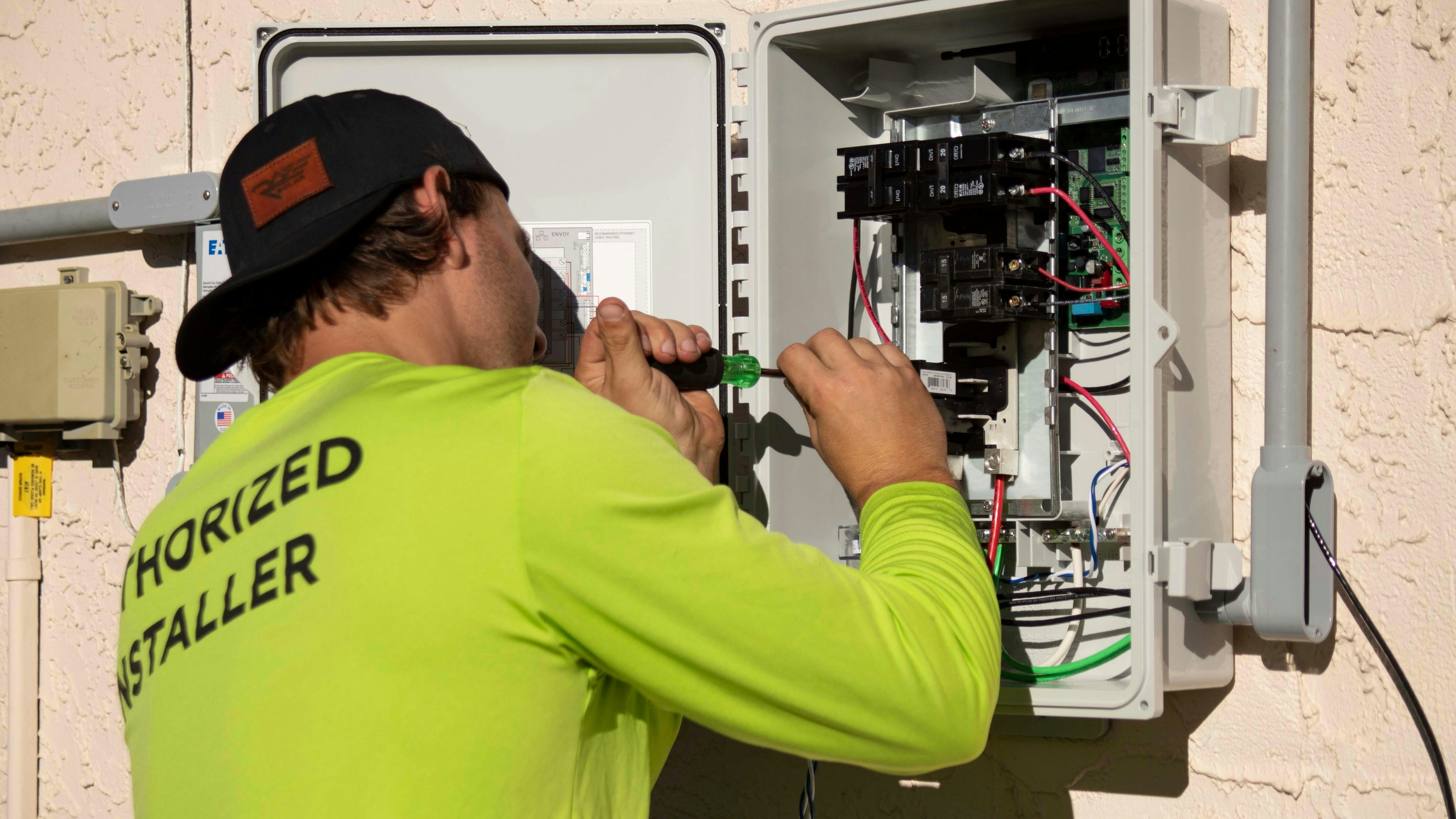
Hot Tub Installation: Site Prep, Electrical & Delivery in Idaho
Everything Idaho Buyers Need to Know to Get From “Sold” to “Soaking”—Foundations, 240V Wiring, Delivery Logistics, and Startup
You’ve chosen your hot tub. Now comes the part that determines whether your first soak happens on schedule—or weeks late after a scramble: installation. A hot tub isn’t a plug-and-play appliance you set in a corner. It’s a 3,000–6,000+ pound installation that needs a proper foundation, dedicated electrical, clear delivery access, and a correct startup.
The good news: when you plan ahead, installation is smooth and predictable. The bad news: when you don’t, you can end up with a spa sitting on your driveway because the gate’s too narrow, or waiting two weeks for an electrician because nobody scheduled one. This guide walks you through every step so you’re ready before your spa arrives.
This guide is written for Idaho buyers by Leisure Time Inc., with showrooms in Boise, Idaho Falls, and Twin Falls. We deliver and install throughout the region with our own experienced team—and we do a site assessment before every delivery so there are no surprises on the big day.
The Installation Timeline: What Happens When
Here’s the typical sequence from purchase to first soak. Some steps overlap, but the order matters—especially getting the pad and electrical ready before delivery day:
- Site assessment (before delivery): We confirm placement, measure access, and identify foundation and electrical needs.
- Foundation prep: Pour a concrete pad, lay a gravel base, or confirm an existing surface is adequate. Allow curing time for new concrete (typically 5–7 days minimum before placing the spa).
- Electrical rough-in: A licensed electrician installs the dedicated 240V circuit, GFCI disconnect, and wiring to the spa pad. Schedule this early—electricians book out.
- Delivery & placement: Our crew delivers, maneuvers the spa to the pad, and sets it in final position.
- Electrical final connection: The electrician connects the spa to the circuit and verifies operation.
- Fill & startup: Fill with water, prime the pumps, balance the water chemistry, and heat to temperature (24–48 hours to fully heat from cold).
- First soak: Once the water is heated and balanced—enjoy.
From the day you buy, a typical Idaho installation takes 2–4 weeks—mostly driven by pad curing and electrician scheduling, not the delivery itself. If you’re building a new concrete pad or running a long electrical line, start those steps as soon as you’ve chosen your spot. The spa delivery is the easy part; the prep is what takes lead time.
Step 1: Choosing the Right Location
Before any prep work, decide where the spa will go. The right location balances convenience, comfort, privacy, and practicality:
- Proximity to the house: The closer to your back door, the more you’ll use it—especially on a 15°F January night. A short, sheltered path from the house beats a long trek through snow.
- Privacy: Consider sightlines from neighbors and the street. Fencing, lattice, or landscaping can create a private retreat.
- Wind protection: Idaho is windy, especially in Idaho Falls and the Snake River Plain. A windbreak (wall, fence, or evergreens) on the prevailing wind side reduces heat loss and makes winter soaks more comfortable.
- Drainage: Don’t place the spa where water pools. You’ll drain it periodically, and Idaho snowmelt needs somewhere to go. The pad should shed water away from the spa and your home’s foundation.
- Access for service: Leave room to access all four sides for maintenance and repairs. Don’t box the spa into a tight alcove where a technician can’t reach the equipment bay.
- View and ambiance: Position the spa to face a view you’ll enjoy—the mountains, your garden, or the night sky. This is a wellness purchase; the setting matters.
Step 2: The Foundation
A filled hot tub weighs 3,000–6,000+ pounds—roughly the weight of a mid-size SUV concentrated in a small footprint. Your foundation has to support that load continuously, for years, without shifting or settling. Here are your options:
| Foundation | Cost | Best For | Notes |
|---|---|---|---|
| 4” reinforced concrete slab | $1,000–$2,500+ | Permanent installations; the gold standard | Supports any residential spa. Allow 5–7 days curing. Slope slightly for drainage. |
| Compacted gravel pad | $300–$800 | Cost-effective, good drainage | 4–6” of crushed stone, properly leveled and compacted. Excellent for Idaho. |
| Pavers on prepared base | $600–$1,500 | Aesthetics + function | Must sit on a proper gravel/sand base. Interlocking design distributes weight. |
| Synthetic spa pad | $200–$500 | Smaller spas, level ground | Rated 5,000+ lbs/sq ft. Fast, DIY-friendly. Ground must be level and stable. |
| Reinforced deck | Engineering required | Elevated installations | MUST consult a structural engineer. Standard decks need reinforcement. |
| Bare grass / soil | Never | Nothing | Causes uneven settling, shell stress, and voids most warranties. |
For most Idaho installations, a 4-inch reinforced concrete slab or a properly compacted gravel pad is the right choice. Both handle the weight, both drain well, and both stand up to Idaho’s freeze-thaw cycling. Whatever you choose, the surface must be level—a spa that isn’t level stresses the shell and can affect water flow and skimming.
In colder parts of Idaho—and especially at elevation (Sun Valley, Driggs, and the high country)—frost can heave an improperly built pad. A concrete pad should be poured on a compacted gravel base that allows drainage, or below the frost line. A pad that heaves over winter can shift the spa and stress the plumbing. When in doubt, go with the reinforced concrete slab on a proper sub-base.
Step 3: Electrical Requirements
This is the step that trips up the most buyers—and it’s the one you absolutely cannot DIY or skip. Most full-size hot tubs require a dedicated, hardwired 240-volt circuit installed by a licensed electrician to code.
What’s Required
- Dedicated 240V / 50-amp circuit: Most full-size spas need a dedicated 240V circuit (typically 50-amp, though some require 40 or 60—check your model’s spec). “Dedicated” means it serves only the hot tub, nothing else.
- GFCI protection: A GFCI (ground-fault circuit interrupter) disconnect is required by code for safety around water. It’s mounted within sight of the spa but at least 5 feet away.
- Proper wire gauge and conduit: Wire size depends on the amperage and the distance from your panel. Longer runs need heavier wire. Outdoor runs require appropriate conduit, often buried.
- Licensed electrician + permit: The installation must meet the National Electrical Code and local Idaho requirements, and pass inspection. Your electrician pulls the electrical permit.
Plug-and-Play Exception
Some entry-level spas (like Hot Spring’s Freeflow Collection) run on a standard 120V/15-amp household outlet—no special wiring required. The trade-off: they heat more slowly and can’t run the heater and jets at full power simultaneously. For year-round Idaho use, a hardwired 240V spa heats faster and holds temperature better through cold snaps. Plug-and-play is convenient for renters or mild-climate use, but most Idaho buyers are better served by 240V.
Cost
Electrical installation typically runs $800–$2,000 in Idaho, depending on the distance from your electrical panel to the spa, whether your panel has capacity for a new circuit, and the complexity of the conduit run. A short run from a garage panel is inexpensive; a long buried run across the yard with a panel upgrade costs more. Get a quote from your electrician early in the process.
The #1 cause of delayed first soaks isn’t delivery—it’s electrical. Licensed electricians book out, and you need the rough-in done before delivery and the final connection after placement. As soon as you’ve chosen your spa location, get an electrician scheduled. We can recommend trusted electricians in the Boise, Idaho Falls, and Twin Falls areas who know spa installations.
Step 4: Delivery and Access
On delivery day, our crew moves your spa—often 700–1,000+ pounds empty—from the truck to the pad. The spa is typically tipped on its side onto a wheeled cart and rolled into position. For this to go smoothly, the path has to work. Here’s what to check before delivery day:
- Path width: You need a clear path at least 36 inches wide from the truck to the pad—wider is better. Measure your narrowest gate, walkway, and any pinch points.
- Gates and fences: Can a gate be removed temporarily for extra width? A removable fence panel can turn an impossible delivery into an easy one.
- Slopes and stairs: Steep grades and stairs make cart delivery harder and may require additional crew or equipment. Tell us in advance.
- Overhead obstacles: Low branches, eaves, power lines, and pergolas can block a spa that has to be tipped or craned. Check clearance above the path and the pad.
- Soft ground: Cart wheels sink in soft soil or wet grass under heavy loads. We may lay plywood to distribute weight—let us know if the path crosses lawn.
- Corners and turns: Tight 90-degree turns between buildings or fences are a common obstacle. Measure the turning space, not just the straight-line width.
When You Need a Crane
Sometimes the only way to get a spa into a backyard is over the house. If access is blocked by a narrow side yard, a steep slope, a second-story deck, or a fully enclosed courtyard, a crane lift is the answer. Crane delivery adds cost ($500–$1,500+ depending on the lift) but is routine—we coordinate it as part of the installation. This is common for tight urban lots in Boise’s North End and for mountain properties. We identify the need for a crane during the site assessment, never on delivery day.
The best time to catch an access problem is before you purchase—not on delivery day. During our site assessment, we measure your gates, pathways, turns, and overhead clearances against the exact dimensions of the spa you’re considering. If access is tight, we’ll know whether a gate needs to come off or a crane is needed, and we’ll plan for it in advance. No surprises, no spa stuck on the driveway.
Step 5: Permits and Codes in Idaho
Permit requirements vary by Idaho jurisdiction, but here’s the general picture:
- Electrical permit: Required in essentially all Idaho jurisdictions for the 240V circuit. Your licensed electrician pulls this and the work is inspected.
- Building permit: Generally not required for a standard portable spa placed on a pad or patio. May be required if you’re building a new deck, structure, or enclosure around the spa.
- Barrier / safety codes: Some jurisdictions have barrier requirements (fencing, lockable covers) for spas, similar to pool codes, intended to prevent unsupervised access by children. A locking, code-compliant cover typically satisfies this for portable spas.
- Setback requirements: Local rules may dictate how far the spa must sit from property lines, structures, or septic systems. Check with your local building department.
Check with your city or county building department for specifics in Boise, Idaho Falls, Twin Falls, or your local area. We can point you in the right direction based on where you live.
Step 6: Fill, Startup, and First Soak
Once the spa is placed and wired, it’s time to bring it to life. Here’s what startup involves:
- Filter and prep: Install the filters, open the necessary valves, and remove any shipping materials from the equipment bay.
- Fill with water: Fill through the filter compartment (not just over the top) to help prevent air locks in the pump. Use a hose pre-filter if you’re on Idaho well water—it removes metals and minerals that cause staining and scaling.
- Prime the pump: Once full, the pumps need to be primed to clear air from the lines. This is a common first-startup step—our team walks you through it (or handles it during professional startup).
- Balance the water: Test and adjust pH, alkalinity, and sanitizer. If you’re on well water, add sequestrant for metals. Proper startup chemistry protects your equipment from day one.
- Heat to temperature: A spa heats roughly 3–6°F per hour, so heating from cold tap water to 100–104°F takes 24–48 hours depending on starting temperature and ambient conditions. Keep the cover on to speed it up.
- First soak: Once heated and balanced—you’re done. Welcome to hot tub ownership.
If your home is on well water (common throughout rural Idaho and parts of the Idaho Falls and Twin Falls areas), bring a water sample to your local Leisure Time Inc. store before your first fill. Idaho well water often carries iron, calcium, and other minerals that stain surfaces and affect your water care system—especially the FreshWater Salt System. We’ll test it free and build you a startup kit with the right pre-filter and sequestrants for your specific water.
What Leisure Time Inc. Handles for You
When you buy from us, you’re not left to figure out installation alone. Here’s what our team takes care of:
- A pre-delivery site assessment to confirm placement, access, foundation, and electrical needs
- Recommendations for trusted local electricians and concrete/pad contractors
- Professional delivery and placement with our own experienced crew
- Crane coordination when access requires it
- Water testing for your specific source water, including well water
- Startup guidance—priming, balancing, and walking you through operation
- In-house service and support for the life of your spa, across Boise, Idaho Falls, and Twin Falls
Frequently Asked Questions
How long does hot tub installation take?
From purchase to first soak, plan on 2–4 weeks for a typical Idaho installation. Most of that time is foundation curing (5–7 days for new concrete) and electrician scheduling—not the delivery itself, which takes a few hours. If your pad and electrical are already in place, installation can happen much faster.
Do I really need a 240V circuit?
For most full-size hot tubs, yes—a dedicated 240V/50-amp circuit installed by a licensed electrician. Some entry-level models run on a standard 120V outlet, but they heat slower and are less efficient for year-round Idaho use. Always check your specific model’s requirements, and never attempt the electrical yourself.
Can I install a hot tub myself?
You can prepare the site (pad, location) yourself, but the electrical must be done by a licensed electrician to code, and delivery/placement of a 700–1,000+ lb spa really requires a professional crew with the right equipment. Most buyers leave the heavy lifting and wiring to the pros—it’s safer and protects your warranty.
What if my backyard is hard to access?
That’s what the site assessment is for. We measure your gates, paths, and turns before delivery. If access is too tight, we remove a gate, lay plywood over soft ground, or coordinate a crane lift over the house. Tight access is common and solvable—we plan for it in advance so there are no delivery-day surprises.
Do I need a permit for a hot tub in Idaho?
You’ll need an electrical permit for the 240V circuit (your electrician handles it). A standard portable spa on a pad usually doesn’t need a separate building permit, but building a deck or enclosure around it might. Some areas have barrier/safety requirements. Check with your local building department—we can help point you in the right direction.
How long does it take to heat up after filling?
A hot tub heats roughly 3–6°F per hour, so heating from cold tap water (around 50–60°F) to 100–104°F takes 24–48 hours. Keep the cover on to speed it up. After the initial heat-up, the spa maintains temperature efficiently—the long wait only happens once.
Can a hot tub go on my existing deck?
Only if the deck is engineered to support the filled weight (3,000–6,000+ lbs, often exceeding 100 lbs/sq ft). Most standard decks need reinforcement. Always have a structural engineer evaluate an elevated deck before placing a spa on it. Ground-level decks and concrete pads are simpler and safer. See our blog on hot tub weight for the full breakdown.
At Leisure Time Inc., installation isn’t an afterthought—it’s part of the purchase. We assess your site, coordinate your foundation and electrical, deliver and place the spa with our own crew, handle crane lifts when needed, and get you through startup so your first soak happens on schedule. We’ve installed hot tubs in every kind of Idaho yard, from tight Boise lots to mountain properties—and we’ll make yours smooth.
From “sold” to “soaking,” we handle the details. Let’s plan your installation.
Browse Hot Tubs: leisuretimeinc.com/collections/hot-tubs
How Much Does a Hot Tub Weigh?: leisuretimeinc.com/blogs/spas-pools/how-much-does-a-hot-tub-weigh
Idaho Buyer’s Guide: leisuretimeinc.com/blogs/spas-pools/hot-tub-buyers-guide-idaho-2026
Operating Cost Guide: leisuretimeinc.com/blogs/spas-pools/how-much-does-it-cost-to-run-a-hot-tub-in-idaho
Water Care Guides: leisuretimeinc.com/pages/water-care-guides
Shop Accessories: shop.leisuretimeinc.com
Locations: leisuretimeinc.com/pages/locations
Boise: (208) 376-0180 • Idaho Falls: (208) 523-4633 • Twin Falls: (208) 933-4295