
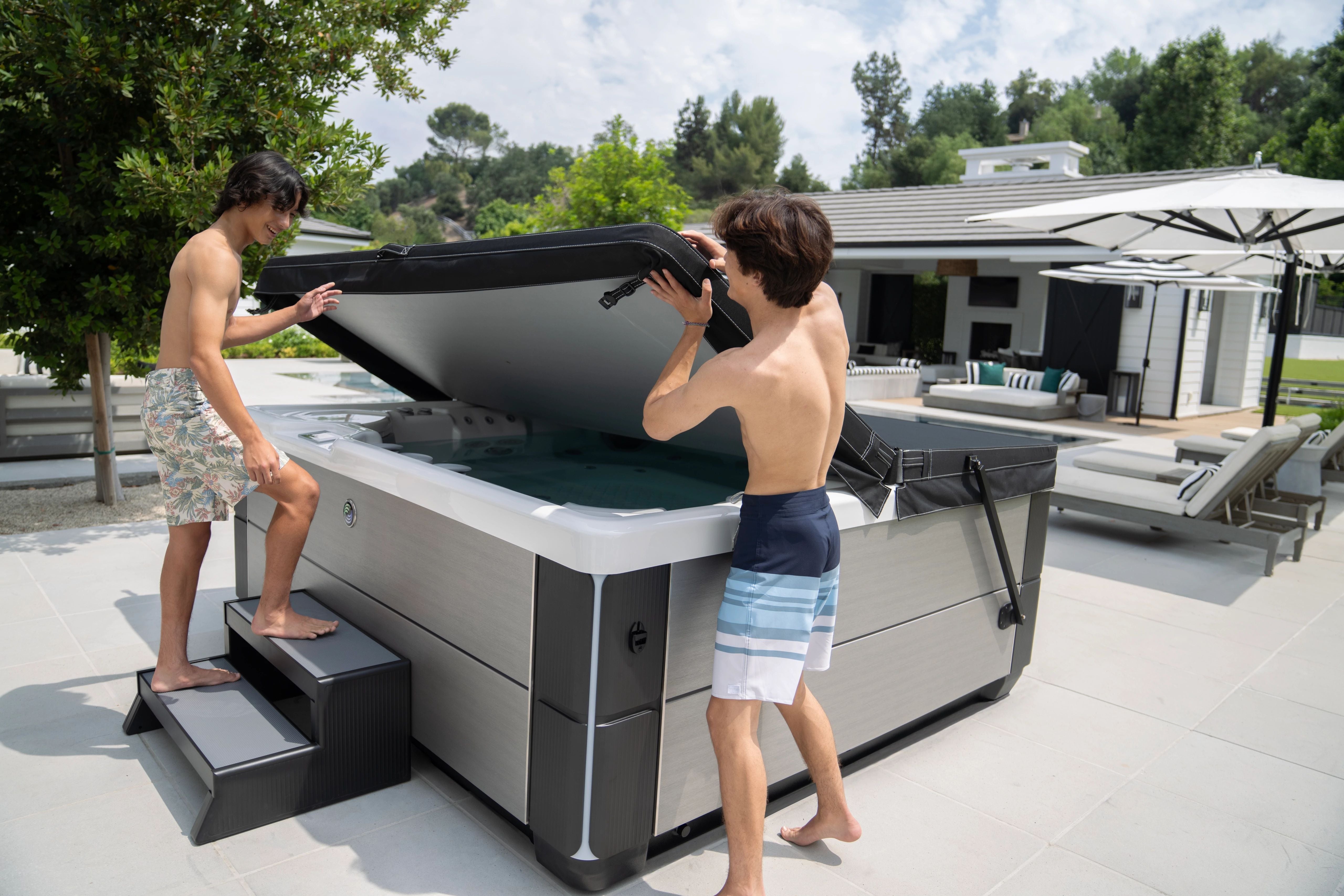
How to Choose a Hot Tub Cover (And Why it Matters More Than You Think)
Why the Right Cover Quietly Determines Your Energy Bills, Your Family’s Safety, and How Long Your Spa Lasts—and How to Choose One That Fits, Insulates, and Holds Up
Of all the parts of a hot tub, the cover gets the least attention—and that’s a mistake. It’s easy to think of it as just a lid, but your cover is doing more work than almost any other component: keeping heat in, keeping your energy bills down, protecting your family, and helping your spa last. A cheap or worn-out cover quietly costs you money every single month.
This guide breaks down what actually matters when choosing a hot tub cover—insulation, fit, safety, durability—and how to care for the one you have so it keeps doing its job. If you’re buying a new spa, replacing a tired cover, or just wondering why your heating costs crept up, this will help.
From Leisure Time Inc., with showrooms in Boise, Idaho Falls, and Twin Falls. In Idaho’s cold winters, the cover is one of the most important—and most overlooked—parts of owning a spa.
Why Your Cover Matters More Than You Think
A hot tub holds 400 gallons of water at 100°F or more, and the surface is where most of that heat escapes. The cover is your primary defense against that loss—which is why it touches almost every part of ownership:
- Energy efficiency: The cover is the single biggest factor in how much it costs to keep your spa hot. A well-insulated cover can cut heat loss dramatically; a waterlogged one can quietly double your heating bill.
- Safety: A quality cover with locking straps helps keep children and pets out of the water when the spa isn’t in use.
- Water care: A good cover keeps out leaves, dirt, and debris and slows evaporation, so you use less water and fewer chemicals.
- Protecting the spa: It shields the shell from UV, weather, and freezing—and a cover that fails can put the whole tub at risk in a cold snap.
In other words, the cover isn’t an afterthought—it’s a working part of the system, and choosing well pays you back every month.
What to Look for in a Quality Cover
Not all covers are built the same, and the differences are mostly hidden inside. Here’s what separates a cover that performs from one that sags and soaks within a couple of years:
- Foam density: Denser foam (commonly 1.0 to 2.0 lb) insulates better, resists sagging, and holds up to snow load. Higher density costs more and weighs more, but lasts longer.
- Taper: Covers are thicker in the center and taper to the edges so water and snow run off instead of pooling. More taper means better insulation and runoff.
- A sealed vapor barrier: The foam core should be wrapped in a heat-sealed plastic barrier to keep water out. This is the single most important feature for preventing waterlogging—the number-one reason covers fail.
- Marine-grade vinyl: A heavy, UV- and mildew-resistant marine vinyl outer skin with double-stitched seams resists cracking and weather.
- A heat seal at the hinge: The fold in the middle is a common spot for heat to escape; a quality cover includes a hinge seal or heat barrier there.
- Reinforced handles and straps: Sturdy handles and lockable safety straps that hold up to daily use and wind.
R-Value and Foam: The Heart of Insulation
When people compare covers, the spec that matters most is insulation—often expressed as R-value, the same measure used for home insulation. A higher R-value means the cover resists heat transfer better, so your spa holds its temperature with less energy.
R-value is driven by two things: the foam’s thickness (taper) and its density. A thicker taper made of denser foam insulates better and resists the sagging and water absorption that ruin cheap covers. For a cold climate, leaning toward a thicker taper and higher density is almost always worth it.
| Cover Tier | Typical Foam Taper | Best For |
|---|---|---|
| Standard | 4″ → 2″ | Mild climates, lighter budgets |
| Premium | 5″ → 3″ | Most homes, true four-season use |
| Cold-Climate / Extreme | 6″ → 4″ | Cold regions like Idaho; maximum efficiency |
The upgrade from a standard cover to a thicker, denser cold-climate cover costs more up front—but in Idaho’s winters, the energy savings add up fast, and the cover lasts longer because dense foam resists waterlogging and snow load. Over the life of the cover, the better one is usually the cheaper one. If your spa runs hard from November through March, this is where to spend.
Safety Is Part of the Job
A hot tub cover isn’t only about heat—it’s a safety barrier. A quality cover is designed to help keep children and pets from accessing the water when the spa isn’t in use, and that protection depends on a few features:
- Lockable safety straps: Straps that clip and lock down secure the cover so it can’t be simply lifted off—important for homes with kids or pets, and often required for insurance.
- A rigid, supportive structure: Safety-rated covers are built to resist collapsing under weight, helping prevent a child from slipping underneath.
- Wind straps: The same straps help keep the cover from blowing off in a storm.
A cover only protects your family if it’s actually secured. Get in the habit of clipping and locking the safety straps every time you close the spa, especially in homes with young children or pets. It takes a few seconds and is the simplest, most important safety step a hot tub owner can take. Look for covers built to recognized safety standards if this is a priority for you.
Getting the Right Fit
A cover only works if it fits. Gaps let heat pour out and debris in, so a snug, correctly sized cover is essential—whether you’re replacing one or ordering for a specific spa. The details that matter are the dimensions, the corner radius, the skirt length, and which way the taper runs.
How to Measure for a Replacement Cover
If you’re replacing a cover, measure carefully—an inch off can mean a poor seal. The basics:
- Length and width: Measure the cover (or the spa cabinet’s outside edges) at the widest points, cap to cap.
- Corner radius: Most spas have rounded corners—measure that radius so the new cover matches.
- Skirt length: The flap that hangs down over the cabinet edge; measure how far it should drop.
- Taper direction: Note which way the fold runs so the new cover hinges in the same direction.
- Foam thickness: Decide on your taper based on climate—thicker for cold winters.
- Strap and tie-down placement: Note where straps attach so they line up with your spa.
When in doubt, bring your spa’s make and model to us—matching a cover to a known spa is the easiest way to get a perfect fit.
Signs It’s Time to Replace Your Cover
Covers wear out—most last around five to seven years—and a failing cover costs you money long before it falls apart. Watch for:
- It’s gotten heavy: A waterlogged cover that takes two people to lift has absorbed water into the foam and lost most of its insulating value. This is the clearest sign it’s done.
- It sags or pools water: A dip in the middle that collects rain or snow means the foam is breaking down.
- Cracked or torn vinyl: Splits in the skin let moisture into the foam and accelerate the decline.
- Gaps or a loose fit: If it no longer seals tightly at the edges or hinge, heat is escaping.
- A musty smell: Trapped moisture and mildew signal a saturated core.
- Climbing energy bills: A quiet, steady rise in heating costs often traces straight back to a tired cover.
If you’re seeing these, a new cover usually pays for itself in energy savings faster than owners expect.
Cover Lifters, Thermal Blankets, and Care
A few accessories and habits make a cover easier to live with and longer-lasting:
- A cover lifter: A pivot or hydraulic lifter lets one person open and close the cover easily—and it keeps the cover off the ground, preventing the dragging and bending that cause damage. It also makes you far more likely to actually use your spa.
- A floating thermal blanket: A thin thermal blanket that floats directly on the water under your main cover adds a layer of heat retention and cuts evaporation—a small, cheap efficiency boost.
- Regular cleaning and conditioning: Wipe the vinyl with mild soap and water and treat it with a UV protectant a few times a year. Avoid harsh or petroleum-based products, which dry out and crack the vinyl.
- Clear snow promptly: Don’t let heavy snow accumulate and pond—brush it off so the foam isn’t crushed or saturated.
- Lift, don’t drag: Always handle the cover by its handles, and use the lifter—dragging tears seams and breaks down the core.
Frequently Asked Questions
Does a hot tub cover really affect my energy bill?
Yes—more than almost anything else. The water’s surface is where most heat escapes, so the cover is your primary insulation against heat loss. A well-insulated, properly sealed cover keeps your spa hot efficiently, while a waterlogged or ill-fitting one can quietly double your heating costs. In a cold climate like Idaho, the cover’s quality shows up directly on your power bill.
How do I know what size cover I need?
Measure your existing cover (or the spa cabinet) at its widest points cap to cap, plus the corner radius, skirt length, and taper direction. Even an inch off can leave gaps that waste heat. The easiest route is to match a cover to your spa’s make and model—bring those details to us and we’ll get you an exact fit.
How long do hot tub covers last?
Most covers last about five to seven years with good care. They wear out when the foam absorbs water and loses its insulating value—so if your cover has gotten heavy, sags in the middle, smells musty, or your energy bills have crept up, it’s time to replace it. A new cover often pays for itself in energy savings faster than people expect.
What foam thickness is best for a cold climate like Idaho?
Lean toward a thicker taper and higher-density foam. Where a mild climate might be fine with a standard 4″-to-2″ taper, Idaho’s winters reward a premium or cold-climate cover (5″-to-3″ or 6″-to-4″) with denser foam. It costs more up front but saves energy all winter and resists the waterlogging and snow-load damage that shorten a cheap cover’s life.
Are hot tub covers a safety feature?
Yes. A quality cover with lockable safety straps helps keep children and pets out of the water when the spa isn’t in use, and a rigid, supportive cover resists collapsing under weight. Always clip and lock the straps when the spa is unattended—it’s the simplest and most important safety habit for any hot tub owner.
Can I buy any cover, or does it have to fit my spa?
It has to fit. The dimensions, corner radius, skirt length, and taper direction all need to match your spa, or you’ll get gaps that waste heat and let in debris. A cover sized to your specific spa seals properly and insulates the way it should, which is why matching to your make and model is the reliable approach.
At Leisure Time Inc., we’ve helped Idaho owners keep their spas efficient and protected for decades, and we know how much the right cover matters here. Bring us your spa’s make and model (or your measurements), tell us how hard your spa works in winter, and we’ll help you choose a cover with the insulation, fit, and durability to pay you back month after month—plus the lifter and accessories to make it easy to live with.
The right cover saves you money, protects your family, and helps your spa last—don’t treat it like just a lid.
10-Year Cost of Ownership: leisuretimeinc.com/blogs/spas-pools/annual-hot-tub-cost-of-ownership-10-year-breakdown
Hot Tub Trade-In Guide: leisuretimeinc.com/blogs/spas-pools/hot-tub-trade-in-guide-when-how-to-replace-old-spa
Idaho Hot Tub Buyer’s Guide: leisuretimeinc.com/blogs/spas-pools/hot-tub-buyers-guide-idaho-2026
Browse Hot Tubs: leisuretimeinc.com/collections/hot-tubs
Locations: leisuretimeinc.com/pages/locations
Boise: (208) 376-0180 • Idaho Falls: (208) 523-4633 • Twin Falls: (208) 933-4295