
Best Sauna for Idaho Homes: Indoor vs. Outdoor Buyer's Guide
How to Choose Between an Indoor and Outdoor Sauna for Idaho’s Climate—Plus Traditional vs. Infrared, Heaters, Sizing, and the Brands Built to Last
A sauna is one of the most rewarding wellness additions you can make to an Idaho home. After a day on the slopes, a cold morning, or a hard workout, nothing matches the deep, restorative heat of a proper sauna—and Idaho’s long, cold winters make that heat feel even better. But before you buy, you face a fundamental decision: indoor or outdoor?
That single choice shapes everything else—where the sauna goes, how it’s built, what it costs to install, how it handles Idaho’s freeze-thaw winters, and the entire ritual of using it. On top of that, you’ll choose between traditional and infrared heat, pick a heater, and size the room to your space. It’s a lot—so this guide walks you through all of it.
Written for Idaho buyers by Leisure Time Inc., with showrooms in Boise, Idaho Falls, and Twin Falls. We carry Finnleo and Tylö—two of the most respected names in the sauna world, with genuine Finnish and Swedish heritage—and we’ll help you choose the right sauna for your home, your climate, and your goals.
The First Decision: Indoor vs. Outdoor
Both indoor and outdoor saunas deliver the same core benefits. The right choice comes down to your available space, your budget, the experience you want, and how you’ll use it. Here’s the high-level comparison before we go deep on each:
| Factor | Indoor Sauna | Outdoor Sauna |
|---|---|---|
| Placement | Bathroom, basement, spare room, home gym | Backyard, patio, deck, poolside |
| Install cost | Lower (uses existing structure) | Higher (standalone structure) |
| Electrical | 120V (small) or 240V (larger) | Usually 240V; often a dedicated run |
| Weatherproofing | Minimal | Critical – must handle Idaho winters |
| The ritual | Convenient, private, year-round easy access | Destination experience, nature, cool-down outside |
| Maintenance | Lowest | Higher (exterior wood, snow, UV) |
| Resale appeal | Strong (spa-like bathroom/gym) | Strong (backyard wellness retreat) |
Indoor Saunas: Convenience and Year-Round Ease
An indoor sauna lives inside your home—commonly in a primary bathroom, basement, home gym, spare room, or a finished garage space. It’s the easiest to access (no trek through the snow), the simplest to install (it uses your home’s existing walls, roof, and climate), and the lowest-maintenance option for Idaho’s climate.
Where Indoor Saunas Work Best
- Primary bathroom: The classic spa-bathroom upgrade. Pairs naturally with a shower for the cool-down rinse.
- Basement: Often the easiest place to fit a sauna—plenty of space, and the cooler basement environment is ideal.
- Home gym: The perfect post-workout recovery pairing. Sweat, then sauna.
- Spare room or closet: Compact models fit surprisingly small footprints—some 1–2 person units need only about 4′×4′.
Indoor Advantages
- Convenient, year-round access without going outside—a real benefit on a -5°F Idaho morning
- Lower installation cost (no foundation or standalone structure)
- Protected from weather—no UV, snow, or freeze-thaw on the cabin
- Smaller units (1–2 person) often run on a standard 120V outlet—no electrical upgrade
- Lowest maintenance of any sauna type
Indoor Considerations
- Requires adequate ventilation—saunas produce heat and (in traditional models) steam
- Needs a moisture-tolerant location and proper floor (tile or sealed surface)
- Takes up interior square footage you might use for something else
- Larger traditional units still need a dedicated 240V circuit
Every indoor sauna needs proper ventilation—both an intake near the heater and an outlet on the opposite wall—to circulate fresh air and manage moisture. This is straightforward with professional installation, but it’s not optional. Good ventilation makes the sauna more comfortable, protects your home from excess humidity, and keeps the wood in great shape. We handle this as part of every indoor sauna installation.
Outdoor Saunas: The Destination Experience
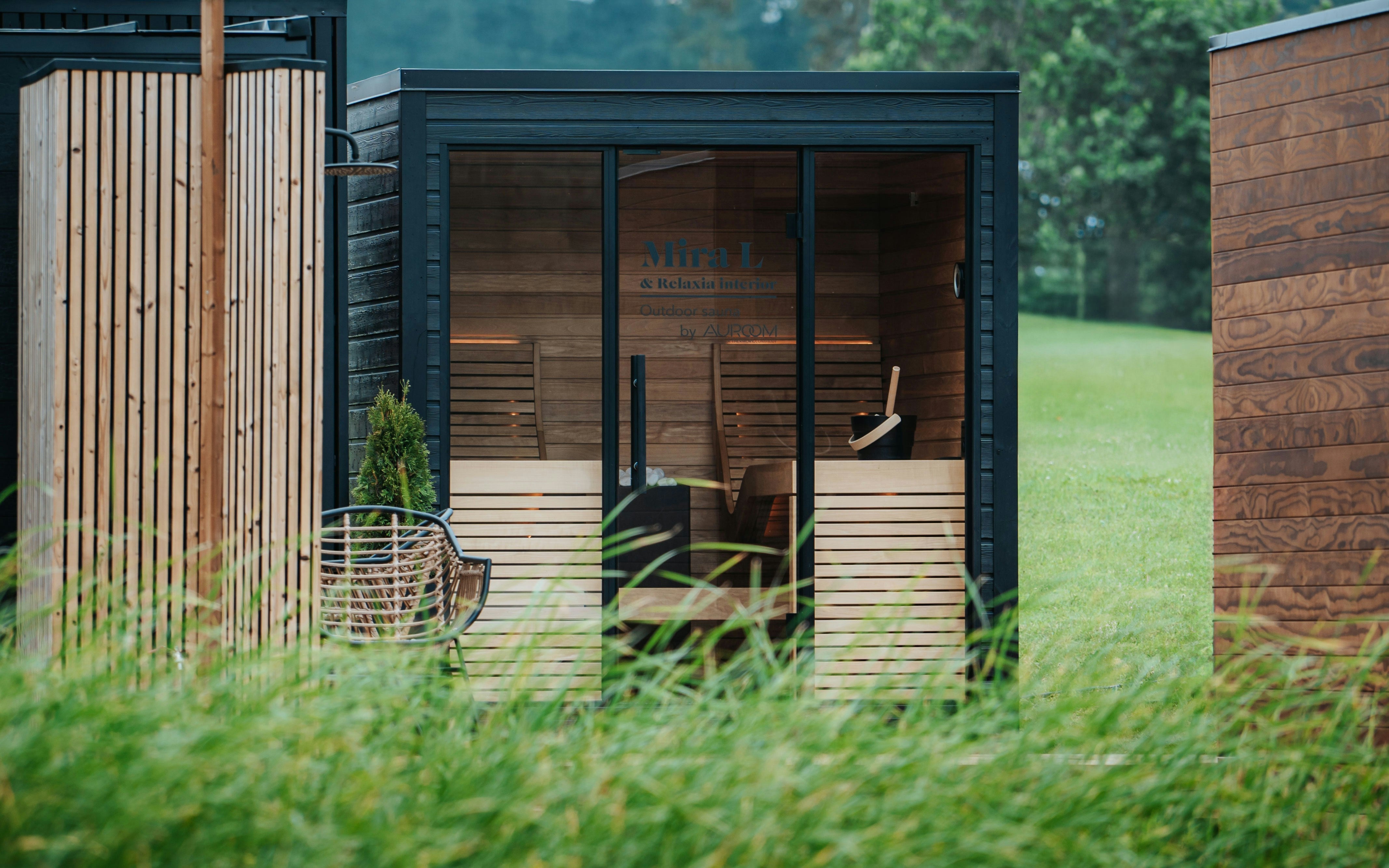
An outdoor sauna is a standalone structure in your backyard, on a patio, beside a pool, or tucked into a garden. It turns sauna time into a destination—step outside, fire up the heat, and cool down in the crisp Idaho air or under the stars. For many people, the outdoor cool-down is the best part, and it pairs perfectly with a cold plunge for contrast therapy.
Popular Outdoor Styles
- Cabin saunas: Traditional rectangular structures with a peaked or sloped roof. The most spacious and customizable—room for benches, a changing area, even a porch.
- Barrel saunas: Iconic cylindrical design. Efficient to heat (less air volume), sheds snow and rain naturally, and a striking backyard centerpiece.
- Custom-cut saunas: Built to your exact specifications and space. Finnleo’s custom-cut program can fit nearly any footprint or design vision.
Outdoor Advantages
- The full ritual—heat inside, cool down in fresh Idaho air, repeat
- Doesn’t use interior square footage
- Larger capacity options—great for families and entertaining
- Pairs beautifully with a cold plunge or pool for contrast therapy
- A genuine backyard showpiece and wellness retreat
Outdoor Considerations for Idaho
- Must be built to withstand Idaho winters—snow load, freeze-thaw, UV, and wind
- Needs a proper foundation: a level pad, concrete, gravel, or pavers
- Requires a dedicated electrical run to the structure (or a wood-burning heater)
- Exterior wood needs periodic care to handle the elements
- The walk from house to sauna matters—keep it short and consider a cleared winter path
Idaho’s freeze-thaw cycles, heavy mountain snow, and intense high-altitude UV are hard on outdoor structures. Choose naturally weather-resistant, stable woods for an outdoor sauna—Western Red Cedar and thermally modified woods resist moisture, rot, and warping far better than untreated softwoods. For the full breakdown of which woods hold up in Idaho, see our guide to the best wood for indoor and outdoor saunas. A quality outdoor sauna, properly built, handles Idaho winters beautifully for decades.
Traditional vs. Infrared: Two Different Experiences
Independent of indoor vs. outdoor, you’ll choose how the sauna heats you. This is less about specs and more about the experience you want.
Traditional Saunas (Finnish)
A traditional sauna heats the air to 150–195°F using an electric or wood-burning heater topped with sauna stones. Pour water over the hot stones and you create löyly—the burst of steam and enveloping heat that defines the authentic Finnish sauna ritual. This is high, intense, immersive heat with the ability to control humidity. It’s the centuries-old experience, and it’s where the deepest cultural roots and the classic sauna feel live.
Best for: Purists who want the authentic ritual, high heat, steam, and the social tradition of the sauna. Traditional is Finnleo’s heritage and DNA.
Infrared Saunas
An infrared sauna uses infrared emitters to warm your body directly with radiant light, rather than heating the air around you. Ambient temperatures are lower (around 120–150°F), which many people find more comfortable for longer sessions. There’s no steam or löyly—it’s a gentler, dry warmth that’s easy to integrate into a daily wellness routine. Infrared units also tend to heat up faster and often run on standard household power in smaller sizes.
Best for: Daily wellness integration, people who find traditional heat too intense, lower-temperature comfort, and faster warm-up.
Hybrid: The Best of Both (Finnleo InfraSauna)
Can’t decide? Finnleo’s InfraSauna combines both in one cabin—infrared heating panels and a traditional electric sauna heater together. Use infrared for a gentle daily session, or fire up the traditional heater for the full high-heat, löyly experience. It’s a genuinely versatile option for households where different people want different experiences.
Here’s something most buyers don’t know: because TylöHelo (Finnleo’s parent company) owns Tylö—the renowned Swedish heater manufacturer—Finnleo traditional saunas are equipped with Tylö electric heaters, among the best traditional sauna heaters available anywhere in the world. When you buy a Finnleo traditional sauna, you’re getting heritage engineering on both the cabin and the heater. Notable innovations include the Himalaya Rock Tower heater with an integral water tank and the SaunaLogic2 control with worldwide mobile-app functionality—so you can start your sauna from your phone on the way home.
Choosing Your Heater
For traditional saunas, the heater is the heart of the system. Your main options:
- Electric heaters (most common): Clean, convenient, and precise. Turn it on, set the temperature, and it heats quickly—especially with a quality Tylö heater. Works indoors and outdoors (with a dedicated 240V circuit on larger units). The default choice for most Idaho homes.
- Wood-burning heaters: The most authentic, off-grid option—ideal for a remote outdoor sauna or a cabin property without easy electrical access. Delivers a crackling-fire ambiance and intense heat, but requires firewood, tending, and a chimney. Popular for rustic Idaho mountain settings.
- Infrared emitters: For infrared saunas—carbon or ceramic panels that radiate heat directly to your body. No stones, no steam, faster warm-up, lower power draw on smaller units.
Sizing Your Sauna
Sauna size is driven by how many people will use it at once and the space you have. A good rule of thumb is to allow roughly 2 feet of bench space per person, plus room to enter and move. Here’s a general guide:
| Capacity | Typical Footprint | Power | Best For |
|---|---|---|---|
| 1–2 person | ~4′×4′ | Often 120V (infrared/small) | Couples, tight spaces, indoor |
| 3–4 person | ~5′×7′ | 240V | Families, most common size |
| 4–6 person | ~6′×8′+ | 240V | Entertaining, larger families |
| 6+ person | Custom | 240V (higher kW) | Outdoor cabins, gatherings |
Bigger isn’t always better: a larger sauna takes longer to heat and costs more to run. Size it to your realistic typical use, not the maximum number of people you might ever host. For most Idaho families, a 3–4 person sauna is the sweet spot.
What to Look for in a Quality Sauna
- Quality wood: Stable, moisture-resistant species—Western Red Cedar, Nordic spruce, hemlock, or thermally modified woods. Critical for outdoor saunas in Idaho. (See our sauna wood guide.)
- A reputable heater: The heater is the engine. Finnleo traditional saunas use Tylö heaters—among the world’s best. Match the heater’s kW rating to the room size.
- Solid construction: Thick wall panels, tight joinery, quality door and glass, and proper insulation hold heat efficiently and last for decades.
- Good controls: Modern digital controls (like Finnleo’s SaunaLogic2) let you set temperature, timers, and even start remotely via app.
- Proper ventilation: Essential for comfort, air quality, and wood longevity—especially indoors.
- Brand and warranty: Established makers like Finnleo and Tylö back their saunas with strong warranties and parts availability. Heritage matters in this category.
- Professional installation: Correct electrical, ventilation, foundation (outdoor), and assembly protect your investment and your home.
Which Sauna Is Right for You?
Choose an Indoor Sauna if you:
- Want convenient, year-round access without going outside in winter
- Have suitable interior space (bathroom, basement, gym, spare room)
- Prefer the lowest installation cost and maintenance
- Like the idea of a spa-like bathroom or recovery-focused home gym
- May want a compact 120V model with no electrical upgrade
Choose an Outdoor Sauna if you:
- Want the full destination ritual—heat, then cool down in the Idaho air
- Have backyard, patio, or poolside space
- Want larger capacity for family and entertaining
- Plan to pair it with a cold plunge or pool for contrast therapy
- Love the idea of a backyard wellness retreat as a showpiece
Choose Traditional if you:
- Want the authentic Finnish ritual—high heat, steam, and löyly
Choose Infrared if you:
- Prefer gentler, lower-temperature heat for longer, daily sessions
Choose Hybrid (InfraSauna) if you:
- Want both experiences in one cabin and can’t decide—or share with people who want different things
Frequently Asked Questions
Is an indoor or outdoor sauna better for Idaho?
Both work beautifully in Idaho year-round. Indoor wins on convenience and low maintenance—no trek through the snow, no weather exposure. Outdoor wins on the experience—the cool-down in crisp Idaho air is unbeatable, and it pairs perfectly with a cold plunge. The right answer depends on your space, budget, and whether you value convenience or ritual more. Many Idaho buyers with backyard space love the outdoor experience; those wanting daily ease choose indoor.
Do outdoor saunas hold up to Idaho winters?
Yes—a quality outdoor sauna built with weather-resistant wood (Western Red Cedar or thermally modified species) and properly installed handles Idaho’s snow, freeze-thaw, and UV for decades. The keys are good materials, a proper foundation, and periodic exterior wood care. Saunas are literally built for cold climates—they originated in Finland.
Traditional or infrared—which should I choose?
It comes down to the experience you want. Traditional gives you high heat, steam (löyly), and the authentic Finnish ritual. Infrared gives you gentler, lower-temperature radiant heat that’s easy for daily, longer sessions. If you want the classic intense sauna experience, go traditional. If you want comfortable daily wellness, go infrared. Finnleo’s InfraSauna hybrid lets you have both in one cabin.
What electrical does a sauna need?
Small 1–2 person saunas (especially infrared) often run on a standard 120V household outlet. Larger traditional saunas need a dedicated 240V circuit installed by a licensed electrician, sized to the heater’s kW rating. Outdoor saunas typically require a dedicated electrical run to the structure—or a wood-burning heater for off-grid use. We’ll spec the exact requirement for your model.
How big should my sauna be?
Size it to your typical use, not the maximum. Allow about 2 feet of bench space per person. A 1–2 person sauna fits roughly 4′×4′; a 3–4 person (the most popular size) needs about 5′×7′. Bigger saunas take longer to heat and cost more to run, so don’t over-size. For most Idaho families, 3–4 person is ideal.
Why Finnleo and Tylö?
Both bring genuine Finnish/Swedish sauna heritage dating back over a century, with Finnleo manufacturing in the USA (Cokato, Minnesota) since 1984. Because their parent company owns Tylö, Finnleo traditional saunas use Tylö electric heaters—among the best in the world. You get authentic engineering, a wide range of indoor/outdoor and traditional/infrared/hybrid options, strong warranties, and modern controls like the SaunaLogic2 app. It’s heritage you can rely on.
Can I install a sauna myself?
Pre-built and modular saunas are designed for relatively straightforward assembly, but the electrical (240V) must be done by a licensed electrician, and outdoor saunas need a proper foundation. Custom-cut saunas require more involved construction. Most buyers have us handle delivery, foundation guidance, electrical coordination, ventilation, and assembly so it’s done right and the warranty is protected.
At Leisure Time Inc., we’ll help you choose the right sauna for your Idaho home—indoor or outdoor, traditional or infrared, the perfect size and heater for your space and goals. We carry Finnleo and Tylö, we install throughout the region, and we’ll guide you through placement, electrical, foundation, and ventilation so your sauna is built to last through every Idaho winter.
Authentic heat. Built for Idaho. Let’s find your sauna.
Browse Saunas: leisuretimeinc.com/collections/saunas
Best Wood for Saunas: leisuretimeinc.com/blogs/health-personal-care/best-wood-for-indoor-outdoor-saunas
Sauna vs. Hot Tub vs. Cold Plunge: leisuretimeinc.com/blogs/health-personal-care/sauna-vs-hot-tub-vs-cold-plunge
Best Hot & Cold Contrast Therapy Routine: leisuretimeinc.com/blogs/health-personal-care/best-hot-cold-routine-contrast-therapy
Browse Cold Plunges: leisuretimeinc.com/collections/cold-plunges
Shop Accessories: leisuretimeinc.com
Locations: leisuretimeinc.com/pages/locations
Boise: (208) 376-0180 • Idaho Falls: (208) 523-4633 • Twin Falls: (208) 933-4295