
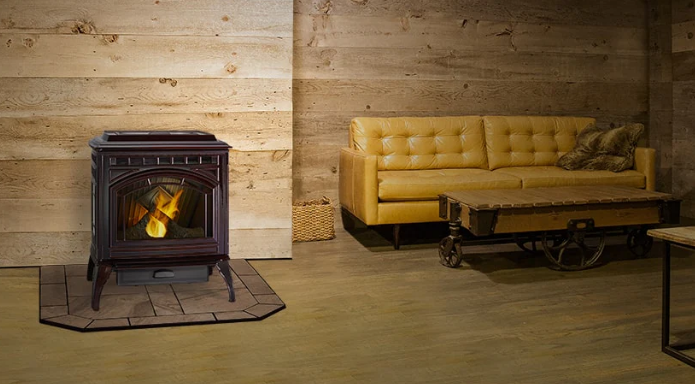
Pellet Stove Buyer's Guide for Idaho Homes
How Pellet Stoves Work, How They Compare to Wood and Gas, How to Size One for an Idaho Winter, and What to Know About Installation, Costs, and Idaho’s Tax Deduction
If you’re looking for efficient, cozy, controllable heat for an Idaho winter, a pellet stove deserves a serious look. It delivers the warmth and ambiance of a wood stove with far less work—no chopping, hauling, or constant tending—plus thermostatic control and clean, efficient burning. For a lot of Idaho homes, it’s the sweet spot between a traditional wood stove and a gas appliance.
This guide covers what you actually need to know before you buy: how pellet stoves work, how they stack up against wood and gas, how to size one for our climate, what features matter, what installation involves, and how Idaho’s state tax deduction can help offset the cost. The goal is to help you choose the right stove with confidence—one that keeps your home warm efficiently for years.
From Leisure Time Inc., with showrooms in Boise, Idaho Falls, and Twin Falls. We’ve helped Idaho homeowners heat their homes for decades—here’s how to think through a pellet stove.
Why Pellet Stoves Make Sense for Idaho
Idaho winters are long and genuinely cold, which makes efficient, reliable heat worth real money. Pellet stoves fit our climate well for several reasons:
- Efficient, even heat: A quality pellet stove burns cleanly and converts most of its fuel into usable heat, holding a steady temperature rather than the swings of a hand-fed wood fire.
- Far less work than wood: No splitting, stacking, or hauling logs—you pour in bagged pellets and the stove feeds itself automatically.
- Lower, more predictable fuel cost: Wood pellets are widely available across the Northwest, and a stove sized right can take a real bite out of winter heating bills.
- A renewable, local fuel: Pellets are made from compressed wood waste—a renewable resource, often produced regionally.
- Backup heat that’s cozy, too: Many Idaho owners run a pellet stove as a primary heat source for the main living area and a comfortable backstop when the weather turns severe.
How a Pellet Stove Works
Pellet stoves are more automated than wood stoves, which is a big part of their appeal. Here’s the basic cycle:
- Load the hopper: You pour wood pellets into a storage hopper—typically holding 40 to 120+ pounds depending on the model.
- The auger feeds the fire: A motorized auger automatically delivers pellets from the hopper into the burn pot at a controlled rate.
- Automatic ignition: An electric igniter lights the pellets—no kindling or matches.
- A clean, hot burn: A combustion blower feeds just the right amount of air for an efficient, low-emission burn.
- Heat into the room: A convection blower pushes warm air out into your living space.
- Thermostatic control: The stove adjusts its feed rate to hold the temperature you set—steady, even heat without constant tending.
- Easy cleanup: Ash collects in a pan you empty periodically—a fraction of the mess of a wood stove.
One important note: because the auger, igniter, and blowers are electric, a pellet stove needs household power to run. We’ll come back to that under installation—it matters in an Idaho outage.
Pellet vs. Wood vs. Gas: Which Is Right for You?
Pellet stoves aren’t the only option. The right choice depends on how much convenience you want, whether you value off-grid operation, and what fuel makes sense for your home.
| Factor | Pellet Stove | Wood Stove | Gas Stove |
|---|---|---|---|
| Fuel | Bagged wood pellets | Cordwood (split & seasoned) | Natural gas or propane |
| Convenience | High—auto feed & thermostat | Lower—load & tend by hand | Highest—on/off, no fuel hauling |
| Heat control | Thermostatic, even | Manual, variable | Precise, instant |
| Needs electricity | Yes (plan a backup) | No | Little or none |
| Mess / upkeep | Moderate—ash & cleaning | More—ash, hauling, chimney | Least |
| Works in an outage | No (without battery/generator) | Yes | Varies by model |
| Idaho deduction eligible | Yes (qualifying models) | Yes (EPA-certified) | Qualifying gas/propane units |
In short: choose pellet for hands-off convenience and even, efficient heat; wood if off-grid operation and the lowest fuel cost matter most and you don’t mind the work; gas for the ultimate set-it-and-forget-it ease if you have a gas line or propane.
Sizing: Matching BTUs to Your Idaho Space
Sizing is where most buyers need the most help—and where a hearth specialist earns their keep. A stove that’s too small won’t keep up on the coldest nights; one that’s too large will short-cycle and leave the room uncomfortably hot. The goal is a stove matched to the space you actually want to heat.
Pellet stoves are rated by BTU output, commonly ranging from around 8,000 BTU on the small end to 40,000+ BTU for larger models. As a rough starting point, a mid-to-large stove can heat somewhere in the range of 1,200–2,000 square feet—but that number swings widely with insulation, ceiling height, layout, and how cold it gets.
Generic ‘BTU per square foot’ charts are built for mild climates. In Idaho’s cold winters—and especially in older or less-insulated homes—you should plan toward the higher end of the range so the stove keeps up on the worst nights, not just the average ones. The best approach is a quick heat-loss assessment with a hearth specialist who knows our climate. Bring your square footage, ceiling height, and a sense of your insulation, and we’ll point you to the right size.
Also decide what you’re heating: a pellet stove is excellent for zone heating a main living area (the most common use), and some larger setups can carry much of a well-laid-out home. Be honest about your floor plan—heat travels better through open layouts than down long hallways and around corners.
What to Look for When Buying
Once you’re in the right size range, these are the features and specs that separate a stove you’ll love from one you’ll tolerate:
- Efficiency and EPA certification: Look for an EPA-certified stove with a high efficiency rating. A higher-efficiency model burns less fuel for the same heat—and a thermal efficiency of 75% or greater (HHV) is also the threshold that matters for Idaho’s tax deduction.
- Hopper capacity and burn time: A larger hopper means longer stretches between refills—some stoves run a full day or more on a single fill. If you don’t want to load pellets twice a day in January, size the hopper accordingly.
- Freestanding stove vs. insert: A freestanding pellet stove sits in the room and vents through a wall or roof; a pellet insert fits into an existing fireplace opening to upgrade a drafty hearth. Your space decides which fits.
- Thermostat and auto-ignition: Programmable thermostats and automatic ignition deliver true set-and-forget convenience—worth prioritizing.
- Heat output range and controls: A good turn-down range lets the stove run low on mild days and ramp up when it’s bitter out.
- Build quality and brand support: A well-built stove from a brand with parts and local service behind it will outlast and outperform a bargain unit—and you’ll want that support down the road.
Installation, Venting, and Power
A pellet stove is a real heating appliance, and proper installation matters for both safety and performance. A few things to plan for:
- Professional installation and a permit: Pellet stoves should be installed to code by a qualified installer, typically with a local permit. This protects your home, your warranty, and your insurance.
- Venting: Pellet stoves use a dedicated pellet vent (not a full masonry chimney) and can often vent horizontally through an exterior wall, which gives you flexibility in placement.
- Floor and clearance protection: Most installations need a hearth pad and proper clearances to combustibles—your installer handles the specifics.
- Electrical: The stove plugs into a standard outlet, but remember it needs that power to run.
Because a pellet stove relies on electricity for its auger, igniter, and blowers, it won’t run during an outage unless you’ve planned ahead. In Idaho, where winter storms can knock out power exactly when you need heat most, consider a battery backup (UPS) sized for your stove or a generator. It’s a small addition that keeps your heat on when it counts.
Idaho Incentives and the State Tax Deduction
Here’s news worth knowing before you shop: the federal biomass stove tax credit (the 30% credit many guides still reference) expired at the end of 2025 and is not available for new installations in 2026. But Idaho has its own incentives that remain valuable:
- Idaho Residential Alternative Energy Tax Deduction: Idaho offers a state income tax deduction (not a credit) for qualifying alternative energy devices, including pellet stoves and EPA-certified wood stoves. You can deduct 40% of the cost in the year it’s installed, then 20% per year for the next three years—capped at $5,000 in any single year, up to $20,000 total.
- DEQ woodstove change-out programs: The Idaho Department of Environmental Quality runs regional change-out programs that offer rebates to replace old, high-emission wood stoves with cleaner certified wood or pellet models. Availability and funding vary by area and over time.
There are conditions—for example, when the deduction is tied to replacing an old non-certified wood stove, that old stove generally must be surrendered to DEQ for proper disposal within a set window. Programs and rules change, and everyone’s tax situation is different.
We’re hearth specialists, not tax advisors. The Idaho deduction and DEQ programs have specific eligibility rules, and incentives can change year to year. Before you factor any savings into your decision, confirm current eligibility and amounts with a qualified tax professional and the Idaho DEQ Woodstove Program. We’re happy to help you choose a qualifying, EPA-certified stove so you’re positioned to take advantage of what applies to you.
Fuel, Maintenance, and What It Costs
A pellet stove is low-maintenance compared to wood, but it isn’t no-maintenance. Knowing the routine—and the real costs—helps you plan:
Fuel
Pellets come in 40-pound bags (and by the ton). Premium, low-ash pellets burn cleaner and leave less to clean up, so they’re usually worth it. Store pellets somewhere dry—moisture ruins them. Fuel cost varies by season and supplier, but a stove sized correctly for zone heating is generally an economical way to heat the space you use most.
Maintenance
Plan on quick, regular upkeep during the burning season—emptying the ash pan, cleaning the burn pot and glass—plus a more thorough seasonal cleaning and an annual vent check. None of it is difficult; it’s just part of owning the appliance, and it keeps the stove efficient and safe.
What It Costs
As a general ballpark, a quality freestanding pellet stove typically runs in the low-to-mid four figures, with inserts and premium models costing more; professional installation (venting, hearth pad, labor) commonly adds several hundred to a couple thousand dollars depending on your home. Pellets are an ongoing seasonal cost on top of that. Because every home and install is different, the best move is to visit a showroom for a firm quote—and to factor in Idaho’s deduction where it applies.
Frequently Asked Questions
Are pellet stoves a good choice for Idaho winters?
Yes—they’re a strong fit. Pellet stoves deliver efficient, thermostatically controlled heat with far less work than wood, which suits Idaho’s long, cold winters well. Sized correctly for your space and climate, a quality pellet stove can be an economical primary heat source for your main living area and a cozy backup when the weather turns severe. The one caveat is that they need electricity, so plan a backup for outages.
Pellet stove or wood stove—which is better?
It depends on what you value. A pellet stove wins on convenience and even, controllable heat: you load pellets, set a temperature, and the stove does the rest. A wood stove wins on off-grid operation (no electricity needed) and the lowest fuel cost if you have access to wood—at the price of more labor and mess. For most Idaho homeowners who want efficient heat without the work, pellet is the easier choice; for true off-grid resilience, wood has the edge.
What size pellet stove do I need?
It comes down to the square footage you want to heat, your insulation, ceiling height, layout, and how cold it gets—so Idaho homes generally need to plan toward the higher end of sizing charts. As a rough guide, a mid-to-large stove can heat roughly 1,200–2,000 square feet, but that varies widely. The reliable way to get it right is a quick heat-loss assessment with a hearth specialist; an undersized stove won’t keep up, and an oversized one will short-cycle.
Does a pellet stove need electricity?
Yes. The auger that feeds pellets, the igniter, and the blowers all run on household power, so a pellet stove won’t operate during an outage unless you’ve planned for it. In Idaho, where winter storms can cause outages, many owners add a battery backup (UPS) sized for the stove or keep a generator on hand so their heat stays on when they need it most.
Is there a tax credit or deduction for a pellet stove in Idaho?
The federal biomass stove tax credit expired at the end of 2025, so there’s no federal credit for new installations in 2026. However, Idaho offers a state income tax deduction for qualifying alternative energy devices—including pellet and EPA-certified wood stoves—of 40% the first year plus 20% per year for three years after, capped at $5,000 per year. The Idaho DEQ also runs regional change-out rebate programs. Rules and eligibility apply, so confirm the current details with a tax professional and the Idaho DEQ before counting on any savings.
How much maintenance does a pellet stove require?
Less than a wood stove, but some regular care during the season: emptying the ash pan and cleaning the burn pot and glass periodically, plus a deeper seasonal cleaning and an annual vent check. Burning premium, low-ash pellets reduces the cleanup. It’s straightforward upkeep that keeps the stove running efficiently and safely all winter.
At Leisure Time Inc., we’ve been keeping Idaho homes warm for decades, and our hearth specialists know what works in our climate. Visit a showroom to see pellet stoves in person, get an honest sizing assessment for your space, and walk through your options—freestanding or insert, the right BTU range, the features that matter, and what installation involves. We’ll help you choose an efficient, EPA-certified stove and make the whole process simple, from selection to installation.
Efficient heat, less work, and a cozy Idaho winter—let’s find your pellet stove.
Browse Fireplaces & Stoves: leisuretimeinc.com/collections/fireplaces-stoves
Hearth Buyer’s Guide: leisuretimeinc.com/pages/hearth-buyers-guide
Financing Options: leisuretimeinc.com/pages/financing
Locations: leisuretimeinc.com/pages/locations
Boise: (208) 376-0180 • Idaho Falls: (208) 523-4633 • Twin Falls: (208) 933-4295