
What Type of Fireplace Should I Choose / Buy?
Your Complete Guide to Choosing the Right Fireplace, Insert, or Stove for Your Home
If you're thinking about adding a fireplace to your home—or upgrading the one you already have—you're not alone. A fireplace is one of the most impactful investments you can make for comfort, ambiance, and even home value. But with so many fuel types, configurations, and brands available, it's easy to feel overwhelmed before you even walk into a showroom.
At Leisure Time Inc., we've been helping Idaho families choose the right hearth products for over 40 years. In this guide, we'll walk you through the major types of fireplaces, inserts, and stoves, explain the key differences between gas, wood, electric, and pellet options, and help you understand which brands and features deliver the best value for your home and lifestyle.
Fireplaces, Inserts, and Stoves: What's the Difference?
Before diving into fuel types and brands, it helps to understand the three main categories of hearth products. Each serves a different purpose depending on your home's construction, your heating goals, and whether you're building new or upgrading an existing setup.
Built-In Fireplaces (Zero-Clearance Fireplaces)
Built-in fireplaces—also called zero-clearance fireplaces—are designed to be installed directly into a wall during new construction or a renovation. They use factory-built metal construction with special insulation that allows them to be framed right up against combustible materials like wood studs and drywall. These are the most versatile option for new builds because they can go almost anywhere in your home: living rooms, bedrooms, basements, even bathrooms. They vent through a metal chimney chase rather than traditional masonry, which significantly reduces installation cost. Brands like Heat & Glo, Heatilator, Kozy Heat, Valor, and Stûv all offer excellent built-in models in gas, wood, and electric configurations.
Fireplace Inserts
If you already have an existing fireplace—whether it's a masonry fireplace or an older factory-built unit—an insert is often the smartest upgrade you can make. An insert slides into your existing firebox and connects to your chimney using flexible liner pipes. This converts a drafty, inefficient open fireplace into a sealed, efficient heating appliance. Gas inserts from Valor, Heat & Glo, and Kozy Heat are among the most popular because they offer instant flame, remote control operation, and significantly more heat output than an open fireplace. Wood inserts from brands like Stûv and Quadra-Fire are excellent for homeowners who love the experience of a real wood fire. Pellet inserts from Harman offer an automated, efficient alternative using compressed wood pellets.
Freestanding Stoves
Stoves are standalone units that sit on a hearth pad and vent through a chimney pipe, either through the wall or through the ceiling and roof. They're ideal for spaces that don't have an existing fireplace or where running a built-in isn't practical—like basements, workshops, or cabins. Stoves come in gas, wood, pellet, and electric varieties. Wood stoves from Vermont Castings and HearthStone Stoves are beloved for their craftsmanship, cast iron construction, and the uniquely comfortable radiant heat that soapstone and cast iron provide. Pellet stoves from Harman and Quadra-Fire offer the convenience of automated feeding and thermostat control. Gas stoves from Vermont Castings and Valor combine the charm of a stove's freestanding design with the convenience of gas.
Not sure which category fits your situation? At Leisure Time Inc., our hearth specialists will assess your home, your existing chimney or venting, and your goals to recommend the right starting point—before you ever have to choose a brand or fuel type.
Choosing Your Fuel Type: Gas, Wood, Electric, or Pellet
The fuel type you choose will have the biggest impact on your day-to-day experience—how you start a fire, how much maintenance is involved, how much heat you get, and what it costs to operate. Let's break down each option.
Gas Fireplaces (Natural Gas or Propane)
Gas fireplaces are the most popular choice for homeowners in Idaho, and for good reason. They offer instant flame at the push of a button or the tap of an app, require virtually no cleanup, and provide consistent, controllable heat. Modern gas fireplaces use direct vent technology, which means they draw combustion air from outside and exhaust fumes back outside through a sealed, co-axial pipe system. This keeps your indoor air clean and eliminates the need for a traditional masonry chimney.
Today's gas fireplaces produce remarkably realistic flames. Brands like Heat & Glo, Kozy Heat, and Valor have invested heavily in burner technology and hand-painted log sets that rival the look of a real wood fire. Kozy Heat's EVO Elevated Burner technology, for example, creates three-dimensional flames that rise through and around the logs rather than just along the bottom of the firebox—a major leap in realism.
Key advantages of gas include convenience (no wood to chop, carry, or store), cleanliness (no ash, soot, or creosote), efficiency (many models exceed 70% efficiency), and the ability to operate during power outages since many direct vent gas fireplaces don't require electricity. Valor's radiant gas fireplaces are specifically designed to heat without fans or electricity, making them especially reliable in Idaho's harsh winters.
| Feature | Gas Fireplace |
|---|---|
| Startup | Instant—button, remote, or app |
| Maintenance | Very low—annual service recommended |
| Heat Output | 20,000–45,000+ BTUs typical |
| Venting | Direct vent (sealed, safe, efficient) |
| Cleanup | None—no ash or soot |
| Ambiance | Excellent—realistic logs, adjustable flame |
| Power Outage | Many models operate without electricity |
Wood-Burning Fireplaces and Stoves
For many homeowners, nothing compares to the experience of a real wood fire—the crackling sounds, the aroma, the dancing flames. Wood-burning is also the most cost-effective fuel source in many parts of Idaho, where firewood is plentiful and affordable.
Modern wood-burning technology has come a long way from the smoky, inefficient fireplaces of decades past. Today's EPA-certified wood stoves and fireplaces burn dramatically cleaner and more efficiently thanks to advanced combustion systems. HearthStone Stoves, handcrafted in Vermont, uses soapstone-lined construction with their TruHybrid combustion system to achieve some of the lowest emissions in the industry while delivering long-lasting, comfortable radiant heat. Soapstone absorbs the sharp heat of the fire, stores the energy, and then radiates a gentle warmth back into the room—keeping your home at a comfortable temperature for hours after the fire goes down.
Vermont Castings offers iconic cast iron wood stoves with their FlexBurn technology, which allows the stoves to burn both catalytically and non-catalytically for maximum flexibility and efficiency. Their Defiant, Encore, and Intrepid models have been trusted for decades. Quadra-Fire's Automatic Combustion Control (ACC) technology makes wood burning easier than ever—simply load the firebox, start the fire, and the ACC system automatically adjusts the air supply to maintain the optimal burn rate. Stûv, a Belgian brand available at Leisure Time Inc., offers stunningly modern wood fireplaces and stoves with unique features like guillotine glass doors that allow you to enjoy an open or closed fire, and 360-degree rotating stoves.
The trade-off with wood is effort: you need to source, store, and carry firewood, and you'll need to clean out ash and have your chimney swept annually. But for those who embrace the ritual, wood burning is deeply rewarding—and many wood stoves and fireplaces are eligible for a 30% federal tax credit when they meet EPA efficiency standards.
Electric Fireplaces
Electric fireplaces have made enormous strides in recent years and are an excellent choice for spaces where gas or wood venting isn't possible—apartments, condos, interior walls, or rooms where running a chimney would be impractical. They require nothing more than a standard electrical outlet (or a dedicated circuit for higher-output models).
Modern electric fireplaces from Kozy Heat (the Osseo eSeries), Heat & Glo (the Allusion series), and European Home offer surprisingly realistic flame effects using LED technology, adjustable ember beds, and multiple media options like driftwood, crystals, and river rock. Many models offer the flexibility of operating with or without heat, which means you can enjoy the ambiance of a fire year-round. Installation is dramatically simpler and less expensive than gas or wood options—many electric units are literally slide-in or plug-in ready.
The primary limitation of electric fireplaces is heat output. While they provide supplemental warmth and wonderful ambiance, they generally aren't designed to be a primary heat source for larger spaces the way a gas or wood appliance can be.
Pellet Stoves and Inserts
Pellet stoves burn compressed wood pellets—a renewable biomass fuel made from sawmill waste. They offer a unique blend of the warmth and ambiance of a real fire with the automated convenience of a thermostat-controlled appliance. You load pellets into a hopper, set your desired temperature, and the stove automatically feeds pellets into the burn pot as needed.
Harman is the gold standard in pellet heating, and their products are available through Forge & Flame (the parent brand that also includes Quadra-Fire and Vermont Castings). Harman's patented PelletPro system and burn pot technology maximizes combustion efficiency, and their EASY Touch Control system makes operation simple and intuitive. The Absolute43 is one of the quietest pellet stoves on the market. Quadra-Fire also offers excellent pellet stoves like the Trekker, which uses smart-sensing technology for precise temperature control.
Pellet stoves do require electricity to run the auger, fans, and control board, so they won't operate during a power outage without a battery backup. They also require more regular maintenance than gas—emptying the ash pan and cleaning the burn pot—though significantly less than a traditional wood stove. Many pellet stoves qualify for the 30% federal tax credit.
Fuel Type Comparison at a Glance
| Gas | Wood | Pellet | |
|---|---|---|---|
| Convenience | Highest | Lowest | High |
| Ambiance | Excellent | Unmatched | Very Good |
| Heat Output | High | Very High | High |
| Operating Cost | Moderate | Low (if wood is available) | Moderate |
| Maintenance | Very Low | High | Moderate |
| Venting Required | Direct vent pipe | Chimney (Class A) | Wall vent or chimney |
| Power Outage Use | Yes (many models) | Yes | No (needs electricity) |
| Tax Credit Eligible | No | Yes (EPA certified) | Yes (EPA certified) |
Design Styles: Traditional, Contemporary, and Linear
The aesthetic of your fireplace is just as important as the fuel type and function. Today's hearth products span a wide range of design styles, so you can find a model that complements your home's architecture and your personal taste.
Traditional
Traditional fireplaces feature classic proportions, arched or rectangular viewing areas, hand-painted log sets, and brick or stone interiors. They evoke the timeless charm of a masonry fireplace. The Heatilator Heirloom and Novus, Kozy Heat's Bayport and Springfield, and Valor's Horizon and Portrait series are excellent examples. Vermont Castings' cast iron stoves are the definitive traditional freestanding option—their Encore and Defiant models are iconic.
Contemporary and Linear
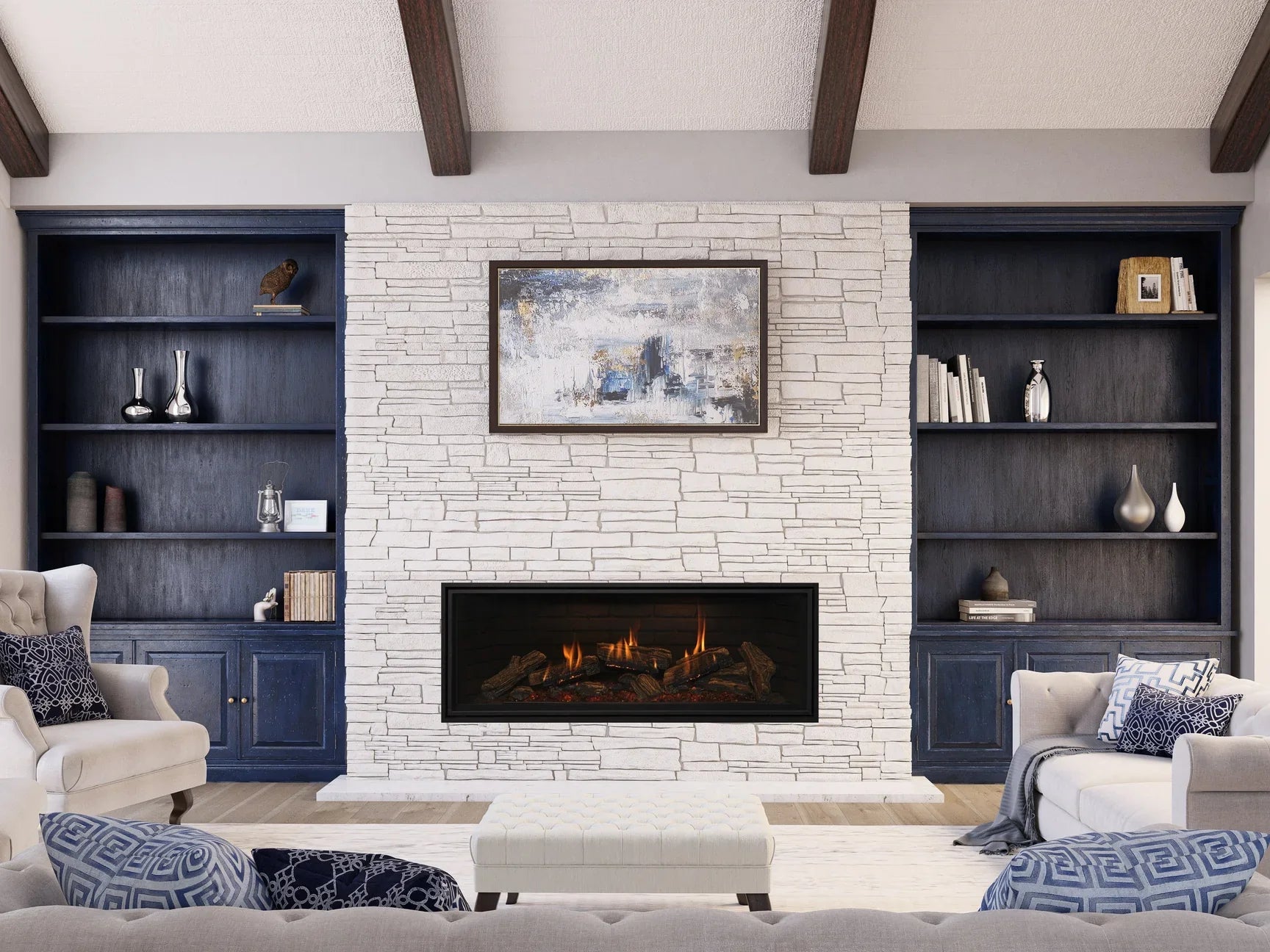
Linear fireplaces are the fastest-growing segment in the industry. These wide, rectangular units create a dramatic ribbon of flame and are typically installed flush to a finished wall for a clean, modern look. They're the fireplace of choice for media walls (mounted below a TV), feature walls, and open-concept living spaces. Heat & Glo's Primo II and Mezzo, Kozy Heat's Callaway series, Valor's L2 and L3, and European Home's H Series are all popular linear options. Many are available in see-through, corner, and peninsula configurations that can serve as stunning room dividers.
European / Modern Minimalist
Brands like Stûv and European Home bring a distinctly European sensibility—clean lines, frameless designs, and innovative features that make the fire itself the focal point. Stûv's 21 series zero-clearance fireplaces are available in single and double-sided formats with a retractable guillotine glass door for open-fire or closed-fire operation. Their 30 series stoves rotate 360 degrees, have three interchangeable doors, and can even be used for grilling. European Home specializes in ventless and direct-vent modern fireplaces with frameless, trimless designs that disappear into the architecture. HearthStone's HASE line offers German-engineered precision in heavy-gauge steel and ceramic.
Thinking about mounting a TV above your fireplace? Look for models with built-in heat management technology like Valor's HeatShift or Heat & Glo's heat management system. These redirect convective heat away from the wall above, protecting electronics and artwork. Your Leisure Time Inc. specialist can help you plan a safe, beautiful installation.
Brands We Carry and Recommend
At Leisure Time Inc., we've carefully selected our brand lineup based on quality, performance, warranty, and customer satisfaction. Here's a brief overview of each brand and what makes them special:
| Brand | Specialty | Known For |
|---|---|---|
| Heat & Glo | Gas fireplaces & inserts | Inventor of direct vent technology; IntelliFire app; industry leader |
| Heatilator | Gas & wood fireplaces | #1 builder brand since 1927; reliable; affordable; wide range |
| Kozy Heat | Gas, wood & electric | EVO Elevated Burners; exceptional realism; great value |
| Valor | Radiant gas fireplaces | No electricity needed; HeatShift/HeatSplit; radiant heat leaders |
| Stûv | Wood fireplaces & stoves | Belgian design; guillotine doors; 360° rotating stoves |
| European Home | Modern gas fireplaces | Ventless and direct-vent contemporary; frameless designs |
| HearthStone | Wood stoves | Vermont-made; soapstone; TruHybrid™ combustion |
| Vermont Castings | Cast iron stoves | Iconic since 1975; FlexBurn; beautiful cast iron construction |
| Quadra-Fire | Wood & pellet stoves | ACC technology; rugged performance; tax credit eligible |
| Harman | Pellet stoves & inserts | PelletPro™; EASY Touch Control; quietest operation |
7 Questions to Ask Before You Buy
- Is this a new build, a remodel, or an upgrade to an existing fireplace? This determines whether you need a built-in fireplace, an insert, or a freestanding stove.
- What is my primary goal—heat, ambiance, or both? If you need serious supplemental heat, gas and wood are your best bets. If ambiance is the priority, electric or gas linear models offer stunning visual impact.
- What fuel type works best for my lifestyle? Gas is the easiest. Wood is the most rewarding but requires the most effort. Pellet is a great middle ground. Electric is the simplest to install.
- What size space am I trying to heat? BTU requirements vary by room size, ceiling height, insulation quality, and climate. A hearth specialist can help you size correctly.
- What style fits my home? Traditional, contemporary, linear, European—the right design should complement your architecture and personal taste.
- Do I need the fireplace to work during power outages? If yes, focus on gas (direct vent with battery backup) or wood. Pellet and electric won't function without power.
- What's my budget for the total project? Remember to factor in installation, venting, finishing materials (stone, tile, mantel), gas line or electrical work, and any permits.
At Leisure Time Inc., we offer free consultations and project planning for fireplace installations. Our in-house service team handles everything from initial design to final inspection, so you have a single point of contact throughout the process.
What to Expect with Installation
Every fireplace installation is unique, but here's a general overview of what's involved:
| Component | Estimated Cost Range |
|---|---|
| Gas fireplace unit | $2,000 – $8,000+ |
| Wood stove or insert | $2,000 – $6,000+ |
| Pellet stove or insert | $2,500 – $5,500+ |
| Electric fireplace unit | $800 – $4,000+ |
| Venting / chimney pipe | $500 – $3,000 |
| Gas line installation | $300 – $800 |
| Electrical work | $200 – $600 |
| Finishing (stone, tile, mantel) | $500 – $5,000+ |
| Permits (varies by location) | $50 – $300 |
Note: Total project costs vary widely depending on the complexity of the installation, the brand and model selected, and finishing materials chosen. Your Leisure Time Inc. specialist will provide a detailed project estimate before any work begins.
Frequently Asked Questions
What's the most efficient type of fireplace?
Gas direct vent fireplaces are typically the most efficient for everyday use, with many models achieving 70–85% efficiency. For wood heating, HearthStone's TruHybrid stoves achieve up to 81% HHV efficiency, among the highest in the industry. Pellet stoves also offer excellent efficiency due to their automated combustion systems.
Can I convert my wood-burning fireplace to gas?
Yes, this is one of the most popular upgrades we do. A gas insert slides into your existing fireplace and uses flexible co-linear vent pipes that run up your existing chimney. It's a relatively straightforward installation that dramatically improves efficiency, convenience, and heat output.
Do I need a chimney for a gas fireplace?
Not a traditional masonry chimney. Gas fireplaces use a direct vent pipe system that can exit through a wall or through the roof. This is much simpler and less expensive to install than a masonry chimney. Some ventless (vent-free) models don't require any venting at all, though these are subject to local code restrictions.
Can I install a fireplace in an existing home?
Absolutely. Gas inserts are designed for existing fireplaces. For rooms without an existing fireplace, a freestanding stove or a new built-in with direct vent piping can usually be installed with minimal structural modification. Electric fireplaces offer the simplest retrofit option since they require no venting at all.
Are there tax credits available for fireplace purchases?
Yes. EPA-certified wood stoves, wood fireplace inserts, and pellet stoves may qualify for a 30% federal tax credit (up to $2,000 per year) under Section 25C of the Internal Revenue Code. Brands like HearthStone, Vermont Castings, Quadra-Fire, and Harman offer eligible models. Consult your tax advisor for details specific to your situation.
Ready to Find the Right Fireplace for Your Home?
At Leisure Time Inc., we carry one of the largest selections of fireplaces, inserts, and stoves in Idaho. Our showrooms in Boise, Idaho Falls, and Twin Falls feature working displays so you can see the flame, feel the heat, and compare brands and styles in person.
Our knowledgeable hearth specialists will listen to your needs, evaluate your home's layout and existing infrastructure, and guide you to the right product at the right price. And our in-house installation and service team means you'll have expert support from start to finish—and for years to come.
Browse Fireplaces & Stoves: leisuretimeinc.com/collections/fireplaces-stoves
Shop Fireplace Products Online: shop.leisuretimeinc.com
Hearth Buyer's Guide: leisuretimeinc.com/pages/hearth-buyers-guide
Locations: leisuretimeinc.com/pages/locations